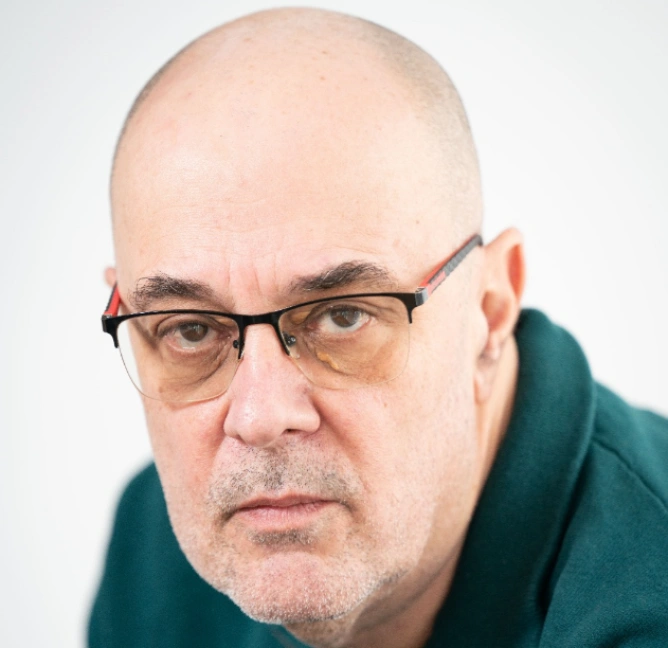
Raed Arafat, a Mr. Bean at DSU



Always see our news on Google
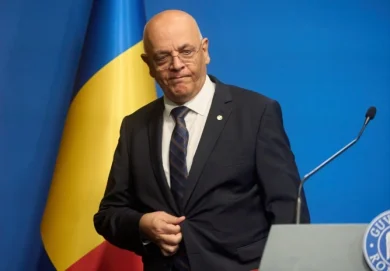
Raed Arafat vigorously defended, in 2026, two decisions that are difficult to reconcile: issuing a RO-Alert at 4:20 a.m. for heavy snowfall, while also foregoing any official alert on the night of a 5.7-magnitude earthquake in Vrancea.
The difference between the two situations is not merely a matter of procedure; it concerns a hierarchy of risk that the population finds increasingly difficult to perceive as rational.
A snowfall for which it is worth waking the city
In February, Bucharest and Ilfov received, at 4:20 a.m., a RO-Alert for a red warning for heavy snowfall. Many citizens were woken up precisely to find out what they would have noticed anyway upon waking: it was snowing outside.
Arafat explained at the time that the alert had been sent according to a procedure, at a “cutoff time,” for those leaving or preparing to leave for work. He acknowledged the inconvenience and apologized, but maintained that the message protected people exposed to real risks: slippery roads, fallen trees, broken cables, and detached objects.
The argument is not entirely without merit. Heavy snowfall can disrupt traffic and endanger people who are outside. The problem, however, is one of proportion: a system designed for emergency situations was used, with the same intrusive sound signal, for a weather phenomenon that millions of people could check by simply drawing back the curtain.
An earthquake that received no alert
On the night of November 17–18, an earthquake measuring 5.7 in magnitude, occurring in the Vrancea area at 2:48 a.m., was felt across a wide territory, including Bucharest, Moldova, Brașov, and Sibiu. Google’s system on some Android phones sent automatic warnings, but RO-Alert—the state’s official channel—remained silent.
Raed Arafat explained that RO-Alert is not used to announce earthquakes a few seconds in advance because there would be no time for evacuation or protective measures and because “we would only cause more panic.” This is a technically debatable position: indeed, early earthquake warnings cannot guarantee a complete evacuation, but they can provide a few valuable seconds to take shelter from potential dangers.
The second justification, however, is more problematic: the head of DSU said that, if the authorities had sent a message at night, “we would have received comments” from those who had not felt the earthquake and had not been woken up. In other words, fear of public criticism appears to have become a decision-making criterion in a system that should respond first to risk, not to reactions on social media.
The contrast is difficult to defend logically. For snowfall, the state considered it worthwhile to wake an entire city, even though the phenomenon was immediately visible upon waking. For an earthquake felt strongly and capable of causing accidents, the state decided that not even a subsequent informational message was worthwhile, even though people were already waking up frightened and searching for explanations.
In other words, according to Raed Arafat’s Mr. Bean logic, it is worth waking up at night to take precautionary measures against snowfall, yet it is pointless to wake up in the event of an earthquake, even though that is precisely when you need a few seconds to protect yourself.
The issue is not for RO-Alert to predict earthquakes. It cannot. The issue, however, is one of basic consistency: if the system considers snowfall serious enough to interrupt sleep, why would it not inform the population after a significant earthquake?
Until this balance becomes clear, we are left with a simple and dangerous impression: your phone tells you that it is snowing, but the state remains silent when the earth moves.
Latest News
13:26
13:24
13:08
13:06
13:01
See more news
NEWS ON THE SAME TOPICS
.webp)