European Commissioner Andrius Kubilius calls for a European Defense Union including Ukraine



Always see our news on Google
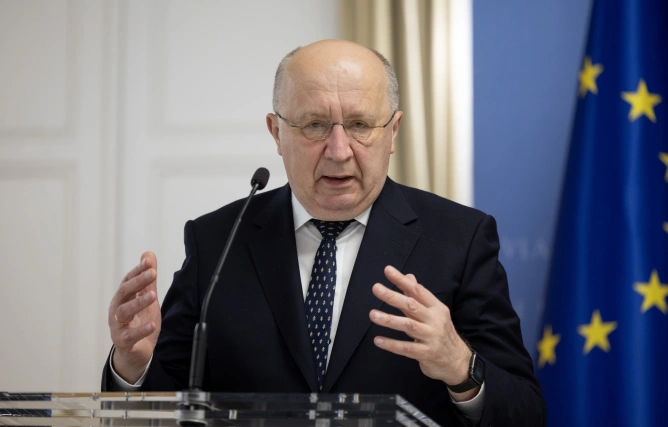
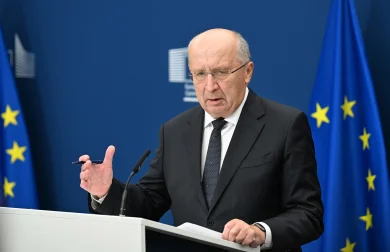
The European Commissioner for Defense and Space, Andrius Kubilius, stated in Vilnius that Europe must take more responsibility for the conventional defense of the continent within NATO, build a single defense market, and integrate Ukraine into the European security architecture. The speech, delivered in front of the NATO Parliamentary Assembly, comes against the backdrop of threats, disinformation, and challenges against the eastern flank.
The European Commissioner for Defense and Space, Andrius Kubilius, called on Europe to build a European Defense Union, create a real single market for the defense industry, and include Ukraine in the European security architecture, in a speech delivered in Vilnius in front of the NATO Parliamentary Assembly.
Kubilius said that the meeting takes place at a time of "threats, disinformation, provocation" against Lithuania and the entire eastern flank, "from the Baltic Sea to the Black Sea." He conveyed "complete and heartfelt solidarity" to the Romanian friends present at the meeting and welcomed NATO Secretary General Mark Rutte's promise to defend every inch of NATO territory.
In short
Andrius Kubilius stated that Europeans must take primary responsibility for the conventional defense of Europe within NATO.
The European Commissioner supported the idea of a European Defense Union and a stronger European pillar within NATO.
He warned that Russia still produces more than the European Union in the field of defense, which creates strategic risks.
Kubilius criticized the lack of a single European defense market, the absence of competition, and the frequent use of direct awards in military procurement.
He called for the integration of Ukraine into the European Defense Union and into a potential European Security Council.
Kubilius's speech was built around three themes: the future of the European defense architecture, the European defense industry, and Ukraine. The Commissioner stated that NATO and the European Union have the same goal, maintaining a free, secure, and peaceful Europe, but different contributions: NATO brings "military power," while the EU brings "financial and industrial power."
On the first issue, Kubilius said that American allies are asking Europeans to take primary responsibility for the collective conventional defense of Europe within NATO. He framed the question as a transition to a "NATO 3.0" post-Cold War, in which the European pillar of the Alliance would become stronger.
The Commissioner presented this direction as a condition for strengthening the transatlantic relationship, not as an alternative to NATO. According to him, Europe must be able to act "as Europe," not just as a combination of 27 member states, including through the development of European strategic capabilities.
On the second issue, Kubilius criticized the fragmentation of the European defense industry. He stated that Russia "still produces more than the EU" and that this is dangerous, as it can create temptations for Vladimir Putin. At the same time, he compared the evolution of Ukrainian defense production with the European pace, stating that Ukraine has increased its production by 50 times since 2022, reaching 50 billion euros.
The Commissioner said that, unlike Ukraine, where there is competition, market rules, and rapid innovation, the European Union does not have a single defense market, has too little competition, too little innovation, and insufficient industrial expansion. He stated that EU governments protect national industries, purchasing up to 70-80% of what the main national suppliers produce and using direct awarding, without public bidding, in 80% of defense procurement procedures, invoking the exception provided for in Article 346 of the Treaty on the Functioning of the European Union.
For Kubilius, this industrial problem also has a doctrinal consequence. He stated that the main traditional defense suppliers influence government demand and, through this, can influence national military doctrines. In this logic, the fight for a single defense market in the EU becomes a fight for the modernization of defense doctrines at the national level.
On the third issue, the Commissioner called for increased support for Ukraine, so that Kyiv can prevail and bring Putin to negotiate a fair peace. He stated that this will cost more than the current support, but that inaction will ultimately cost much more.
Kubilius called Ukraine "the best military force in Europe and the world" and argued that it would be hard to understand if Europe did not consider integrating this force into the European defense architecture as a vital interest. Under the conditions in which Ukraine's NATO membership is not yet agreed upon, and EU membership could take longer, he called on national parliaments to support Ukraine's membership in the European Defense Union.
Andrius Kubilius is the European Commissioner for Defense and Space, a portfolio in which he works with the High Representative and member states to ensure that Europe spends more, better, and more European in the field of defense.
The speech in Vilnius formulates one of the most direct pleas from the Commission for the transition from fragmented cooperation in the field of defense to a more integrated European architecture within NATO, with Ukraine treated as a central part of the continent's security.
Latest News
19:14
19:12
18:53
18:47
18:30
See more news
NEWS ON THE SAME TOPICS


.webp)