The EU–Ukraine drone alliance begins work on joint production and lines capable of rapidly increasing deliveries


Always see our news on Google
The 18 founding members must combine European industrial capacity with Ukrainian experience in adapting drones to the front. Kubilius is calling for the first results by the end of the year, with an emphasis on components, testing, and reducing development time.
The EU–Ukraine Drone Alliance began its work with the objective of accelerating joint production and preparing European industry for rapid increases in military demand. European Commissioner for Defence and Space Andrius Kubilius called on the 18 founding members to turn Ukrainian frontline experience into industrial projects and concrete results by the end of the year.
In brief
1. The alliance brings together nine EU members and nine from Ukraine. The industry-led initiative seeks partnerships and joint production, with a new leadership meeting before the end of the year.
2. Kubilius is calling for production lines capable of increasing volumes within a few weeks. Component availability and maintaining industrial capacity are priorities distinct from technology development.
3. Cooperation must bring frontline experience into design and testing more quickly. The Commissioner aims to reduce the time from requirement to prototype from years to months.
4. The first results are expected by the end of the year. In his remarks, Kubilius did not announce contracted production volumes or a new budget allocated to the alliance.
The alliance's leadership brings together nine members from the European Union and nine from Ukraine, representing manufacturers and innovative enterprises. The initiative is industry-led, in cooperation with the Commission. Kubilius announced that a second leadership meeting is planned before the end of the year, while participants continue to set the working agenda.
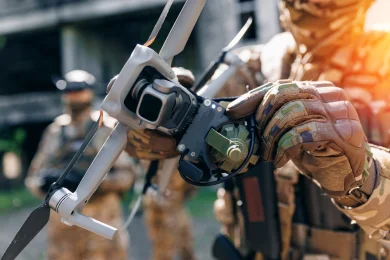
The first priority is accelerating joint ventures and production carried out together by European and Ukrainian companies. The Commissioner seeks to bring European industrial capacity closer to the way Ukraine rapidly adapts equipment to combat experience. Under this approach, the design, manufacture, procurement, and use of drones must operate in a cycle in which observations from the front quickly reach those modifying the product.
A second area concerns production lines kept ready for a rapid increase in volumes. Kubilius explained that they could operate at a lower level during quiet periods, while retaining the capacity to expand within a few weeks. He identified the European Defence Industry Programme, EDIP, as one of the instruments that can support this preparation. The programme provides support for expanding industrial capacities and for establishing and maintaining industrial preparedness reserves in the defence sector.
Expanding production also depends on the availability of components. The Commissioner called for the identification of bottlenecks in the supply of magnetic materials, explosives, and chips, as well as difficulties related to testing, certification, intellectual property, and skilled personnel. In his opening remarks, he encouraged companies to open their supply chains to one another and to include component manufacturers, software developers, and equipment users.
Testing must shorten the path from a military requirement to a usable prototype. Kubilius called for reducing this period from years to months, using both European facilities and the experience of testing under the conditions of the war in Ukraine. The BraveTech EU initiative, cited by the Commissioner, already provides a framework for cooperation in developing and testing defence technologies. Its activities include cooperation with military operators to adapt solutions to real operational constraints.
Industrial cooperation also has access to EDIP's support instrument for Ukraine, with a budget of 300 million euros for modernising Ukraine's defence industry. This funding belongs to the broader European programme and does not represent a new budget granted to the alliance at its first meeting. The Commission identifies joint production, counter-drone systems, and strengthening supply chains among the areas supported.
Kubilius called on the alliance to contribute to European projects concerning drones, countering them, and monitoring the eastern flank. In his statements, he did not announce contracted production volumes or new factories approved. The first results expected by the end of the year will have to show how the agreed priorities are being transformed into effective industrial cooperation.

Latest News
08:38
08:22
08:05
07:50
07:35
See more news
NEWS ON THE SAME TOPICS