Kaja Kallas drops plan for new EU defense group after reservations from some member states



Always see our news on Google
The group’s first meeting will no longer take place, and the EU’s foreign policy chief is looking for other ways to cooperate with the member states. In Lithuania, Kallas calls for the acceleration of protection of the eastern flank and concrete measures against hybrid attacks.
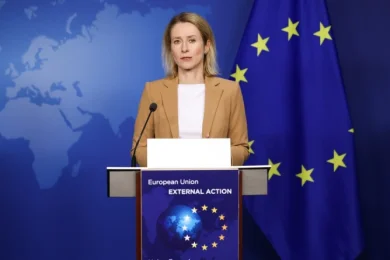
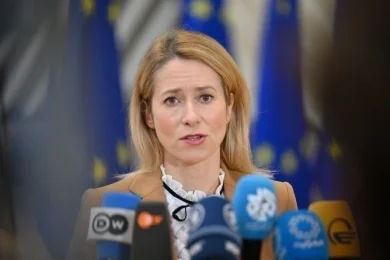
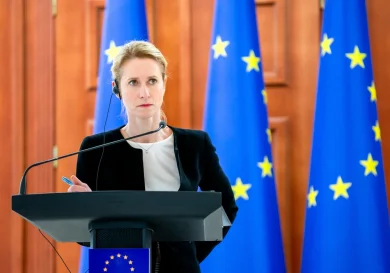
The High Representative of the European Union for Foreign Affairs and Security Policy, Kaja Kallas, abandoned the initiative for a new defense group after some member states considered that this was not the right course of action at this time. The European Commission confirmed in Brussels that the first meeting, scheduled for the morning, would no longer take place and that the EU’s foreign policy chief was seeking other ways to cooperate with national governments to accelerate defense efforts.
In brief
1. Kallas decided not to continue the initiative after discussions with ministers and reservations expressed by some member states.
2. The Commission did not identify the governments concerned and did not explain their reasons, stating that they must present their positions themselves.
3. In Vilnius, Kallas called for the acceleration of the Eastern Flank Watch initiative, in close cooperation with NATO, and concrete protection against hybrid threats.
4. The EU’s foreign policy chief insisted on support for Ukraine, including air defense, and on maintaining pressure on Moscow.
The decision was made following consultations with ministers, according to the explanations provided at the Commission briefing. Brussels emphasized that the assessment of security needs remained unchanged and that Europe needed to achieve results in the field of defense more quickly. No alternative cooperation format or timetable for it was presented.
Asked about the reasons for the reservations expressed by some governments, the European Commission’s chief spokesperson, Paula Pinho, stated that the countries concerned were best placed to explain them. Germany, France, and Italy were mentioned in a journalist’s question, but the Commission’s response did not confirm that these were the countries that had opposed the initiative.
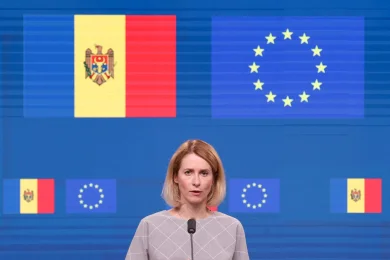
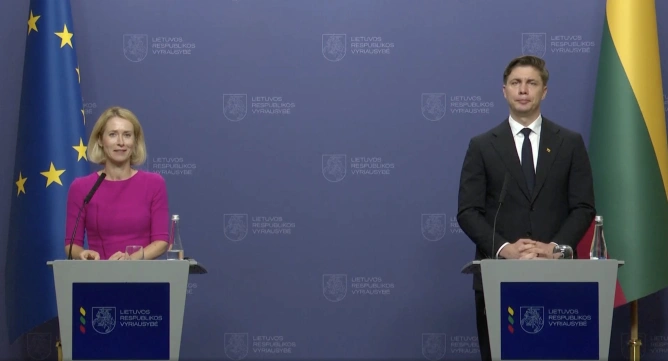
In joint statements delivered in Vilnius alongside Lithuanian Prime Minister Mindaugas Sinkevičius, Kallas emphasized strengthening Europe’s ability to defend itself and protecting democracies from external interference. She warned that the approaching elections for Russia’s State Duma required preparation for new challenges on European territory and referred to the risk of attacks similar to the one in Leipzig.
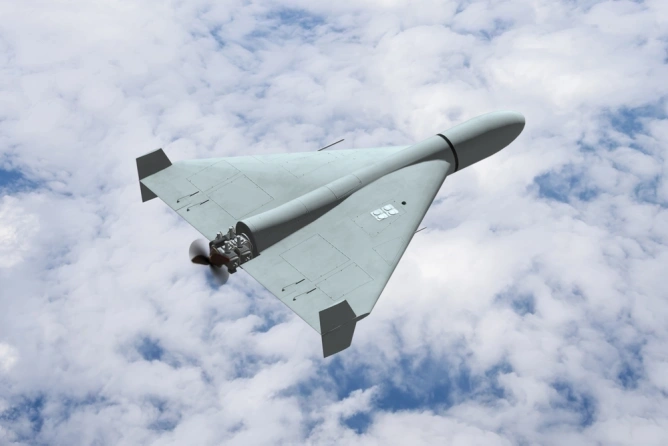
Lithuania is one of the member states most frequently targeted by threats, Kallas said, mentioning airspace violations, disinformation campaigns, and sabotage. The EU’s foreign policy chief called for the EU strategy against hybrid threats and the action plan on drones and combating them to provide concrete protection. Ukraine’s experience accumulated on the battlefield should contribute to developing the necessary European capabilities, she added.
The security of Lithuania’s border with Belarus was another topic of discussion. Kallas accused the regime of Aleksandr Lukashenko of using illegal migration against its European neighbors and said there were strong indications that Minsk was supporting smuggling tunnels. She described the security of Lithuania’s border as a shared European responsibility and called for the acceleration of Eastern Flank Watch, in close cooperation with NATO, while maintaining pressure through sanctions.
Regarding Ukraine, Kallas announced that 8.47 billion euros had already been transferred through the European support loan and that another 6.1 billion euros had been approved, including for air defense. She stated that the EU was preparing new additions to the sanctions lists and argued that increasing aid to Ukraine, together with intensifying pressure on Moscow, represented the fastest way to end the war.
Kallas linked these priorities to the European Union’s future multiannual budget, calling for adequate funding for foreign and security policy, the Global Europe instrument, and the European diplomatic network. In preparation for Lithuania’s presidency of the Council of the EU next year, she supported Vilnius’s emphasis on security and defense and the need for a timely budget agreement to enable the use of funds from the beginning of the new period.
European cooperation in the field of defense is already conducted, among other channels, through the Foreign Affairs Council, which brings together defense ministers when the agenda concerns this area. The meetings are chaired by the High Representative, and the Council decides on measures to strengthen the EU’s defense industry and military capabilities. This is the existing framework in which national governments participate in European decisions on defense.
European cooperation in the field of defense is already conducted, among other channels, through the Foreign Affairs Council, which brings together defense ministers when the agenda concerns this area. The meetings are chaired by the High Representative, and the Council decides on measures to strengthen the EU’s defense industry and military capabilities. This is the existing framework in which national governments participate in European decisions on defense.
Latest News
22:15
21:55
21:33
21:12
20:56
See more news
NEWS ON THE SAME TOPICS