Kallas presents an emergency EU protocol and new anti-drone capabilities as options to counter hybrid threats



Always see our news on Google
The EU’s foreign policy chief discusses a response combining protection against drones, rapid coordination among states, sanctions, and restrictions for Russian diplomats and former combatants. In Warsaw, Kaja Kallas kept these options on the European agenda, without announcing the adoption of the protocol or the financing of new systems.
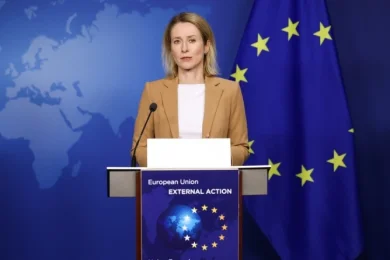
Kaja Kallas included a European emergency security protocol and new counter-drone capabilities among the options discussed by the EU to respond to hybrid threats it attributes to Russia. In her statement from Warsaw, published after the November 6 meeting of the foreign ministers of the Baltic Sea states, the EU’s High Representative supported increasing the costs of Moscow’s actions, including through sanctions and travel restrictions. The protocol remains under preparation, with no adoption decision announced at the meeting.
In brief
Kaja Kallas lists new counter-drone capabilities, an emergency protocol, additional sanctions, stricter controls on the movements of Russian diplomats, and a visa ban for former Russian combatants among the response options to hybrid threats.
The protocol aims to enable consultation and rapid action by member states. Discussions began in September, and Kallas called for complementarity with NATO; in October, she linked the proposal to the future European security strategy.
The Warsaw statement does not establish the rules for activating the protocol, budgets, procurements, or a timetable for deploying counter-drone capabilities. The Commission’s civilian drone security plan is a separate framework, existing since February.
Kallas links the cessation of Russian sabotage in Europe to a lasting peace in Ukraine and calls for the EU to be involved in decisions concerning the continent’s security. Pressure on Moscow is expected to continue, including through the 22nd sanctions package, without the intervention announcing its adoption.
In Kaja Kallas’s assessment, Russia’s willingness to take greater risks requires a European response that imposes higher costs. The options presented combine the protection of infrastructure and European airspace with diplomatic and economic tools. Restrictions on diplomats’ movements and a possible visa ban for former Russian combatants are part of the same discussion, but the statement does not establish the concrete conditions for their application.
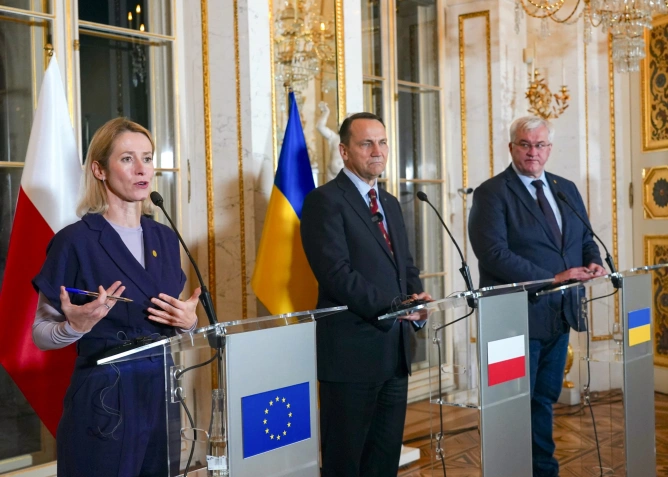
The informal meeting of foreign ministers from the Council of the Baltic Sea States was organized by Poland in cooperation with Iceland, which holds the presidency of this regional framework. Kallas and the Ukrainian foreign minister, Andrii Sybiha, also attended. The discussions linked the response to Russian threats with supporting Ukraine ahead of winter and Europe’s role in peace efforts. Kallas presented the EU’s position at a joint press conference with the Polish foreign minister and Deputy Prime Minister Radosław Sikorski and with Sybiha.
The emergency protocol is not an initiative launched in Warsaw. After the first discussion among the defense ministers in September, Kallas stated that she could not say whether there was a supportive majority because not all states had expressed their position. She insisted on complementarity with NATO and the coordination of European instruments for situations below the threshold of armed aggression. In her explanations in October, she described a mechanism for consultation and rapid action, which would be proposed במסגרת the European security strategy and accompanied by ready-to-use response instruments.
Mentioning the protocol in Warsaw confirms that the political discussion is continuing, but does not establish its activation rules or the measures that states should apply. Nor are the new counter-drone capabilities accompanied in the statement by budgets, procurement contracts, a number of systems, or a deployment timetable. The distinction is between response options and the decisions needed to turn them into operational tools.
A Commission action plan presented in February already exists for drone security. It focuses mainly on civilian domestic security and complements defense efforts through prevention, detection, and response measures. Protecting critical infrastructure, borders, and public spaces remains primarily the responsibility of the member states. The plan provides a framework for cooperation, without proving the availability of the new capabilities invoked by Kallas.
German Foreign Minister Johann Wadephul separately called for collective protection against hybrid threats before traveling to Warsaw. He linked the security of the Baltic region to the activity of Russia’s shadow fleet and the protection of infrastructure, arguing that Europe must participate in decisions concerning its own security and Ukraine’s future.
In the position presented by Kallas, ending Russian sabotage in Europe is part of the conditions for a lasting peace in Ukraine. The EU’s foreign policy chief states that implementing an agreement involving security guarantees, sanctions, reconstruction, or Ukraine’s accession would require the Union’s participation. She rejects legal recognition of Russia’s claims over Ukrainian territory, limitations on the size of Ukraine’s armed forces, and a Russian veto over the alliances chosen by Kyiv.
Kallas argues that an agreement must prevent Russia from using a pause to rearm and attack again. Alongside diplomatic efforts, she announces the continuation of support for Ukraine and pressure on Moscow, including through the 22nd sanctions package. The intervention presents the directions discussed without announcing a new package adopted or the activation of the emergency protocol.
Latest News
14:30
14:20
14:07
13:55
13:42
See more news
NEWS ON THE SAME TOPICS
.webp)