



Von der Leyen proposes a protocol allowing a threatened state to bring together all EU countries for a common response



Always see our news on Google
The mechanism would draw inspiration from the consultations provided for by Article 4 of NATO and would also target incidents below the threshold of armed aggression. The President of the Commission also supports the creation of a European Security Council, involving partners such as Canada, Norway, Ukraine and the United Kingdom.
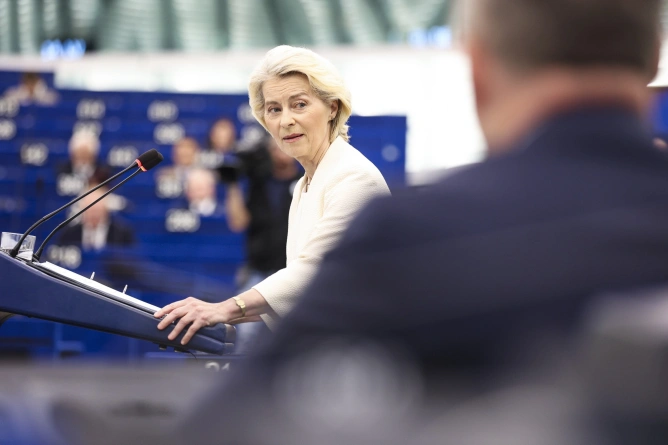
The President of the European Commission, Ursula von der Leyen, proposes a security protocol whereby a single threatened member state could trigger the convening of all EU countries to coordinate a common response. The initiative presented in the State of the Union address, in Strasbourg, would also cover incidents that threaten national security without reaching the threshold of armed aggression.
In brief
1.A single member state could activate the protocol, and all EU countries would meet to coordinate the response. The stated objectives are to deter escalation and limit the effects of the incident, including in situations below the threshold of armed aggression.
2.The model cited is Article 4 of NATO, which allows consultations among allies in the face of a threat. The European protocol is not presented as a new collective defence guarantee or as an automatic obligation to intervene militarily.
3.Von der Leyen also supports the creation of a European Security Council, a leaders’ format involving partners such as Canada, Norway, Ukraine and the United Kingdom. Its final composition and powers are not specified in the address.
4.The announcement leaves open the legal basis of the protocol, the rules for adopting common measures and the implementation timetable. Nor does it explain the relationship between the new proposals and the EU’s existing crisis mechanisms.
The security protocol for emergency situations would seek to coordinate the European response, deter escalation and limit the effects of the incident. Von der Leyen calls for a common approach to counter hybrid threats and cites the intensification of cyberattacks, sabotage, deliberate arson and drone incursions.
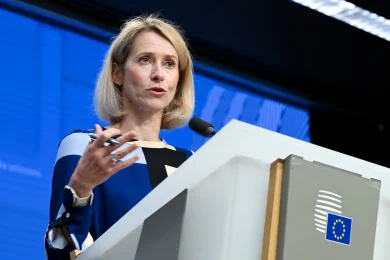
“But our doctrine, our institutions and our decision-making process have not kept pace with the new reality,” von der Leyen states in the published text of the address. She also announces a new European security strategy, which she will propose together with the High Representative of the Union for Foreign Affairs and Security Policy, Kaja Kallas.
The explicit reference is Article 4 of the North Atlantic Treaty. It allows consultations when an ally considers the territorial integrity, political independence or security of one of the members to be threatened. For example, Poland requested such consultations on 10 September 2025, after its airspace was violated by several Russian drones. At NATO, discussions take place in the North Atlantic Council and may lead to a decision or joint action.
Article 5 concerns an armed attack against one or more allies in Europe or North America, considered an attack against them all. Each must provide assistance through the actions it deems necessary, including the use of armed force. The analogy used by von der Leyen refers to the consultation provided for by Article 4. The announcement of the European protocol does not establish a new collective defence guarantee or an automatic military response.
Von der Leyen announced, in parallel, that she would present ideas for creating a European Security Council. It would bring together leaders to discuss the security of the continent, involving partners such as Canada, Norway, Ukraine and the United Kingdom. The address does not specify the final composition or powers of the format.
The Union already has the Integrated Political Crisis Response mechanism, IPCR. Through it, the Presidency of the Council of the EU brings together the European institutions, affected states and other relevant actors to coordinate the response. The mechanism may be activated by the Presidency or at the request of a member state under the solidarity clause. It provides information exchange, analyses and crisis meetings to prepare political decisions.
For armed aggression, there is Article 42(7) of the Treaty on European Union. It obliges the other member states to provide aid and assistance, by all the means at their disposal, to a state attacked on its territory. The Treaty preserves the specific character of the security and defence policies of certain member states and NATO’s role as the foundation of collective defence for its members. Assistance may be civilian or military, depending on the situation.
The address does not specify the legal basis of the protocol, who would chair the meetings, how common measures would be adopted or an implementation timetable. The relationship between this mechanism, the proposed European Security Council and the existing crisis instruments also remains unexplained.
Latest News
16:09
15:57
15:56
15:47
15:47
See more news
NEWS ON THE SAME TOPICS
.webp)






.webp)
.webp)


