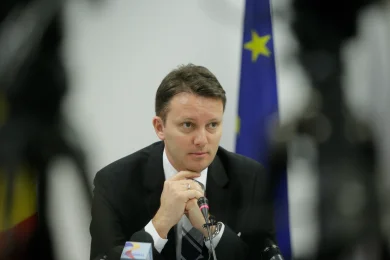
Who is Siegfried Mureșan, designated prime minister by Nicușor Dan



Always see our news on Google
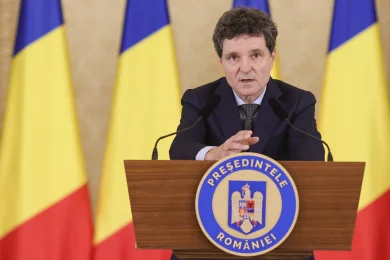
On Thursday, President Nicușor Dan designated PNL MEP Siegfried Mureșan as a candidate for the position of prime minister, following consultations with the parliamentary parties at Cotroceni Palace. The decision comes amid a prolonged political crisis, more than four months after the dismissal of the Bolojan Government, at a time when the parties have failed to reach a common majority formula.
His designation highlights a move with a dual purpose: the president is betting on the international credibility of a politician professionally shaped within European institutions, while PNL, USR, and UDMR are trying to build a reformist formula around him, outside the PSD. The decisive question remains, however: can Mureșan turn his European capital into a parliamentary majority and a functioning government?
A Prime Minister from Brussels
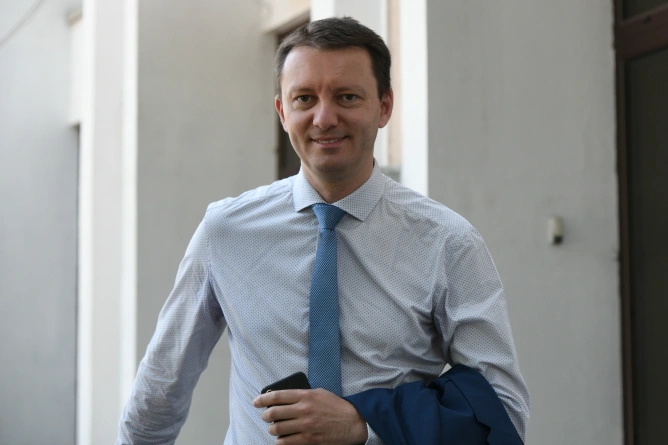
Siegfried Vasile Mureșan was born on September 20, 1981, in Hunedoara. He graduated from the Bucharest University of Economic Studies, where he studied business administration in German, and holds a master’s degree in economics and management from Humboldt University of Berlin. His professional career was built almost entirely in proximity to European institutions. Between 2006 and 2009, he worked as an adviser to the chairman of the Committee on European Affairs of the Bundestag, and subsequently worked at the European Parliament and in the EPP’s central apparatus, in the field of economic and social policies.
Siegfried Mureșan entered the European Parliament in 2014, after winning his first mandate on the PMP list, a party then associated with former President Traian Băsescu. Over the course of his three terms, he specialized in budget files, European finances, and EU relations with countries in the Eastern neighborhood, particularly the Republic of Moldova.
In 2018, he joined PNL, and in the meantime rose through the European structures of the European People’s Party family: he has been vice-president of the EPP Group in the European Parliament since 2019 and is a vice-president of the EPP.
At the national level, within PNL, Mureșan is the party’s vice-president, a position confirmed both by his own recent public statements and by communications from the liberal formation. In 2024, he also took over the interim leadership of PNL Diaspora, following the resignation of Rareș Bogdan, thereby consolidating his position within PNL’s internal architecture.
Experience in European dossiers
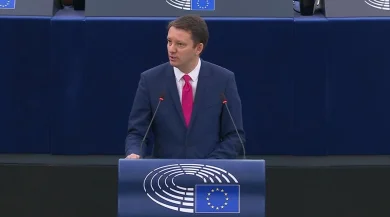
In the European Parliament, Mureșan serves on the Committee on Budgets and the Committee on Economic and Monetary Affairs. He is also a member of the Delegation to the EU–Republic of Moldova Parliamentary Association Committee, according to official information published by the European legislature.
This is the central argument invoked by PNL for his proposal. Senate President Mircea Abrudean stated that the liberals went to Cotroceni with two options: a “reformist government” formed together with PNL, USR, and UDMR, led by Siegfried Mureșan, or a technocratic government with a limited mandate.
Abrudean argued that Romania needs an executive that can produce a realistic budget, maintain progress in reducing the deficit, continue modernizing the state, and restore the confidence of financial markets and European institutions. These are political objectives announced by PNL that will have to be negotiated and assumed in a potential governing program.
The support of a narrowed right
Mureșan was the joint proposal of PNL, USR, and UDMR during the consultations at Cotroceni. USR leader Dominic Fritz presented the solution as “reasonable” and “responsible,” arguing that the alternative of a single-party PSD government would not be justified in the context of the government crisis. For PNL, the candidacy also has an identity-related dimension. The liberals are proposing a prime minister perceived as a political technocrat, affiliated with PNL but with a predominantly European career and less connected to the party’s internal networks. UDMR joined the support formula, giving Mureșan a broader parliamentary base than the PNL–USR tandem. But this remains insufficient to guarantee an investiture vote without additional support, strategic abstentions, or a change of position by the PSD.
PSD: support conditional on participation
PSD went to the consultations with its own prime ministerial proposal, Sorin Grindeanu. The Social Democrats decided that they would not vote for a government in which they were not represented. The PSD’s stake is twofold. On the one hand, the party claims the right to participate directly in government and rejects the idea of a formula that keeps it outside power. On the other hand, supporting a cabinet led by Mureșan without participating in it would mean that PSD was providing stability to a political project built by PNL, USR, and UDMR. This position makes the negotiations for the investiture more important than the designation itself. If PSD maintains its refusal, Mureșan will either have to convince parliamentarians outside the committed groups or build a broader government formula, at the cost of substantial compromises.
AUR and the early-elections scenario
AUR rejected support for a technocratic formula and advocated early elections. MP Gheorghe Piperea argued, before the announcement, that nominating Mureșan would push the country toward early elections, on the grounds that he would not be able to secure the votes of PSD and AUR. In AUR’s discourse, Mureșan’s pro-European profile becomes a reason for attack, not an advantage. The party specifically challenges the idea of a prime minister shaped within the institutions in Brussels and presents the designation as an option disconnected from the real balance of power in Parliament.
Conclusion
The designation of Siegfried Mureșan shifts the center of negotiations from Cotroceni to Parliament. The PNL MEP starts with the declared political support of PNL, USR, and UDMR and with a profile built within European institutions, particularly on economic and budgetary dossiers.
Obtaining the investiture vote nevertheless depends on his ability to bring together a parliamentary majority in a context in which PSD is backing its own candidate, Sorin Grindeanu, while AUR is calling for early elections. In the period ahead, negotiations over the government’s composition, the governing program, and parliamentary support will show whether the designation can be turned into a functioning cabinet.
*****Summary produced with the help of a data feed provided by the media monitoring platform NewsVibe Romania. The analysis, data, and images presented were enhanced with the help of Machine Learning and Artificial Intelligence tools.
Latest News
22:55
22:48
22:22
22:14
21:54
See more news
NEWS ON THE SAME TOPICS