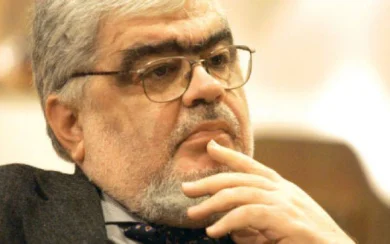
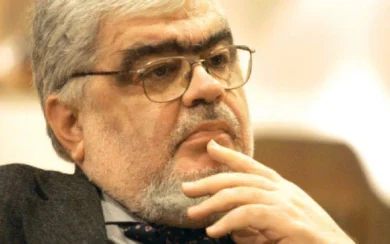
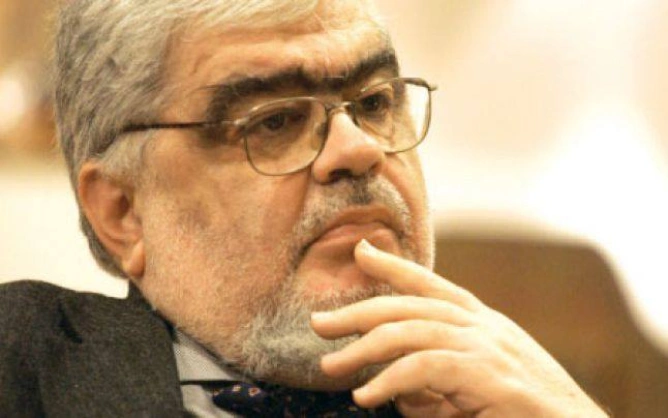
Andrei Pleșu, Dilemma: The Inflation of the Political



Always see our news on Google
The presence of politics in our lives should be a balanced dosage of effectiveness and discretion. It is not normal, in other words, for politics to become an occupation at every moment, a perpetual bet, a goal in itself. It should only maintain the social mechanism, with all its components, from economic and political stability to the rigorous functioning of laws and institutions; it is well-regulated only when its action is subtle and unspectacular. Like any healthy organism, the political organism will not make itself felt permanently. When it makes itself felt acutely, it is a sign of illness. Politics is, in a certain sense, the optimal background for its own transcendence. It allows you to do the essential things that fall outside its sphere: to live your passions, vocation, personal destiny. Obviously, each of us must participate in the anointing of the democratic machinery: to vote (that is, to judge the governmental functionality chances of all political formations), to defend our rights, to amend deviations, whenever the life of the citizen shows signs of dismay. But at the moment when politics, instead of being a precondition for the public good, becomes a content of life for the majority of citizens, at the moment when, instead of being an adjunct to self-fulfillment, it becomes a substitute for it, an obsession, a vice, we are facing a tumor-like evolution, a severe community pathology.
Under dictatorship, politics had a paradoxical status. On the one hand, it arbitrarily determined every detail of daily life, but, on the other hand, it did not constitute (unfortunately?) a concern. It polluted us without inhabiting us. We all knew that we could not escape the official political pressure, that everything is "politicized", but as long as we accepted (out of laziness, resignation, or opportunism) the status quo, we could digress compensatorily. We followed our lives, we strived to do our jobs, we practiced infinite modalities of evasion. Thus, we managed to save our inner freedom, despite the general paralysis of "freedoms". It is a way of saying that politics was at the same time hyper-present and null, suffocating and absent.
After "normalization", politics gained, on the contrary, monumental dimensions. It occupied the stage, assaulted us, confiscated us. As a result of its invasive metabolism, new professions emerged, new meanings of life, new hierarchies. Otherwise steadfast friendships were destroyed, honorable families were split, the world was divided in two. We spend an unacceptably long time in front of televisions to follow dizzying "political" debates, we opt hysterically, we argue blindly, we slide, irreversibly, into the subordinate position of a supporter. We witness daily how intelligent people become idiots, people with humor become gloomy fools, decent people become scoundrels. There can be no talk of "inner freedom". Romanian society has transformed into the arena of a mediocre tournament. It is, of course, the fault of the politicians themselves, who only function based on interest and bickering, it is also the fault of the press that exults whenever it smells scandal, but it is, first and foremost, our fault, all of us, who have learned to live as annexes to second-hand adhesions. It seems that we no longer know what is important and what is not, what deserves our intimate engagement and what does not, what the true purpose of each day and each life is. We live ultimatum secondary problems, we serve mindlessly derived values. What vaccine could still save us?
P.S. The article is old. But it is of the future... The change in concerns of our political class is becoming increasingly visible (with serious consequences): from "What should be done for the country?" to "Each for themselves"!
Latest News
21:27
21:15
21:01
20:46
20:46
See more news
NEWS ON THE SAME TOPICS