An acronym for our peace of mind


Always see our news on Google
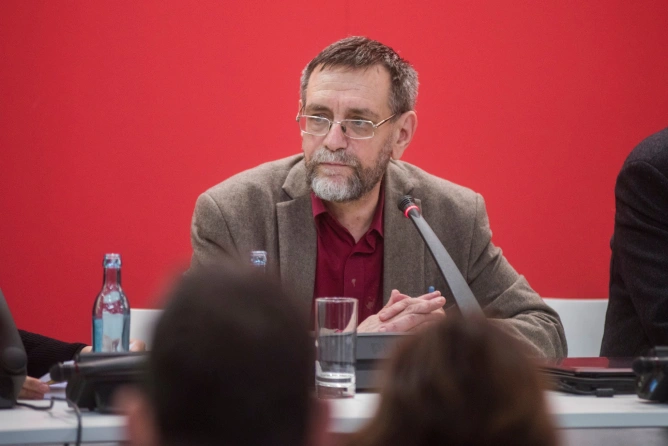
The other day I had the opportunity to talk with several experts in FIMI (Foreign information manipulation and interference). Serious people, well-versed in all the tricks of the trade, not analysts who cling like leeches to television screens for lack of any real pursuits. In other words, people from institutions, civilians and military personnel alike, as well as from private companies and NGOs. There were different accents there, but also a shared stock of concepts, which betrayed not so much an organizational life as a culture underpinned by similar concerns and vocabularies.
For anyone interested, the European External Action Service (the EU’s diplomatic service) has a structure dealing with combating FIMI campaigns, dating back roughly to 2015, when the hybrid war in Ukraine began (https://www.eeas.europa.eu/eeas/information-integrity-and-countering-foreign-information-manipulation-interference-fimi_en ).
The interesting thing is that this entire sphere of concerns (propaganda, manipulation, strategic communication, false news/fake news, disinformation campaigns as part of a hybrid war), which has somehow obsessed Romanian society from the end of communism to the present day, has periodically enjoyed conceptual rebrandings, depending on the context. The years after 2015, amid international concern over the loss of the international system as we believed it to be—peaceful, friendly, ready to be visited on exotic trips and covered by trade and internet networks—returned to a hi-tech version of the Cold War. And when you think that, during the first Cold War, both sides sent people into space using computers with less capacity than the phone each of you now has in your pocket, you begin to understand what we are going through. As in that joke: we have not made it to Mars, but we do have plastic caps glued to glass.
Sometimes, however, you get the feeling that the fundamental concern, from diplomats to decision-makers, from academia to the mass media flirting with geopolitics, all the way to the advisers who draft policy papers, whenever a new challenge arises, is to give new realities a different name, hoping that the new names will also come with the necessary answers. Some time ago I commented on how fake news and hybrid war are concepts that describe a reality, but their capacity to provide an explanation is quite limited. Well, you see, hybrid war is this way and that, it is not like the old ones, but it can be. Beyond the technical aspect, I look at history and see that propaganda has always prepared the ground for regime changes, wars, and revolutions, at least in modern times, since we can genuinely speak of mass communication and public opinion. And yes, in Ukraine’s case, hybrid war prepared the way for a major invasion. Let us look at how this hybrid war was analyzed between 2015 and 2022, and we will see that, little by little, in the specialist literature we use the same word after 2022, but it means something different from what it meant before. Under the pressure of facts, of course. Likewise, the concept of security, and likewise that of fake news, about which experts realized after a few years that it is not the same thing as false news and that “fake” is not necessarily false, etc.
I do not dispute the usefulness of the FIMI concept, or of whatever came before it, or whatever will come after it, but I am concerned by this communication strategy in which, whenever a problem becomes more complicated, we change or nuance its name and then, perhaps, ask AI to generate some answers. Because the manipulation of public information and interference in the national/European information space by a foreign force, especially a rival one, is a real problem, but it is not solved by changing the acronym, nor by investing in exiling it to the digital and AI realm. It is a matter of understanding how the two ends connect—the foreign, illegitimate, and malicious sender (which does not necessarily use illegal means) and your own public opinion, which exists as a small two-stroke engine, even after the ordinary, disappointed person has taken their nose out of their phone and social networks, as one might put it.
Latest News
23:01
22:57
22:53
22:50
22:43
See more news
NEWS ON THE SAME TOPICS






.webp)