Europe has kept the United States involved in Ukraine through concessions made by Trump, but has also postponed its own autonomy.


Always see our news on Google
A Carnegie Europe analysis argues that European leaders avoided a break with Donald Trump through a combination of political deference, increased funding for Ukraine, and purchases of American weaponry. The strategy helped Kyiv continue the war and kept the transatlantic alliance functional, but it directed money towards the U.S. industry and did not resolve Europe’s military dependence.
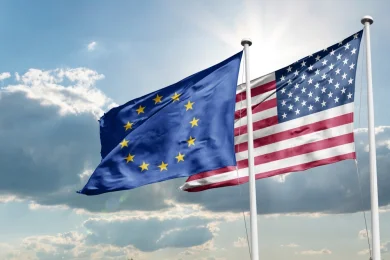
The strategy of European leaders to avoid direct confrontation with Donald Trump managed to keep the United States involved to a limited extent in supporting Ukraine, according to an analysis published by Carnegie Europe. The outcome is not a decisive victory for Kyiv nor a Europe capable of acting alone, but the military situation and the transatlantic relationship could have been much worse without this approach.
In short
1. The analysis argues that European leaders set two limited objectives: to keep Ukraine fighting, without the promise of a decisive victory, and to prevent the complete withdrawal of the United States from European security.
2. Europe also accompanied its political approach towards Trump with money and concrete tools. By 2025, European states had increased their military aid to Ukraine by 67%, and financial and humanitarian support by 59%, reaching a total of 73 billion euros.
3. By May 2026, Europeans had invested 4.8 billion euros in American weaponry through the NATO Prioritized Ukraine Requirements List mechanism, to maintain Ukraine's access to systems that Europe cannot yet produce in sufficient quantities.
4. The strategy contributed to improving the relationship between Washington and Kyiv and to discussions regarding the licensed production of drones and Patriot missiles. The author attributes the outcome to both Ukraine's resilience and the mistakes made by Vladimir Putin in his relationship with Trump.
5. The cost is that Europe continues to depend on American capabilities and uses funds necessary for its own defense industry for purchases from the United States. Without a common strategy, new European coalitions risk remaining discussion groups without the power to change the military situation on their own.
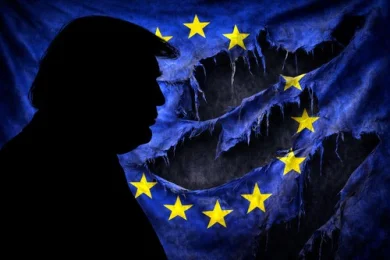
The analysis signed by Rym Momtaz starts from the difficult relationship between the Trump administration, Ukraine, and European allies. After Donald Trump returned to the White House, several European leaders chose to avoid public confrontation and to give the American president visibility, recognition, and political concessions.
This approach has been criticized as humiliating and lacking ambition. However, European leaders continued to use it as their options for action were limited by dependence on American weaponry, intelligence, and military capabilities.
Carnegie Europe describes the objectives pursued by Europeans as modest. The first was for Ukraine to be able to continue the war, even if the available support was not enough to guarantee a decisive military victory. The second was to maintain a minimum level of American involvement in Europe’s defense. The strategy did not aim to demonstrate to Washington, through a more balanced power report, that supporting Europe serves American interests. It accepted the situation in which the United States held the greatest negotiating power, and Europe needed time to address its vulnerabilities.
According to the analysis, this realism contributed to saving lives in Ukraine and prevented the rapid disintegration of the transatlantic alliance. The outcome remains limited: Ukraine continues to resist, and the United States has not completely withdrawn, but Europe has not gained the capacity to decide the evolution of the conflict on its own.
European unity regarding Ukraine has been stronger than in other foreign policy issues. Member states have used existing tools, such as the European Peace Instrument, and created new mechanisms to finance Kyiv.
The analysis mentions the support loan for Ukraine worth 90 billion euros, agreed upon at the European Council in December 2025. Another tool is the Prioritized Ukraine Requirements List, known by the acronym PURL, through which European allies finance the purchase of priority American equipment for the Ukrainian army.
These tools would not have been sufficient without maintaining some form of Washington's involvement. Ukraine continues to depend on systems, munitions, and capabilities that the European industry cannot provide quickly enough and in the necessary quantities.
The relationship between Donald Trump and Ukrainian President Volodymyr Zelensky deteriorated significantly after the public confrontation at the White House. Leaders from France, Germany, Italy, and the United Kingdom, along with representatives from the European Commission and NATO, later supported Zelensky at a new meeting in Washington.
Carnegie Europe believes that the coordinated presence of European leaders and the avoidance of direct confrontation with Trump contributed to limiting the break. The analysis indicates that a sign of change was the meeting between Trump and Zelensky at the NATO summit in Ankara, described in available reports as better than previous contacts.
Washington and Kyiv are also working on agreements for the licensed production of drones and Patriot missiles. Such agreements would allow the manufacturing of equipment outside existing American lines, without the United States relinquishing control over the technology.
The analysis also notes that the agreements discussed by Trump and Vladimir Putin at the Anchorage summit in 2025 did not become the basis for subsequent diplomatic processes. The author believes that Europeans thus managed to avoid the rapid imposition of a negotiated framework without their participation and without sufficient guarantees for Ukraine.
The outcome is not attributed solely to the European strategy. Putin may have overestimated Trump's willingness to accept Russia's positions and did not effectively utilize the relationship with the American administration.
At the same time, Ukrainian forces have resisted better than many observers anticipated. Ukraine's ability to continue fighting has given European leaders time and arguments to maintain Western support.
The difference compared to previous periods is that political deference has been accompanied by larger financial contributions. In the last year of the Biden administration, Europe was already providing over half of the military and non-military aid destined for Ukraine.
After the funds for Ukraine approved during the Biden administration were exhausted, and the Trump administration did not ask Congress to replace them, European states covered part of the deficit.
In 2025, European military aid to Ukraine increased by 67%, according to figures cited in the analysis. Financial and humanitarian support increased by 59%, and the total allocated amount reached 73 billion euros.
These figures indicate a shift in the distribution of costs. European states did not take over all the functions previously fulfilled by the United States, but they provided a larger share of the funding necessary to continue Ukraine's defense.
Through PURL, Europe pays for American equipment that Ukraine prioritizes. By May 2026, European contributions to the U.S. defense industry through this mechanism had reached 4.8 billion euros.
This arrangement represents an implicit exchange. Europeans financially contribute to the American industry, while Ukraine retains access to weapons and munitions that cannot be quickly replaced with European products.
The mechanism responds to a military urgency but reduces the funds available for expanding European industrial capacity. Each order placed in the United States addresses an immediate need for Ukraine without automatically creating a new production line in Europe.
The American industry is also demanded by other international priorities. If the U.S. supply becomes more limited, Europe may find that it has financed American production without having built its own alternative quickly enough.
Support for Ukraine has also reduced the ability of European states to intervene financially and militarily in other regions. The analysis specifically mentions Africa and the Middle East, where available resources and strategic attention have been diminished.
These costs are presented as inevitable choices. Ukraine represents the most immediate security problem for the continent, and reducing support could have led to a much worse military situation.
The strategy has demonstrated that European states can remain more united than Russia and, to a lesser extent, China anticipated. They have continued to support Ukraine even under the conditions of an American administration hostile to some of their objectives.
Some governments have also begun to reduce dependence on the United States in long-term projects. The analysis provides the example of cloud computing infrastructure, where technological control and access to data have become components of strategic autonomy.
Progress is not sufficient to transform Europe into an actor capable of deciding the outcome of a conflict on the scale of the war in Ukraine. The continent remains dependent on the United States for air defense, intelligence, command, strategic transport, and other capabilities.
The time gained through the strategy towards Trump can be used to build these capabilities. However, this outcome depends on the emergence of a common vision regarding threats, priorities, and funding.
European states need to agree on which dangers should be addressed first and how much money they will allocate over several budget cycles. A real industrial expansion cannot be achieved through isolated orders and unpredictable annual funding.
The analysis warns that new European coalitions for Ukraine, protecting navigation through the Strait of Hormuz, and defense against ballistic missiles may remain consultation structures if they do not receive clear missions, funding, and capabilities.
Europe must also decide to what extent it wants to reduce dependence on the United States. Complete autonomy would require very large investments and years of development, while maintaining the current dependence leaves the continent vulnerable to political changes in Washington.
Divergences between states have not disappeared. France, Germany, the United Kingdom, and other countries have different strategic traditions, perceive threats differently, and do not prioritize all regions equally.
Possible political changes in France, Germany, and the United Kingdom may make a long-term agreement more difficult. New governments may alter budgets, military commitments, and relations with the United States.
Trump's public behavior towards allies may continue to consume the attention of European leaders and create divisions. Each verbal conflict obliges governments to manage immediate political relations instead of focusing on building the necessary capabilities.
The conclusion of the analysis is that the European strategy has produced real but limited benefits. It has prevented a worse scenario for Ukraine and maintained a form of transatlantic cooperation without transforming Europe into an independent military power.
The long-term outcome will depend on how Europeans use the time bought. Without sustained industrial investments and a common strategic culture, deference towards Trump may remain a temporary method of managing dependence, not the beginning of its exit.
Latest News
23:05
22:44
22:20
22:04
21:44
See more news
NEWS ON THE SAME TOPICS