Informat.ro Summary / Without satellites from Washington, Zelensky looks toward Paris. Can Eutelsat/OneWeb save Ukraine from dependence on Starlink?


Always see our news on Google
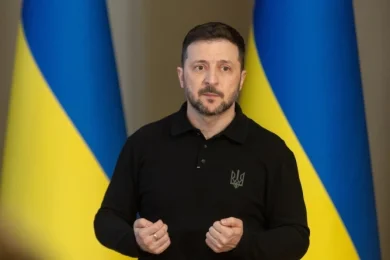
President Volodymyr Zelensky stated on Friday, at the press conference following the EU summit in Brussels, that the speed limits imposed on the Starlink system, which left Ukraine without an essential defense tool, have not yet been completely lifted, although they are “now coming back.” With drones linked to a system controlled in Washington, Kyiv is now seeking European alternatives: “we are working with several countries, including France,” Zelensky said. Nevertheless, European alternatives are limited and cannot fully replace Starlink.
The night Ukraine’s drones fell silent
On the night of October 13–14, SpaceX abruptly limited the operation of Starshield terminals — the military version of Starlink — for equipment on the move: terminals mounted on vehicles and drones stopped receiving a signal as soon as the object on which they were installed exceeded a certain speed threshold, reported by Ukrainian military sources as approximately 72 to 161 km/h. In practice, Ukrainian interceptor drones, which need a permanent connection while flying at hundreds of km/h in order to catch Russian Shahed drones, were left without guidance. The units received no warning, according to sources in the Ukrainian Ministry of Defense cited by Kyiv Post. On Thursday, Reuters reported, citing two American officials and one Western official, that the order to slow the service “came from inside the White House.” Pentagon officials were reportedly told that Starshield for the Ukrainian army “must be slowed down.”
On Friday, at the EU summit in Brussels, the question shifted from Washington to Europe: does the bloc have anything with which to replace a technology that has become the backbone of the Ukrainian front? The answer, given by the EU’s top diplomat herself, is uncomfortable: not in the short term.
Who gave the order
Elon Musk stated that “Starshield systems are owned and controlled by the U.S. government” and that “any speed or usage limits are decided by the U.S. military and, ultimately, by the president.” A senior American official told Reuters in response: “Such a request was never made by the president.” Kyiv, however, maintains that after calls on Tuesday and Wednesday to the White House, the State Department, and the Pentagon, it was told that this was “a White House decision.”
The political context cannot be ignored. The restrictions came amid Donald Trump’s pressure on Ukraine to stop strikes against Russian refineries. After Kyiv resumed the attacks, Trump said of Zelensky: “All he does is drive up the world price of oil. Well, I think it’s a shame.” In an interview with Newsmax, the American president went even further: “Zelensky is not a man it is good for us to negotiate with. He says he wants a deal, but he doesn’t want one,” describing him as more difficult to deal with than Vladimir Putin. Cracks are also appearing among Republicans in Washington: Senator Thom Tillis spoke of a possible “mix-up” in Pentagon systems and called for an investigation.
Zelensky says restoration of SpaceX Starshield service is still incomplete
At the press conference following discussions with EU leaders, Zelensky provided the clearest technical details so far about the restriction.
“Starlink was not turned off, but the speed limits were lowered… and we could no longer shoot down some Shahed drones, we could no longer use one of the tools for protecting the population,” he said, describing the measure as “a very dangerous and unpleasant surprise.” Shahed drones with jet propulsion fly at 400 km/h, while the connection’s speed ceiling was reduced to just 70 km/h, the president explained.
Zelensky specified that the technology is not used for “deep strikes inside Russia,” but for defensive operations and medium-range strikes against military targets, as well as for logistical deliveries. And regarding the essential question — has the problem been resolved? — the answer was nuanced: “The Ministry of Defense is in contact with the partners; I was told that there had been signals from the White House that they would restore these capabilities. Have they returned to the previous speed limits? No. But are they coming back now? Yes.”
The president was also asked about dependence on Patriot interceptors, which CNN reports have been exhausted. Zelensky responded bitterly: Ukraine is not “a priority destination” for deliveries financed by Europe, so the system is operating on an improvised basis — “we take them wherever we can: one or two here, five there, ten elsewhere.”
Regarding Starlink, Zelensky confirmed that Ukraine “is working with several countries, including France” on additional capabilities.
Brussels acknowledges the EU’s limited capabilities
In Brussels, Europeans did not hide the reality. “Starlink is truly indispensable for Ukraine and, unfortunately, in the short term Europe cannot replace this capability,” Kaja Kallas said before the summit proceedings. Latvian Prime Minister Andris Kulbergs put it in the same terms: “We have some, but not enough.” Dutch Prime Minister Rob Jetten said he had discussed with Emmanuel Macron “how we Europeans can provide more such services in the not-too-distant future.”
Defense Commissioner Andrius Kubilius also acknowledged that Europe is “quite dependent on American space capabilities.” French Foreign Minister Jean-Noël Barrot added that two-thirds of the security information Ukraine receives from Western partners comes from European countries.
What alternatives exist in Europe
Europe does not have a “ready-to-plug-in” replacement for Starlink, but it has three avenues — one immediate, one medium-term, and one only toward the end of the decade.
The emergency solution: Eutelsat and SES. The French operator Eutelsat, which merged with British operator OneWeb, already provides satellite internet in Ukraine through its low-Earth-orbit constellation — more than 600 satellites — plus approximately 35 geostationary satellites. It is the only company in the world that still has a network of this type besides SpaceX, and it is already working with European institutions on the “rapid deployment of additional terminals for critical missions.” Zelensky’s statement on Friday — that Ukraine “is working with several countries, including France” — fits this profile exactly. The limitation is one of weight, cost, and technology: OneWeb terminals are heavier, more expensive, and more demanding in terms of power than Starlink terminals, while SpaceX equipment cannot simply connect to another network — switching would mean replacing thousands of terminals. In practice, Eutelsat and Luxembourg-based rival SES can add capacity now, but they cannot fully take over Starlink’s role.
The consolidation solution: GOVSATCOM, from 2027. It is the European satellite “pool”: a system that brings together the government capabilities of France, Greece, Italy, Luxembourg, and Spain and makes them available to member states through a single hub. It has been operating since January 2026, and the Commission has confirmed that it is negotiating for Ukraine to be “fully associated” with the program, with additional commercial capacity “at the beginning of 2027.” The Commission has nevertheless refused to say whether GOVSATCOM can support the same combat missions as Starshield — which says everything about the remaining gap.
The sovereign solution: IRIS², toward the end of the decade. This is the European secure communications constellation — the EU’s “sovereign Starlink,” built specifically for governmental and military use. The contract was signed in December 2024 with the SpaceRISE consortium (SES, Eutelsat, Hispasat), and in August 2026 the program entered the deployment phase. The revised architecture provides for 348 satellites — 330 in low Earth orbit and 18 in medium Earth orbit — with 66 added specifically for defense and security, bringing the budget to more than 15.6 billion euros. Operationalization will come in three stages: the first launches in 2029, the first secure services around 2030, and full capability only in 2031–2032. Ukraine has already requested access through a formal agreement under negotiation, but analysts warn that the timelines “remain aspirational.”
Thus, a roadmap for Kyiv’s independence for independence from the United States remains partial diversification through Eutelsat and SES now, access to GOVSATCOM from 2027, and genuine autonomy only with IRIS², toward the end of the decade. Until then, as Zelensky said about the Patriot interceptors, Ukraine will continue to “take them wherever it can.”
Latest News
18:45
18:43
18:40
See more news
NEWS ON THE SAME TOPICS

.webp)
.webp)