The memory that moves. How the EU tries to save the invisible heritage of dance



Always see our news on Google
A project funded by the European Union seeks to recover the memory of contemporary dance, a cultural heritage that disappears along with the bodies that have carried it.
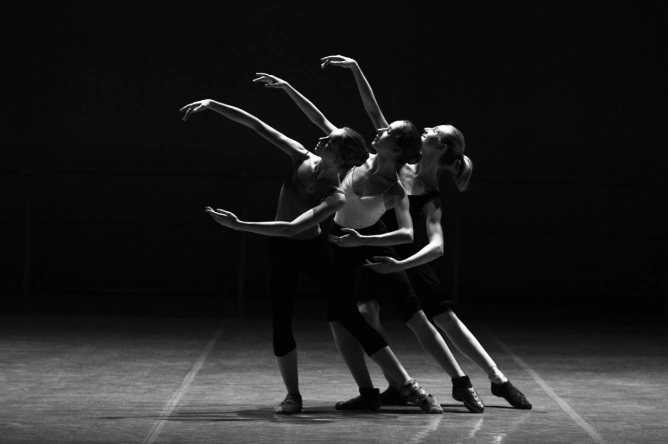
When a dancer leaves the stage for the last time, their work often disappears with them. Unlike music, literature, or painting, contemporary dance does not have a universal score or a stable archiving system. A large part of its heritage survives only in the memory and in the bodies of those who created it.
In short
Contemporary dance is poorly represented in classical heritage policies
The EU funds the mapping of dance archives through a research project
"Living archives" of dancers are treated as sources of heritage
The project aims to prevent the disappearance of European artistic memory
To prevent the disappearance of this fragile heritage, a research project funded by the European Union, DanceMap, aims to map the legacy of contemporary European dance. Instead of creating a centralized archive, researchers gather information about all the forms in which this memory already exists, from institutional archives and private collections to the knowledge preserved in the bodies of dancers.
The initiative starts from a direct critique of how cultural heritage is defined in Europe. In most member states, public funds for heritage are absorbed by buildings, museums, and manuscripts, while performing arts remain almost invisible in national budgets. Dance, an art form that exists only at the moment of performance, is rarely treated as heritage.
Researchers involved in the project argue that this lack of recognition has long-term consequences. Without archives and without institutional memory, creations disappear along with the withdrawal of dancers or the death of choreographers, and new generations risk repeating styles and artistic languages already explored, believing they are inventing them.
A central element of the project is the idea of a "living archive." Through interviews, oral research, and documentation in motion, dancers are treated as direct bearers of heritage. In some cases, choreographic works continue to exist not because they have been perfectly archived, but because the performers have decided to keep them active, assuming their role as guardians of artistic memory.
DanceMap is funded through Horizon Europe, the EU program for research and innovation, reflecting a shift in perspective on culture. Dance is approached not only as an artistic expression but as a form of knowledge and collective memory. The project raises a broader question for European cultural policies: what happens to heritage that cannot be exhibited in a museum and how can it be protected in a system built around objects, not around living experiences.
Latest News
13:44
13:35
13:18
13:08
12:56
See more news
NEWS ON THE SAME TOPICS
.webp)