EU researchers are testing more genetically diverse forests to withstand drought, fires, and diseases.



Always see our news on Google
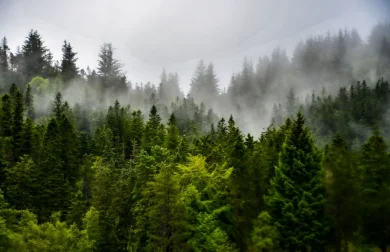
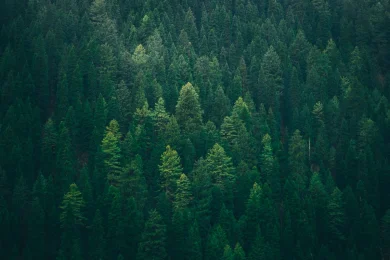
The forests of Europe are weakened by drought, fires, diseases, and insect attacks, and researchers funded by the European Union are testing a solution that starts with seeds: more genetically diverse forests that are less dependent on a few commercial species. The OptFORESTS project plants and monitors seedlings in 28 locations across Europe, using 12 species of trees, to see which combinations can better withstand future climates.
In short
Forests cover approximately 43% of the territory of the European Union.
The OptFORESTS project tests 12 species of trees in 28 locations across Europe.
Researchers aim to diversify forests and include less commonly used species in commercial forestry.
Genetic diversity can increase the chances that some specimens will withstand drought, pests, diseases, or fires.
The research is funded through the EU's Horizon program.
In the village of Suonenjoki in Finland, at the Natural Resources Institute Finland, Luke, the soils are poor, and pine is almost the only species that can grow naturally in the surrounding forests. In the institute's nursery, seedlings have been grown from genetic material brought from several parts of Europe: European larch, wild cherry, and Scots pine.
This diversity is being tested within OptFORESTS, a European project that aims to change the way forests are restored and managed. Researchers are not only looking for fast-growing trees but also combinations of species and genetic sources that can survive in a climate with more frequent episodes of extreme heat, drought, fires, and diseases.
Katri Himanen, a researcher at Luke, says the goal is to diversify European forests and bring to the forefront species that are ignored in conventional forestry. Santiago González-Martínez, a researcher at the French National Institute for Agriculture, Food and Environment, INRAE, which coordinates the OptFORESTS research, says the project aims to guide the transition to more resilient and productive forest ecosystems.
Forests are essential for biodiversity, climate regulation, and carbon storage. However, the pressure on them is increasing rapidly. In Germany, the Czech Republic, and Austria, Norwegian spruce forests have suffered massive losses due to repeated droughts and insect attacks starting in 2018.
The problem is not just the loss of trees. When a forest becomes vulnerable, its ability to store carbon, protect soils, maintain biodiversity, and support industries that depend on wood, paper, or construction materials decreases.
González-Martínez describes genetic diversity as a biological reserve system. If a forest includes trees with different genetic profiles, the likelihood increases that at least some of them will withstand drought, pests, or new diseases.
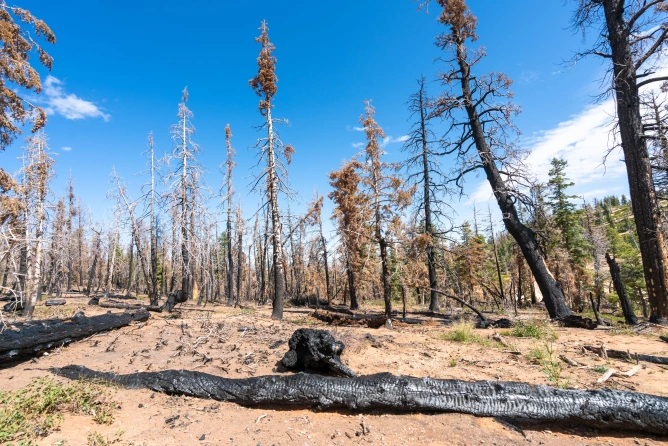
Diversity also helps in the case of fires. Pine forests can burn intensely because they contain a lot of flammable material. When oaks grow alongside pines, fires tend to be less severe and cause less damage. González-Martínez says mixed forests can slow the spread of fire and allow the survival of more fire-tolerant species.
François Lefèvre, a geneticist at INRAE, points out that diversity must be considered at multiple levels: within a forest, at the landscape scale, and at the country level. A diverse forest in one location is not sufficient if entire areas remain dominated by the same vulnerable species.
One of the difficulties is that many European forests are monocultures or consist of a small number of species. These are easier to manage, harvest, and process economically, but they become more vulnerable as the climate changes or when a new pest appears.
European forestry is largely built around a few well-studied commercial species, such as Norwegian spruce or beech. Most tree species in Europe remain little analyzed from the perspective of their use in forest management.
Change starts with reproductive material: fruits, seeds, cones, and plant parts that determine what actually gets planted. OptFORESTS researchers are assessing the European nursery sector, estimating future needs for planting material, and working with nurseries to develop production capacity for a wider range of species.
This change requires time and investment. Nurseries need to collect and maintain more types of seeds, adapt growing practices to different species, and cover knowledge gaps regarding less commonly used trees in forestry.
The project also develops planning tools for forest managers. These can help them explore which species and genetic combinations are best suited for local conditions and future climate scenarios.
Some results are already being applied. In Norway, forest managers are planting seedlings resistant to ash dieback disease. In Slovenia, experimental plantations are being restored with seed sources and seedlings developed through the project.
Researchers are also tracking the integration of genetic information into traditional forest breeding models. Simulations can show how different strategies influence long-term resilience and what type of management can reduce risks.
Cross-border collaboration is important because changes do not hit all forests at the same time. Lefèvre says some countries are facing problems today that others will encounter in the next decade.
For the economy, the risk is direct. If trees do not develop well, the quantity and quality of wood available for construction, paper, and other industries decreases. Himanen says the state of the forests thus becomes a practical economic issue, not just an ecological one.
Decisions made now will have effects for decades. Lefèvre reminds us that a forest manager does not plant for just one year, as in agriculture. Himanen says that planters make genetic decisions for a hundred years, and the best insurance is to include as much genetic diversity as possible.
OptFORESTS is funded through the EU's Horizon program. The project is connected to the EU's goals regarding forest restoration, biodiversity, and adaptation to climate change.
Latest News
22:52
22:34
22:28
21:56
21:29
See more news
NEWS ON THE SAME TOPICS
.webp)