Day of fire in Brussels. Europe, caught between Orban's veto and the wars in Ukraine and Iran / The stakes of Nicușor Dan's meeting with the NATO chief



Always see our news on Google
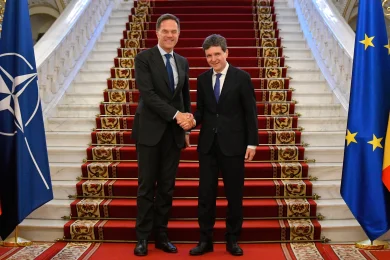
Thursday's summit in Brussels becomes a stress test for the European Union's ability to maintain its strategic cohesion at a time when funding for Ukraine and the response to the war in Iran are directly linked to its credibility as a security actor, while Romania seeks to strengthen its transatlantic profile through the meeting of President Nicușor Dan with NATO Secretary General, Mark Rutte.
Orban and the blockage on the loan for Ukraine
The immediate stake of the summit is the unlocking of the 90 billion euro loan for Ukraine, politically approved in December, but called into question by Viktor Orban's subsequent veto. The Hungarian Prime Minister explicitly linked the financial agreement to the resumption of oil deliveries through the Druzhba pipeline, damaged following a Russian attack and at the center of a recent technical agreement between Kiev and Brussels for EU-funded repairs.
Diplomats cited by Politico and Reuters speak of a new red line in Budapest's behavior and a dangerous precedent: a leader renegotiating his own agreement with the other 26 during a full electoral campaign, calling into question the seriousness of the European Council's decisions.
For the rest of the capitals, the issue is no longer just short-term funding for Ukraine, but the risk that Orban's model – using the veto as a tool for internal campaigning and bilateral negotiation – will be replicated by other leaders in the future. Therefore, options on the table range from intensifying the conditionality of the rule of law to scenarios for suspending Hungary's rights in the event that the blockage persists after the Budapest elections, even though so far a sufficient majority has not been achieved to fully activate Article 7 to take Hungary's voting rights away.
EU credibility in the wars in Ukraine and Iran
The external context amplifies the stakes of Thursday's meeting: Kiev risks running out of resources in a few weeks without this funding package, which would undermine not only Ukraine's ability to continue its war effort but also the EU's message that it can protect and stabilize its eastern neighborhood. Meanwhile, the war in Iran blocks the Strait of Hormuz, through which about one-fifth of global oil and gas transport passes, putting pressure on markets and fueling the perception of a Union that always reacts on the go to crises, instead of preventing them.
In relation to Washington, the summit takes place at a time when President Donald Trump has openly criticized NATO and European allies for their lack of support in the operation in Iran, warning that the alliance "will have a very bad future" if it does not get more involved. Although many NATO states have refused to provide direct military support in Iran, they are pressured to show that they can contribute to securing Hormuz and maintaining energy flows – both to meet American expectations and to protect themselves economically.
Romania, Rutte, and the transatlantic stakes
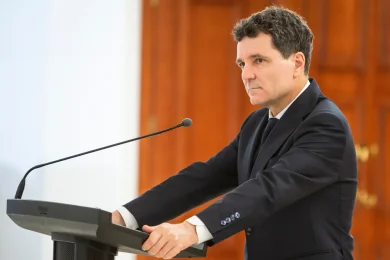
The meeting at NATO headquarters between President Nicușor Dan and Mark Rutte has a double stake: regional security and re-anchoring the transatlantic relationship in the tense context with Trump. According to the Presidential Administration, the discussions focus on security developments on the Eastern Flank, especially in the Black Sea region, measures to strengthen deterrence and collective defense, as well as increasing Romania's security through NATO.
The meeting comes just a week after Romania accepted the White House's request to deploy American soldiers and equipment in two bases on national territory, at a time when most NATO states have refused to support the US operation in Iran. President Dan thus has the opportunity to use the dialogue with Rutte to project Romania as an "over-compliant" ally: a state that increases its defense spending, provides multidimensional support to Ukraine, and explicitly calls for strengthening support for vulnerable partners, such as the Republic of Moldova, given the Russian hybrid actions.
What Romania seeks at the summit
In the logic of these moves, Nicușor Dan's participation in the European Council is more than just an extension of a visit to NATO: Bucharest wants to position itself as a pivot state between Washington and Brussels at a time of transatlantic tensions. The acceptance of American troops allows Romania to argue, in front of European partners, that solidarity with the US must be complemented by a joint effort to keep Hormuz open and to manage the economic impact of the war in Iran, without undermining the support effort for Ukraine.
At the same time, Romania has an interest in the EU quickly finding a way to overcome the Hungarian veto, precisely because any delay in funding Kiev directly affects the security of the Black Sea and the hybrid pressures in the Republic of Moldova, areas where Bucharest has committed to play a leading role. How European leaders will manage Orban's "last show" and how they will connect the Ukrainian agenda with the Iranian one depends not only on the stability of the eastern neighborhood but also on the credibility of the European project as a pillar of security for its own member states.
*****Synthesis made with the help of a data monitoring flow provided by the media monitoring platform NewsVibe Romania. The analysis, data, and images presented have been enhanced with the help of Machine Learning and Artificial Intelligence tools
Latest News
07:19
23:04
22:36
22:16
22:01
See more news
NEWS ON THE SAME TOPICS