SYNTHESIS Informat.ro / What Romania took away from the NATO summit in Ankara, while Donald Trump tried to monopolize the discussion


Always see our news on Google
Romania leaves the NATO summit in Ankara with an enhanced profile on the Eastern Flank, with access to the new Defense Bank, involvement in initiatives related to drones and aerial surveillance, and participation in deep strike missile development programs – while, at the level of public perception, Donald Trump's show has pushed these concrete "deliveries" of the Alliance into the background.
What Romania takes away from the NATO summit in Ankara
The NATO summit in Ankara was built by Mark Rutte and allied leaders as a "delivery summit": not a moment for new historic declarations, but a stage in which the promises made in The Hague and Vilnius are transformed into real capabilities – money, contracts, armament programs.
For Romania, the main stake was to strengthen the security of the Black Sea, to assert and confirm its role as a key player on the Eastern Flank, and to connect more directly to the new wave of investments and industrial cooperation within NATO.
The Romanian mandate, established in the Supreme Council of National Defense, explicitly aimed at: strengthening NATO's presence in the Black Sea region, additional support for Ukraine and the Republic of Moldova, as well as promoting the national defense industry within the Defence Industry Forum. Radu Miruță, the interim Minister of Defense, explained before the summit that Romania would support "the strengthening of capabilities on the eastern flank" and bring to the forefront the issue of drones and the impact of the conflict in Ukraine on the states in the region.
Romania, founding member of the Defense, Security and Resilience Bank
One of Romania's most concrete gains in Ankara is participation as a founding member of the new Defense, Security and Resilience Bank (DSRB), an international financial institution created at the initiative of Canada and supported by several allies.
Agerpres notes that Romania will host a secondary headquarters of this bank, which gives it a privileged role in the financing of defense, security, and critical infrastructure projects – from the armament industry to dual-use investments in energy and transport infrastructure.
In simple terms, Romania enters the core that will decide and manage part of NATO's financial flows towards defense and resilience projects, which can bring it, in the medium term, easy access to funding for its own programs and increased visibility in front of other allies.
For an audience looking for "Romania at the NATO summit in Ankara", this element – "Romania, founding member of a NATO bank for defense and security" – is one of the strongest impactful messages.
Drones, aerial surveillance, and deep strike programs
At the Defence Industry Forum in Ankara, NATO presented a massive package of contracts and new initiatives: at least $50 billion in agreements and programs aimed at transforming the increase in military spending into concrete capabilities.
Three main directions:
The Drone Edge initiative, through which allies commit to invest over $40 billion in five years in counter-drone defense capabilities (C UAS), a marketplace for anti-drone solutions, and a fivefold increase in the number of drone operators by 2027.
Strengthening aerial and maritime surveillance (ISR) through contracts for platforms like GlobalEye and drones MQ 4C Triton, plus strengthening existing early warning and surveillance programs (for example, at Sigonella, with RQ 4D Phoenix).
The launch of a joint "deep precision strike" program: 12 countries, led by the United Kingdom, commit to invest over £37 billion (about $50 billion) in the next decade for the development of precision missiles with ranges between 300 km and over 2,000 km. Romania is involved in this dynamic in two ways. On one hand, through involvement in initiatives regarding drones and aerial surveillance, which is directly related to its concern for the security of the Black Sea, where fragments of Russian drones have been found on Romanian territory in recent years. On the other hand, by joining memoranda related to the production and maintenance of existing missile systems (Stinger, AMRAAM, PAC 3, ATACMS, PrSM) and participating in joint programs for the development of deep strike capabilities, so that the Romanian industry and armed forces are compatible with the new generation of NATO weapons. Thus, Romania leaves Ankara with initiatives and agreements related to drones and aerial surveillance, plus participation in the Alliance's production and development programs for deep strike missiles, with ranges from 300 km to over 2,000 km.
NSM, JSM, and the path to an air-launched cruise missile
On a national level, one of the most important details – noted by Hotnews – is related to precision strike missiles. Romania has also joined the "NSM family": the contract for the coastal Naval Strike Missile systems, developed by Kongsberg and Raytheon, provides the Naval Forces with anti-ship missiles with a range of over 300 km for the defense of the coastline and the Black Sea. NSM is officially described as a "long-range precision strike weapon" for maritime defense, capable of hitting both ships and – in certain configurations – land targets, from coastal or ship-based launchers, ensuring interoperability with NATO allies. The Joint Strike Missile (JSM) is the air-launched variant of the NSM: a missile designed to be integrated on aircraft such as the F 35, with a range of several hundred kilometers, capable of striking naval and land targets deep into enemy territory. Agerpres specifies that, in the context of the Ankara summit, Romania joined the "Specific Coalition for the Naval Strike Missile and Joint Strike Missile", alongside the USA, the UK, Norway, and other states, which means participation in industrial and operational cooperation related to these systems, not just the acquisition of NSM. Hotnews notes, in an analysis article, that an "overlooked detail" is that Romania is thus opening the way to "its first truly offensive weapon" – an air-launched cruise missile, with a range of over 500 km, launched by the Air Force aircraft.
In other words, if NSM defends "Romania's backyard" in the Black Sea, an air-launched cruise missile, comparable in profile to JSM – even if there is not yet an official announcement of JSM acquisition – would allow Romania to strike important military targets deep into the territory of a potential aggressor, in line with the logic of the deep strike programs launched in Ankara.
However, attention, Romania does not yet have its own air-launched cruise missile, but participation in the NSM/JSM coalition and NATO deep strike missile programs creates the technical and political framework so that, in future modernization packages, it can adopt such a capability.
The Black Sea, drones, and Romania's defense industry
Regionally, Bucharest used the summit to once again put the Black Sea at the center of discussions. Nicușor Dan stated, in his declarations, that the Ankara declaration explicitly emphasizes the unity of the Alliance, Article 5, and the transatlantic link, but also insists on the importance of the Eastern Flank and the Black Sea region.
Mediafax and other Romanian sources reported that Romania went to Ankara with a "heavy list of requests", in which the threat posed by drones and the security of the Black Sea were at the forefront, the objective being to increase NATO's presence and investments in surveillance and air defense in the area.
At the same time, the economic and specialized press noted that Romanian companies in the defense industry used the Defence Industry Forum to strengthen their partnerships and to delve deeper into NATO supply chains: munitions, vehicles, C4ISR solutions, joint production projects. NewsVibe, in the Monitor of Ministers, observes that Ankara "has signed a greater pooling of NATO resources", in which Romania tried to secure a better position both for military capabilities and for industry.
How Donald Trump monopolized the NATO summit and pushed investments into the background
Against this backdrop of money, contracts, and technical programs, Donald Trump managed, once again, to monopolize media attention at the NATO summit.
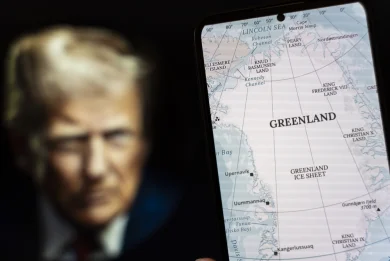
From statements about the lack of support from allies for the US campaign in Iran to the resumption of the Greenland theme, the American president turned Ankara into a stage where his speech oscillated between threats, pressures, and claims of "love" and "unification".
Threats, Greenland, and tone changes
In the Romanian press, Trump is quoted as saying that the withdrawal of other American troops from Europe depends on "Greenland" and suggesting that he could withdraw up to a third of American forces stationed on the continent if he does not obtain "a very good deal" for Greenland. Politico and The Guardian describe how, in discussions with European leaders, Trump even evoked the idea of stopping or limiting trade with certain states – Spain being mentioned – as a pressure tool, a type of rhetoric that produces spectacular headlines and fuels the perception of unpredictability. At the same time, the American president continued to publicly complain about the lack of support from allies for the US campaign in Iran and to declare "loved", reporting that leaders present at the summit had told him "we love you, sir" and talking about "tremendous love" and "great unity" in the last hours of the summit. The oscillation of tone – from threats to affectionate statements – created the impression that Ankara is, first and foremost, "the summit where Trump threatens and then talks about love", leaving the technical decisions regarding investments in defense in the shadows.
Trump vs. Rutte: political speech vs. capability language
Mark Rutte, NATO's Secretary General, tried to manage this context calmly and keep the attention on the declared objective of the summit: implementing spending commitments, increasing armament production, strengthening European capabilities.
In public appearances, Rutte praised Trump, stating that the American president achieved what Eisenhower had tried – to make Europeans spend more on defense – a compliment that Trump presented as validation of his pressure strategy.
While Rutte spoke about "deep precision strike", "dense air and missile defense", "warfighting cloud", and the defense bank, Trump dominated media flows with memorable remarks and controversies. The question posed to Rutte – "Does Trump hurt your self-respect?" – well captures the tension between the volatile speech of the American president and NATO's attempt to build a "strategic self-respect" through actions: spending, contracts, programs, not by adapting to every change of tone.
It is evident the scene where Mark Rutte stands next to Donald Trump while he talks about how the US should control Greenland and how "Denmark has nothing to do with it", and NATO's chief's reaction is not to contradict him outright, but to shift the discussion to strategic ground – Russia, China, Arctic routes, the need to break the ice, without questioning Denmark's right to the territory.
Just as in the case of Iran, where American attacks are described by Rutte as "absolutely necessary" and where he says that "Trump was right" to push allies towards war and rearmament, the Greenland moment shows how the new Secretary General chooses to minimize the political shock of the US president's statements and to validate, in practice, the hard line, while the Alliance tries to convey the message of "unity" and unprecedented investments in defense.
NATO investments, partially overshadowed by Trump's chaotic show
Sources such as Foreign Policy, Euractiv, and Curs de Guvernare emphasize that the Ankara summit marks "stunning" increases in military spending, major armament contracts, and the launch of deep strike programs, but these elements remain in the background compared to the Trump-centered narrative.
NATO insists that Europeans are "delivering": more states exceed the 2% of GDP threshold for defense, approaching the 5% target set in The Hague for 2035, and committing real money to drone, missile, and air defense programs – and Romania is part of this line, with plans to reach 3% of GDP for defense sooner than the common deadline.
However, for the broader audience, Ankara will likely remain in memory as "the NATO summit with Trump and Greenland", not as the moment when NATO launched the deep strike missile program and the defense bank.
Reuters notes that President Donald Trump caused chaos at the NATO leaders' summit on Wednesday, demanding that the United States sever trade ties with Spain and reiterating his claims on Greenland, only to later change his tone and speak about feelings of affection and "great unity".
He also spoke in a much warmer manner about Volodymyr Zelensky during his meeting with the Ukrainian president, a stark contrast to the harsh criticisms he had directed at him during a meeting at the White House last year.
*****Summary made with the help of a data monitoring flow provided by the NewsVibe Romania media monitoring platform. The analysis, data, and images presented have been enhanced with the help of Machine Learning and Artificial Intelligence tools.
Latest News
12:41
12:24
12:04
11:45
11:30
See more news
NEWS ON THE SAME TOPICS