SUMMARY Informat.ro / “Permanent control” or NATO compromise? What Trump would seek to obtain through the agreement for Greenland



Always see our news on Google
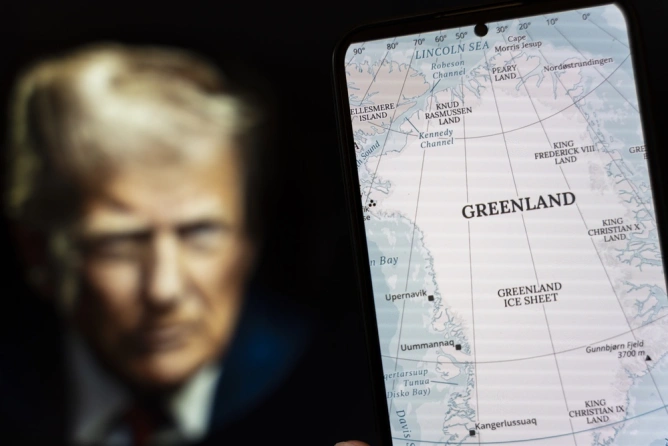
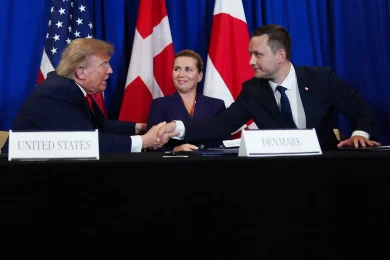
President Donald Trump is set to sign on Tuesday, in New York, an agreement with Danish Prime Minister Mette Frederiksen and Greenland’s Prime Minister, Jens-Frederik Nielsen, paving the way for a significantly larger U.S. military presence on the Arctic island. The agreement is being presented as a way out of the diplomatic dispute sparked by Trump’s repeated insistence that the United States take control of Greenland, but the text is not public, and Washington’s and Copenhagen’s positions on its significance remain markedly different.
The trilateral ceremony is scheduled to take place at the United Nations General Assembly at 10:30 a.m. ET, or 5:30 p.m. in Romania. According to Reuters, the agreement would allow the United States to reopen a Cold War-era military facility at Narsarsuaq, in southern Greenland, and develop a second site at Mestersvig, on the east coast, currently used by Denmark’s elite dog-sled patrol, “Sirius.”
From the idea of buying Greenland to a NATO crisis
Trump’s interest in Greenland is not new. During his first term, in 2019, he said he had discussed buying the island from Denmark, a proposal firmly rejected by Copenhagen. Mette Frederiksen described the idea at the time as “absurd,” and Trump subsequently canceled his planned visit to Denmark.
The issue returned forcefully before and after the start of Trump’s second term. At the beginning of 2025, he refused to rule out the use of military force to take over Greenland, while Donald Trump Jr. visited the island, claiming that locals would benefit if the territory became part of the United States.
The pressure escalated in January, when Trump suggested that Washington would do “something,” regardless of whether Greenland and Denmark agreed. The American president’s refusal to rule out military or economic measures to acquire the island triggered a diplomatic crisis within NATO and forced Copenhagen and Greenland’s administration into intense negotiations with the United States.
The stakes are strategic. Greenland, a semiautonomous territory of the Kingdom of Denmark, lies between North America and the Arctic, in an area important for military surveillance, early missile warning, and control of northern routes. The island also has considerable energy and mineral resources, amid growing geopolitical competition over access to critical raw materials.
What the agreement would allow
Three people familiar with the negotiations told Reuters, speaking on condition of anonymity, that the United States would expand its military infrastructure beyond Pituffik Space Base, the only major American facility still operating in Greenland today. Narsarsuaq would represent the reactivation of a former Cold War base, while Mestersvig would add an American presence on the island’s eastern coast.
The expansion would be the most significant increase in the U.S. military footprint in Greenland since the Cold War. During that period, the United States operated 17 military installations on the island and had more than 10,000 troops deployed there; currently, approximately 150 American troops are stationed at Pituffik.
However, the agreement’s legal and operational details remain unclear ahead of the signing. Reuters reports that it is not yet known whether the document will amend the 1951 U.S.-Danish defense treaty, the legal basis for the American presence in Greenland, or create a separate framework. People familiar with the agreement also said that some details had not been finalized before the ceremony.
The White House declined to comment in detail on the agreement’s content. A spokesperson merely repeated that signing the document would “ensure and defend the security of Greenland and the United States.”
Trump claims “permanent control”
Donald Trump presented the agreement in much broader terms than the publicly available information. On Friday, the president said that it grants the United States “permanent control over security and all other necessary aspects in Greenland.”
That wording, however, goes beyond what emerges from reports about the agreement. Reuters indicates that the deal represents, rather, a retreat from Trump’s previous objective—directly taking over Greenland—and a substantial strengthening of American military infrastructure. Based on the available information, the agreement does not appear to involve a transfer of sovereignty or administration over the territory.
This distinction is politically essential. Greenland has a population of approximately 57,000, extensive internal autonomy, and the right to self-determination, while polls cited by the international press have shown overwhelming opposition among Greenlanders to the idea of annexation or takeover by the United States.
Denmark invokes sovereignty and NATO
Copenhagen did not directly respond to Trump’s statement regarding “permanent control.” Denmark’s position, however, is that the agreement respects the sovereignty of the Kingdom of Denmark and Greenland’s right to self-determination.
Danish Foreign Minister Lars Løkke Rasmussen emphasized that the agreement would place Arctic security under NATO’s collective oversight, rather than leaving it solely to the United States and Denmark. This is a significant clarification: it seeks to frame the expansion of the American military presence within an allied architecture, rather than an arrangement that would institutionalize Washington’s unilateral influence over the island.
Prime Minister Frederiksen and Greenlandic Prime Minister Jens-Frederik Nielsen are thus set to sign a document that gives America greater strategic access while attempting to avoid the appearance of a surrender of control. For Denmark and Greenland, the NATO formula provides a way to address genuine security concerns in the Arctic while maintaining the principles of sovereignty and local autonomy.
Trump’s agreement opens Greenland to American investment
The agreement may also have a significant economic component. The Wall Street Journal writes that the new security arrangement could ease the tension created by months of American pressure and facilitate investment by U.S. companies in Greenland, an economy facing difficulties but possessing important mineral resources, according to the Wall Street Journal.
For the American and Greenlandic business communities, easing the political conflict could reduce the stigma associated with cooperation with the United States and make projects in areas such as infrastructure, mining, and resource development easier to support. The potential benefit for Nuuk is access to capital and economic projects; the risk is that investments may be perceived locally as an extension of American geopolitical pressure.
Tuesday’s agreement does not automatically settle the dispute over Greenland, since its text has not been published and the Trump administration’s interpretation contrasts with the Danish message regarding sovereignty and NATO. It does, however, appear to establish a compromise: the United States gains an expanded military presence and a possible economic opening, while Denmark and Greenland formally retain political and legal control over the island.
Summary prepared with Perplexity
Read also
ANALYSIS. What NATO risks under pressure from Trump’s demands to take over Greenland
Latest News
23:08
22:58
22:57
22:55
22:54
See more news
NEWS ON THE SAME TOPICS
.webp)