RADIOGRAPHY Bolojan's administration reform: between good intentions and the "on the ground" reality



Always see our news on Google
The administrative reform adopted by the Bolojan Government promises to cut the budget apparatus without affecting base salaries, to save billions, and to free up resources for economic relaunch. The essential question is not how much is cut on paper, but whether these cuts will genuinely change the way the state operates or if they will just be a new accounting exercise.
What the Government says it will do
The Executive adopted on Tuesday, in an extraordinary evening meeting, the ordinance regarding the administrative reform along with the economic relaunch package. The text provides for the dismissal of approximately 13,000 employees from local administration, a 10% reduction in personnel expenses for most public institutions, and the elimination of thousands of positions at both central and local levels.
At the central level, positions are being reduced in ministries, in the prefect's institution (minus 25% of positions), and hundreds of positions for dignitary advisors are being cut. At the local level, municipalities must reduce the maximum possible number of positions by 30%, with an initial step of 10% by 2026. The Government estimates savings of about 1.6 billion lei by 2026, which are expected to increase to over 3 billion lei annually in the period 2027–2030, funds that would support the economic relaunch package.
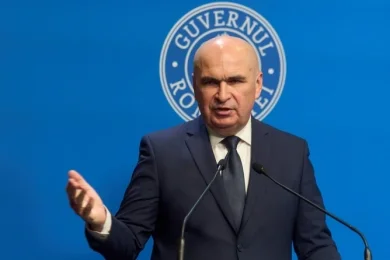
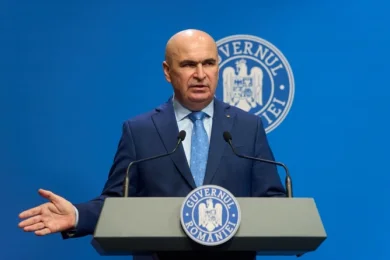
Prime Minister Ilie Bolojan speaks of "personnel audits" and the elimination of "unjustified" positions in oversized administrations, insisting that hospitals, emergency services, and other sensitive areas are exempt from cuts. The political scheme is clear: the administrative reform must demonstrate that the state is cleaning up its own expenses before asking more from the private sector.
What is being cut
About 13,000 positions from local administration (municipalities, county councils), through a 10% reduction in occupied positions and limiting personnel norms.
A 25% reduction in positions from the prefect's institutions, plus restructuring in decentralized services.
Elimination of over 6,100 positions for personal advisors and other similar functions at the central level.
A 10% cut in salary budgets for "most institutions," through reductions in bonuses and other rights, while maintaining base salaries.
In parallel, unpaid fines may be increased by up to 60%, and the state gains more aggressive tools for recovering debts from individuals.
What unions and employers contest
Beyond the numbers, the procedure and secondary effects raise questions. The Economic and Social Council issued an unfavorable opinion, stating that the ordinance is "vulnerable from a constitutional perspective," that it does not meet the conditions to be adopted through an emergency ordinance, and that it affects the stability of public function. Unions in administration speak of a "reform made through legislative improvisation," accusing the Government of ignoring the observations of the relevant ministries and preferring to rush through a package with a major impact on the status of civil servants.
The Federation of Unions at the Government warns that professional evaluations can be transformed into tools for political purges, and that job cuts may be followed by outsourcing services to private firms, with final costs higher than the salaries of dismissed civil servants. Employers contest, in turn, the lack of a real impact analysis: there is still no clear map of the institutions that will disappear or merge, nor a transparent assessment of the risk of blockage in providing public services.
Reform or rebranded austerity?
A central element of the criticism is that, although the name speaks of "reform," the core of the ordinance remains an adjustment in the personnel chapter: base salaries remain, changes are made to bonuses, the number of positions, and salary budgets, without a profound rethinking of the roles and procedures of administration. Parallel projects aimed at digitization, reducing bureaucracy, and simplifying the citizen-state relationship remain secondary, while measures with immediate budget impact are pushed to the forefront.
Moreover, the projected savings have decreased compared to the initial drafts, from over 3.3 billion lei estimated initially for 2026 to about 1.6 billion in the politically agreed version, which shows successive compromises within the coalition and a reduced appetite for cuts across the board. In this context, the question becomes whether Romania is witnessing a genuine reform of administration or a form of politically calibrated austerity, where influential areas remain almost intact, and sacrifices concentrate on the weaker links.
Who loses
About 13,000 civil servants from local administration – especially in small municipalities and county councils with oversized apparatus.
The prefect's institutions and other decentralized structures – minus 25% of positions, with the risk of additional burden on the remaining staff.
Staff benefiting from bonuses and special allowances, where the 10% cuts in salary budgets will be felt most strongly.
Employees who fall under opaque or arbitrary evaluations, in a context where unions warn of "political purges."
Citizens in localities with already undersized administrations, where the elimination of positions without intelligent reorganization can lead to blockages and poorer services.
What risks the Government
Politically, Bolojan and the coalition are taking a double-risk bet. On one hand, the reform is designed to send a signal to Brussels and financial markets that Romania is taking fiscal consolidation seriously – otherwise, the deficit and debt could spiral out of control, risking the loss of European funds and increasing financing costs. On the other hand, the abrupt manner of adoption, with emergency ordinances contested by the Economic and Social Council and unions ready to protest, could turn the reform into a source of internal instability.
From an operational perspective, the risks are equally high: if cuts stop at the level of the organizational chart and bonuses, without a real reassessment of procedures and without genuine digitization, the administration will remain just as cumbersome, only with fewer people to carry the same volume of tasks. Additionally, a rushed implementation could lead to dysfunctions in tax collection, in managing European projects, and in providing public services – exactly the areas where the Government cannot afford any hiccups.
Predictable repercussions
Legal challenges and possible constitutional criticisms, following the negative opinion of the Economic and Social Council and accusations regarding the infringement of civil servants' rights.
A wave of protests and strikes in administration, especially if the cuts prove to be unequal or arbitrary.
Blockages in the implementation of projects with European funds and in revenue collection, if the apparatus is reduced without functional reorganization.
The loss of political credibility for Bolojan as the "man of reform," if after a few years only cuts to bonuses remain, without a more efficient administration.
Conclusions
At this moment, the administrative reform is more of an open process than a stable reality. How "real" it will be depends on three things: whether the cuts transform into restructuring, whether the Government takes on transparent corrections along the way, and whether society – from civil servants to the business environment – is involved beyond the level of window-dressing consultations.
In the absence of credible fiscal consolidation across the entire budget (pensions, salaries, subsidies, investments), there is a likelihood that, at the first external shock or deficit deviation, the government – this one or the next – will revert to the reflex solution of raising taxes.
Contradictory messages in recent years (taxes raised, then relaxations "for relaunch") create expectations in business that the rules can change again, which caps the positive impact of the current package anyway.
For now, Bolojan's reform looks more like a tense combination between a real need for fiscal consolidation and a brutal adjustment exercise through emergency ordinance, rather than a lucid and consensual reconstruction of the state. As long as this ambivalence remains, the correct title remains an open question: "How real is the administrative reform?" – or is it, in fact, just another wave of accounting cuts, wrapped in a big word.
Latest News
23:06
22:49
22:37
22:22
22:03
See more news
NEWS ON THE SAME TOPICS