ANALYSIS The PNRR money, public sector salaries and the real stakes: who is willing to sacrifice the tranche of 770 million euros




Always see our news on Google
The public discourse has shifted from statements supporting the adoption of the Unified Salary Law, so that we can claim the tranche of about 770 million euros, negotiated and agreed with the EU through the PNRR, to politicians who today say that it is better to give up this money than to adopt the law in its proposed form now.
The natural question that arises is whether we should give up this money or not and what, in essence, is the purpose? For whom is it worth making sacrifices? For someone who sees reform as a real correction of the state, not as an operation to protect existing salaries. Because the PNRR money is worth keeping only if the law truly changes the salary system: fewer exceptions, more transparency, and a credible unified grid.
When 770 million becomes a test of power
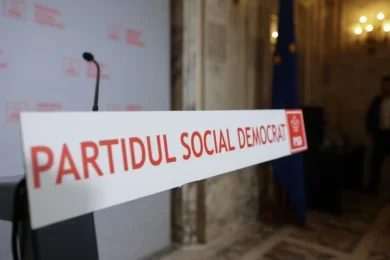
Behind the formula "it is better to lose the money than to adopt the law as it is" lies, at least declaratively, a rejection of the reform, but rather a rejection of the reform in its current form. According to recent reports, the PSD refuses to vote for the project without amendments that would protect the incomes of public employees, while the PNL and part of the USR push the idea that the PNRR milestone cannot be missed. AUR also rejects the project, but rather from the register of political protest and distrust in the way the state is making its reforms.
This transforms the sum of 770 million euros into a test of priorities: do we pay the political cost of a tough law or do we accept the financial cost of postponement? In the public debate, the two camps are not just discussing money, but about who bears the bill for the masked austerity in reform.
Positions
The camp that says the law "in its current form" should not be accepted is primarily made up of the PSD, while AUR also positions itself against it. Their argument is that a salary reform should not lead to reductions for certain categories, especially in an already tense system, where bonuses and differences in treatment have become the rule, not the exception.
PNL supports the opposite: that Romania risks serious penalties and that the reform must be completed, even if this means sacrifices and the reduction of some privileges. In a more political formulation, PNL says that you cannot ask for European money and, at the same time, block exactly the reforms for which that money was conditioned.
What the law aims for
The new law is presented as a tool for unifying salaries in the public system, reducing inequalities, and providing clearer correlations between functions, ranks, and remuneration. The project includes capping bonuses, a stricter salary hierarchy, and a more uniform mechanism for calculating incomes.
This means that, in theory, the law should cut arbitrariness: fewer exceptions, fewer negotiations on pieces, fewer gains obtained through bonuses and derogations. That is precisely why it is contested: where the reform promises discipline and uniformity, it is perceived by opponents as a loss of income and a harsh rearrangement of privileges.
What the challengers want
The challenge does not generally target the idea of a single law, but rather the way it distributes losses and gains. Trade unionists and the PSD party mainly demand the protection of vulnerable categories and a salary coefficient that does not erode purchasing power or push the administration towards an exodus of specialists.
In simple terms, the challengers want a law that corrects inequalities without producing severe cuts or turning the reform into a mere accounting shift. They accept the idea of change, but do not accept that the change should be disproportionately paid for by public employees with average or low incomes.
Are the calculations correct?
Here the answer is: partially. It is correct that there is a real financial stake of around 770–972 million euros associated with the PNRR milestones in this area of reform. But it is incorrect to reduce everything to the formula "either this law, or we automatically lose the money," because in Brussels what matters is the fulfillment of the milestone, the timeline, and the content of the reform, not just the vote of a law with a similar title.
Equally important: the idea that "if we give up the money, we lose nothing" does not hold water. A potential failure to fulfill the reform leaves Romania without funding and without credibility in other future negotiations, which raises the political and budgetary cost beyond the immediate sum.
What is actually at stake
This dispute is not just about a salary law, but about the model of the state that the parties accept: one that standardizes and cuts exceptions or one that conserves the internal balances of the public system. For PNL, the answer is that it is worth keeping the tranche and making the reform even at political costs. For PSD and AUR, it is worth negotiating harder, even at the risk of losing money, if the law hits too hard on incomes and the administrative structure.
In short: regardless of how large the sum is, the real stake is who pays for the reform and how deeply the state delves into its own privileges.
Analysis conducted with the support of Perplexity
Latest News
15:05
14:55
14:45
14:35
14:30
See more news
NEWS ON THE SAME TOPICS

.webp)