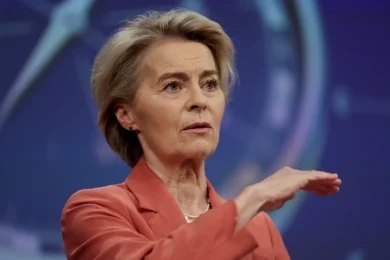
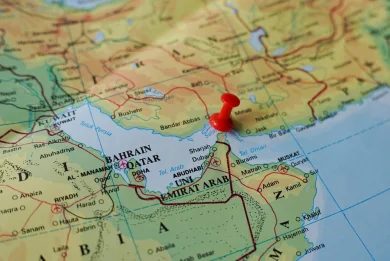
Ursula von der Leyen calls for the immediate reopening of the Strait of Hormuz following the agreement between the United States and Iran



Always see our news on Google
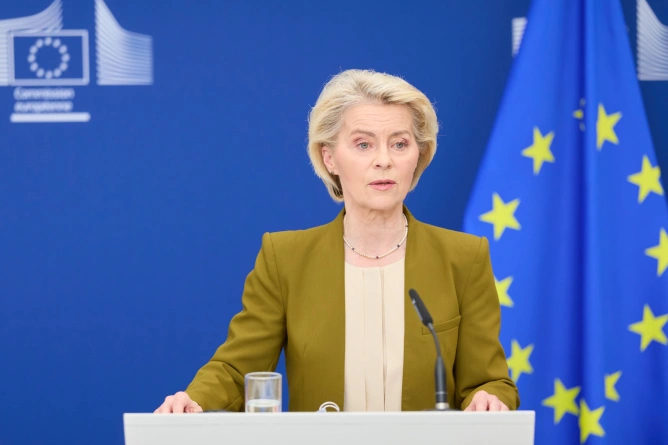
The President of the European Commission, Ursula von der Leyen, welcomed the agreement between the United States and Iran and called for its rapid and complete implementation, with the immediate reopening of the Strait of Hormuz and the restoration of tax-free navigation. The head of the European executive linked the agreement to regional stability, the global economy, energy security, and broader peace negotiations in the Middle East, warning that energy dependencies have once again been turned into a tool of pressure.
The President of the European Commission, Ursula von der Leyen, welcomed the agreement between the United States and Iran and called for it to be implemented quickly and fully by all parties. She stated that the immediate priority is the reopening of the Strait of Hormuz, the restoration of tax-free navigation, and using the agreement as a starting point for broader negotiations on peace and security in the Middle East.
In short
Ursula von der Leyen welcomed the agreement between the United States and Iran, concluded after sustained diplomatic efforts by several partners.
The President of the European Commission called for the immediate reopening of the Strait of Hormuz and the restoration of tax-free navigation.
Von der Leyen stated that the agreement should open broader negotiations on peace and security in the Middle East, including the nuclear, ballistic, and regional activities files of Iran.
The head of the Commission warned that energy dependencies have once again been turned into a weapon and called for diversified supply routes and alternative export corridors.
Von der Leyen asserted that the agreement should allow for the immediate reopening of the Strait of Hormuz, one of the most sensitive maritime routes for global energy transport. In her statement, she emphasized that freedom of navigation must be restored tax-free, as this is essential for both regional stability and the global economy.
The President of the Commission presented the agreement as a broader diplomatic opportunity. She stated that it "opens the door" to broader negotiations on peace and security in the Middle East and that the process should lead to the conclusion of Iran's nuclear and ballistic programs, as well as its destabilizing activities in the region.
The statement links the agreement to the situation in Lebanon. Von der Leyen stated that there can be no peace in the Middle East as long as Lebanon is "in flames" and reiterated her call for all parties to respect the sovereignty and territorial integrity of the country. She also called for the implementation of a real ceasefire, at a time when the regional conflict remains connected to multiple fronts.
The energy dimension occupies an important place in the President's message. Von der Leyen stated that this crisis sends a clear lesson, as energy dependencies have once again been used as a tool of pressure. She called for the diversification of supply routes and the development of alternative export corridors, so that the European Union and its partners can reduce dependence on the strategic blockage represented by the Strait of Hormuz.
The subject will be discussed in Evian, where G7 leaders are set to meet with partners from the Gulf and the broader Middle East. Von der Leyen conveyed that Europe is ready to play its role in this process, both on the diplomatic front and in discussions regarding energy security and regional stability.
Latest News
08:29
08:14
08:07
07:55
07:42
See more news
NEWS ON THE SAME TOPICS