20 suspects arrested in Ecuador in an investigation into a cocaine route to Europe




Always see our news on Google
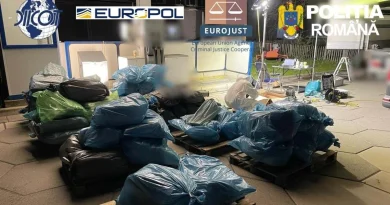
A joint operation by the authorities of Ecuador and Spain, supported by Europol, led to the arrest of 20 suspects and 23 searches in Ecuador in a case involving shipments of cocaine concealed in commercial loads of tropical fruit. The network under investigation had links to logistics hubs in Belgium, Spain, and the Netherlands. The more than 43 tons of cocaine mentioned by Europol represent cumulative seizures in 13 operations carried out between 2022 and 2026, not the amount confiscated in the action on October 8.
Twenty suspects were arrested in Ecuador in an operation against a network accused of transporting cocaine from Latin America to Europe by concealing the drugs in commercial shipments of tropical fruit. The action on October 8 included 23 searches at multiple locations in Ecuador and was carried out as part of a joint investigation by the Ecuadorian and Spanish authorities, with support from Europol.
The investigation has a direct European component. According to Europol, the network had developed bases and connections in key European logistics hubs, including Belgium, Spain, and the Netherlands, and had operational links in Peru and the United Arab Emirates. The case shows how traffickers attempt to integrate illegal shipments into normal commercial flows between Latin America and European ports.
In brief
The operation on October 8 led to 20 arrests and 23 searches, all in Ecuador.
The network is suspected of concealing cocaine in commercial shipments of tropical fruit destined for Europe.
The investigation identified links with ports and logistics hubs in Belgium, Spain, and the Netherlands.
More than 43 tons of cocaine were confiscated in 13 operations between 2022 and 2026 during the broader investigation. This quantity was not captured entirely on October 8.
The operation was supported by Europol and the European EL PACCTO 2.0 program for combating transnational organized crime in Latin America and the Caribbean.
The operation, named CANTABRIA, is the result of an investigation conducted over several years. The Spanish authorities involved are the Guardia Civil and Policía Nacional, while in Ecuador the investigation was conducted together with the Ecuadorian police. Europol provided support for information exchange, data analysis, and operational coordination.
The trafficking model identified by investigators exploited legal trade infrastructure. Ecuador is one of the world's leading exporters of tropical fruit and has ports handling large volumes of containers bound for Europe. According to Europol, the network used import-export companies in this sector to introduce drugs into commercial shipments and make them more difficult to identify among the very large volumes of cargo processed in ports.
This method allows criminal organizations to avoid separate clandestine shipments and use routes, containers, and companies that are part of ordinary international trade. For European authorities, the vulnerability of ports and logistics chains has become one of the main challenges in combating cocaine trafficking into the EU.
The investigation identified a transnational structure broader than the relationship between Ecuador and Spain. The suspects allegedly had strategic bases in Peru and connections in European logistics hubs in Belgium, Spain, and the Netherlands. Europol also indicates operational links in the United Arab Emirates, suggesting that the investigation is tracking both the physical routes of the drugs and the international infrastructure used by the network.
Police cooperation also included the secondment of two Ecuadorian officers to Europol's headquarters in The Hague. They worked together with the authorities of the member states and the agency's analysts to exchange information, analyze data, and support investigators in the field.
Europol says that, as part of the broader investigation, the authorities confiscated more than 43 tons of cocaine in 13 major operations carried out between 2022 and 2026, including Operation CANTABRIA. This figure must be separated from the result of the action on October 8: the statement does not claim that 43 tons were found during the 23 searches in Ecuador.
The European agency also points to earlier seizures linked to the same type of trafficking. In December 2020, Dutch authorities intercepted two containers of bananas from Ecuador containing nearly four tons of cocaine. A few months later, Ecuadorian authorities stopped a shipment of more than two tons destined for Belgian ports.
Separately, Europol states that in 2023 and 2024 the authorities confiscated more than 35 tons of cocaine in operations associated with the investigation, including a seizure of 13 tons in Spain. These figures describe the development of the investigation over time and should not automatically be added to the 43 tons, because some of the seizures may form part of the cumulative total reported by the agency.
The European significance of the case goes beyond the number of arrests in Ecuador. The ports of Belgium, Spain, and the Netherlands are among the main entry points for transatlantic trade, and criminal organizations are trying to exploit precisely the density of these flows to introduce cocaine into the European market.
The operation also benefited from the support of EL PACCTO 2.0, a program funded by the European Union for cooperation with Latin America and the Caribbean in the fields of justice and security. The program has a European budget of EUR 58.8 million and runs until the end of 2027, focusing on transnational organized crime, drug trafficking, human trafficking, arms trafficking, cybercrime, and money laundering.
For the EU, the objective of this cooperation is for information and investigations to begin before shipments reach European ports. Instead of authorities intervening only after cocaine is discovered in a container in Europe, police officers and prosecutors from the two regions are attempting to track the organizers, the companies used, the shipments, and the financial flows from origin to destination.
The arrests on October 8 represent an operational stage of the investigation, not a ruling on the guilt of the persons concerned. The suspects are presumed innocent, and determination of criminal liability rests with the competent judicial authorities.
Latest News
23:13
23:02
22:58
22:25
22:21
See more news
NEWS ON THE SAME TOPICS
.webp)











.webp)