Valeriu Stoica: How can the people defend themselves against their own power?




Always see our news on Google
The etymological meaning of democracy is misleading. The phrase “the power of the people” is used with different meanings: popular democracy, totalitarian democracy (it is said that such a thing also exists), referendum democracy, participatory democracy, representative democracy, liberal democracy, illiberal democracy and, last but not least, constitutional democracy. In all these types of democracy, it is asserted that power belongs to the people, but some of them are organized as oppressive, authoritarian, dictatorial or totalitarian political regimes. Proclaimed by demagogues and populists from all corners of the world for more than two millennia, the power of the people has often been hijacked and emptied of content.
The question was and remains a natural one: how can the people defend themselves against their own power, through the hijacking of which they are deprived of power?
Classical liberalism was the first to formulate the question. As is well known, correctly formulating a question opens the way to a pertinent, coherent and credible answer. Classical liberalism brought together in the theory of constitutional democracy two conceptions that appeared antagonistic, democracy and the rule of law, in order to lay the foundations for the institutional framework through which the people could defend themselves against their own power and prevent it from being lost to populists and demagogues. Although elaborated within the intellectual movement of classical liberalism, this political theory is expressed less ambiguously by the designation “constitutional democracy” than by “liberal democracy,” given that the term “liberal” has always been, and has become increasingly, confusing.
First, in the theory and practice of constitutional democracy, the people ceased to be an amorphous mass subject to the will of leaders. Unfolding over many millennia as a relationship between masses and leaders, history offers an extensive arsenal of methods and procedures through which the people are deprived of their own power for the benefit of leaders. The premise for changing this way of shaping history was the redefinition of the people, so that they could be understood as a community of persons in the private sphere, and as a community of citizens in the public sphere. Without departing from its etymological meaning, the term democracy was reconfigured by shifting the center of gravity toward the members of the community, regarded as persons and citizens, and toward the relationships of association—political, economic and cultural—that make up the structure of resistance against the concentration and centralization of power, in defense of the dignity, freedom and security of the individual.
It is no coincidence that, in Romania, Europe and the world, a furious ideological assault has been under way for several decades to discredit the qualities of the individual as a person and a citizen, so that the people may once again become an amorphous mass, shaped by new dictators.
Second, in order to preserve the understanding of the people as a community of persons and citizens, theoretical elaboration and institutional construction were needed to prevent the concentration and centralization of power, first and foremost political power. The principle of the separation of powers and loyal cooperation among the powers of the state, pluralism, freedom of expression, the existence of political parties, electoral systems and procedures, the supremacy of the Constitution and constitutional review of laws are elements that define the rule of law and through which the people can defend themselves against their own power, in order to preserve it and be able to exercise it rationally and effectively. If in England it was said that the king reigns but does not govern, the practical effectiveness of this rule was made possible by constructing the institutional framework of the rule of law. Paraphrasing, it may be said that the people reign but do not govern precisely in order not to lose their power.
All these elements that define the rule of law are targets of attacks by populists and demagogues in the Free World, as well as of the propaganda offensive launched by authoritarian political regimes, regardless of their ideological or religious basis. The campaign to discredit, fragment and dismantle political parties is growing increasingly intense, directed by agents of influence even from countries where the political regime of constitutional democracy operates. Regrettably, many journalists, commentators, political scientists and sociologists who believe in the values of this political regime contribute involuntarily, through their language and rhetoric and by replacing polemics with pamphleteering, to discrediting political parties.
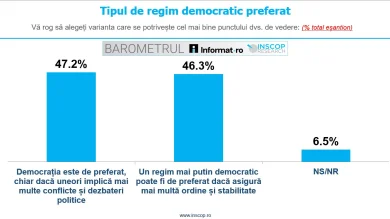
Recently, a so-called proposal to reform Romania’s political system circulated on social media. It was claimed that dictatorial government would be far more efficient than the exercise of power through political parties and constitutional institutions. Periodically, through a referendum, the people could change the dictator if he failed to respect the mandate entrusted to him. A similar argument was developed during the interwar period to justify totalitarian political regimes. The illusion that the people could preserve their power through a referendum was paid for dearly by the entire world in the Second World War. Referendum democracy is still an illusion today, just as dangerous as it was during the interwar period. Abandoning the institutional framework for dividing political power, balancing it through mutual oversight and cooperation among the authorities that exercise it, opens the way to dictatorship. Along this path, the people do not regain their power. On the contrary, all the methods and procedures through which the people can defend themselves against their own power are removed, so that they do not lose it for the benefit of dictators.
The ailments of constitutional democracy are real, but the patient cannot be cured by killing it; it must be treated with the appropriate remedies so that it may regain its health. And in this political regime, democracy must not be set against the rule of law, nor the rule of law against democracy.
Valeriu Stoica is a lawyer and professor of civil law at the Faculty of Law of the University of Bucharest.
Latest News
19:04
18:51
18:50
18:49
18:43
See more news
NEWS ON THE SAME TOPICS













.webp)