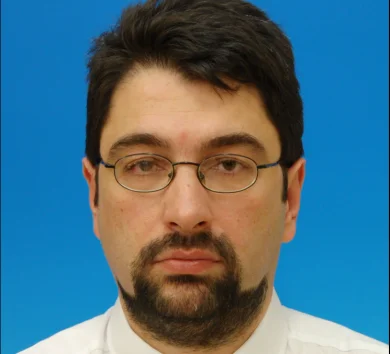
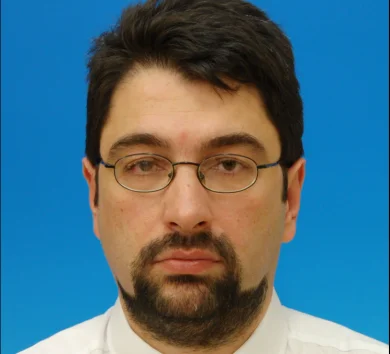
Sever Voinescu: Playing at Sovereignty



Always see our news on Google
If we were lucid, we would perhaps understand that every political piece of news recorded in our Romania is a page from the diary of a collapse. It seems that Romania produces more political reality than the Romanian public can digest, no matter how ravenous it may be for politics. In its corner of the world, overlooked by almost everyone, Romania is suffocating on its own political hysteria. “The isle is full of noises...”
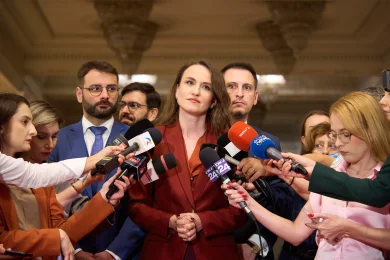
What is truly worrying is that today’s political pygmies are striking blow after blow against fundamental values that are themselves the supporting pillars of the Romanian state, laid down through the sacrifices of great forebears. Bewildered by the pygmies’ agitation, the Romanian public and the domestic press passed very quickly and superficially over an extremely important political moment, perhaps the most important of the past year, seeming to understand nothing of it. The MFA posted on its website a letter signed by Foreign Minister Oana Țoiu alongside ten other EU foreign ministers, addressed to the EU High Representative for Foreign Affairs and Security Policy as well as to the other 16 EU foreign ministers, proposing a certain voting mechanism in the field of foreign and security policy. It has long been known that several countries view the unanimous voting rule, under which every EU member, large or small, has veto power, as an obstacle to the development of EU policies. Frustration has grown since Russia attacked Ukraine and the EU was unable to be as effective as it supposedly wanted to be because of the constant opposition of Hungary, led by Viktor Orbán, an open sympathizer of Putin. The question was raised with even greater nervousness: is it acceptable for a single EU member to block the common will of the other 26? Changing the unanimity rule would require amending the Treaty of Lisbon, an undertaking that no member state is willing to embark on because it poses an immense risk of seriously destabilizing the Union, while each state’s veto right serves a purpose, preventing a situation in which a few major powers seize control of a decision that ultimately concerns each of them. On the other hand, each country’s veto right, as we can see, prevents the EU from making major decisions and, indirectly, urges states to conduct their foreign and security policies on their own, outside the EU. A complicated matter.
In February 2023, nine countries in the European Union (among them France, Germany, Italy, and Spain) decided to form a self-styled group with the indigestible and thoroughly uninspired name “Group of Friends to foster Qualified Majority Voting (QMV) in EU Common Foreign and Security Policy.” EU bureaucrats seem almost deliberately to give institutions, documents, and missions titles that are unappealing and difficult to remember. The purpose of this group was to find a way to avoid blocking a decision desired by 26 states and opposed by the 27th, without affecting each country’s veto right. Romania and several other states subsequently joined this discussion group. The logical option, possible under the Treaty and practiced in other areas within the EU, is to give the state that disagrees with the majority decision the possibility not to participate in implementing the decision, not to be party to the respective agreement, but not to be able to block it. Moreover, if a decision is adopted by a qualified majority, the states opposing it must explain their opposition, and the decision’s supporters will make an effort to address the opponents’ concerns. That is roughly what the letter on the website says.
Immediately after the document appeared (a letter and nothing more), Romania’s Senate adopted a Political Declaration opposing the solution proposed by the foreign ministers’ letter, including by the Romanian foreign minister. On the political battlefield here, where politicians and journalists mingle in a sort of vague distribution of roles, as well as in the ultras’ stands, the story was delivered like this: Minister Țoiu unilaterally gave up Romania’s veto right, and the minister said that this was not the case at all. Another episode in the brawl between the PSDists and the USR-PNLists. But let us nevertheless see what this is really about, because the stakes are much more important than we are being told.
The minister is right: she did not give up Romania’s veto right; in any case, even if she wanted to, she could not do so. But the Senate’s declaration is also right to ask: did the foreign minister have a mandate on the basis of which she signed this proposal? More precisely: was Romania’s position on the issue of the voting mechanism in the EU’s foreign and security policy discussed in the CSAT, in the Government, or in Parliament? I’ll tell you, because I checked: no! USR supporters and their minister claim that there was a mandate from 2023, given by President Iohannis, which has not changed. As far as I have been able to verify, there is no clear mandate for the solution Romania supports—there is a public statement by President Iohannis that it would be good to have a more flexible voting mechanism, and the decision to join this group of “friends.” That is all. In the meantime, however, the facts of the world have changed. If, in 2023, the EU was united against Putin’s aggression but was blocked by Orbán alone and a way had to be found, today things are more complicated. The prospect is that in a year or two we will have, in the major European capitals, in Paris and Berlin, political leaders friendly toward Putin and open to abandoning Ukraine for the sake of Russian gas. In that case, do we still want an EU foreign and security policy decided by majority vote? If I wake up to find that the Paris of the National Rally and the Berlin of the AfD are steering the EU toward a position conciliatory toward Russia’s desire to control Eastern Europe and the Black Sea, do we still want a foreign and security policy without our veto right?
My opinion is that this is where Minister Țoiu made a mistake. Pushed, of course, by a good pro-integrationist impulse, strongly ideologized like any USR member, she moved forward to please Brussels without opening an internal discussion about Romania’s position on this issue. Since 2023, however, we have had a new president, a new government, a new Parliament in Bucharest and, above all, a new political reality in Europe. A discussion would have been necessary, all the more so because the mandate on the basis of which she claims to have acted does not exist. Still, we cannot all be so much like USR members as to believe that a former president’s general statement from nearly four years ago constitutes a mandate for such a concrete action today. Especially since this is such an important issue.
The fact that Minister Țoiu (USR) did not consider discussion of Romania’s interest in this matter important or perhaps deliberately evaded it so as not to end up in the position of supporting something other than what she personally believes is entirely unacceptable. Likewise, the fact that AUR-PSD are lying by saying that Minister Țoiu gave up Romania’s sovereignty is entirely unacceptable. But both of these attitudes show that, in fact, today’s pygmies are completely incompetent, both politically and as human beings, to manage Romania’s sovereignty. The most important instrument that the nation places in its politicians’ hands through elections is national sovereignty. It is on its basis, and only on its basis, that politicians exist as politicians. The meaning of politics is to use national sovereignty for one purpose or another.
Romania’s sovereignty was achieved through sacrifices, often even the ultimate sacrifice, by our forebears. Neither Simion nor Țoiu did anything to make us a sovereign state today; instead, they have the country’s sovereignty in their hands, to use it in the nation’s interest. Well, from what I see, they are completely overwhelmed by this task, of which they may not even be fully aware. Throughout our history, there have been Romanians who made a mockery of our national sovereignty. Many mimicked it propagandistically, but it must be said that it was not the great loudmouths, not the demagogues, who were its great saboteurs, but those who betrayed it, placing the country at the disposal of its enemies, as well as those who used national sovereignty to oppress the nation.
I will speak about them and about the way national sovereignty is discussed and practiced today by the pygmies on the political stage next week as well.
Latest News
23:12
22:53
22:25
22:06
21:47
See more news
NEWS ON THE SAME TOPICS