Kubilius's despair. Europe in a time of crisis
2eu.brussels


EU
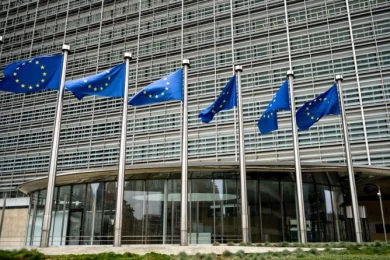
Foto: 2eu.brussels

Always see our news on Google
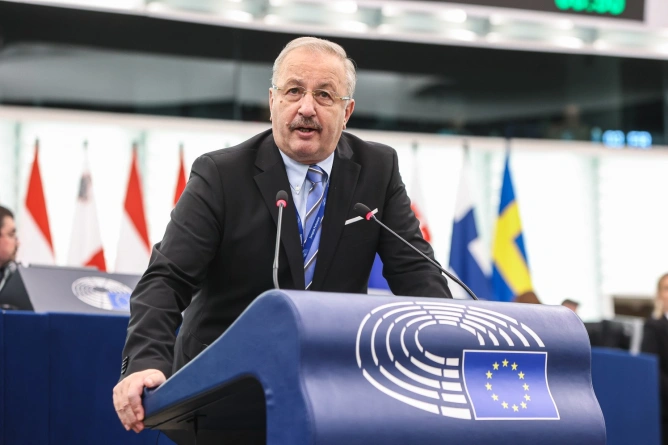
As a member of the defense and Constitutional Affairs (AFCO) committees in the European Parliament, I often think of Commissioner Kubilius, a calm, good-natured Baltic, former Minister of Defense in his country, who frequently comes to Parliament to discuss security and defense issues. I often thought, with concern, about the limited means at his disposal, beyond plans and strategies, and I admired his calmness and patience, even though I thought that one day this man over 70 would burst out and tell the truth. This recently happened when he issued a harsh and necessary warning. I put this under the sign of a certain form of despair, even though our commissioner maintained the decent tone and cold patience of the frozen north.
Andrius Kubilius's warning must be read beyond the usual register of political statements from Brussels. He is not only signaling a commissioner's dissatisfaction with the slow pace of European procedures, but he expresses, in almost brutal terms, the increasingly clear conflict between the speed of security threats and the speed of the European Union's response. When Kubilius says that Vladimir Putin will not wait for the last trilogue to test Europe, he compresses into a single formula the entire strategic vulnerability of the Union: the adversary acts in real time, while Europe continues to think in bureaucratic cycles, procedural stages, and delayed compromises.
The real stake of his statement is therefore not strictly procedural. We are not just discussing the acceleration of some legislative files, but the structural incapacity of the Union to transform the perception of threat into a quick decision, and the quick decision into usable military capability. In the current geopolitical context, this difference in pace becomes a strategic vulnerability in itself. A power that decides slowly, produces slowly, and coordinates slowly sends a dangerous signal to the adversary: it knows what needs to be done, but cannot act in time. Thus, Kubilius raises one of the most sensitive issues of European construction: the relationship between legality, consensus, and strategic survival. For decades, the European model has operated on the idea that slow processes produce more legitimate, balanced, and stable decisions. In conditions of relative peace, this logic made sense. However, in an environment dominated by conventional war at the eastern border, sabotage, hybrid pressure, and accelerated military-industrial competition, the same logic produces the opposite effect. It no longer offers security, but delay.
Therefore, Kubilius's warning must be understood as a frontal attack on the post-Cold War European strategic culture. This culture was built on the assumption that strategic time is abundant, that threats can be absorbed through prolonged negotiations, and that the security of the continent remains guaranteed by the combination of the American umbrella and European institutional inertia. Today, all these assumptions are simultaneously eroding. The United States is redistributing its strategic attention, Russia operates on a logic of mobilization and continuous testing, and Ukraine has demonstrated that rapid adaptation of production and doctrine can change the reality on the ground in a much shorter timeframe than the EU takes to finalize its own procedures.
In this sense, Kubilius's message is also a critique of how Europe defines defense preparedness. In the traditional Brussels paradigm, preparedness has often been treated as a budgeting exercise, normative harmonization, and gradual construction of consensus. But the war in Ukraine and the degradation of the security environment show that preparedness has another definition: it means reaction time, it means how many days are needed to approve a measure, how many months to launch production, how many years to turn a political initiative into a real operational capability. From this perspective, Kubilius's warning hits exactly at the Union's nerve center: the difference between declared ambition and the real speed of execution.
Moreover, his statement implicitly introduces a theme that will inevitably dominate the European debate in the coming years: the compression of democratic time under conditions of strategic pressure. When the commissioner suggests even eliminating the standard eight-week period for the analysis of legislative projects by national parliaments, he is not just asking for administrative efficiency. He raises a fundamental question: how much of the classic mechanism of political control can still be kept intact when the threat moves faster than the institutions? Here lies the central tension of the European moment. On the one hand, accelerating decision-making is necessary; on the other hand, any compression of procedures shifts power towards the executive and reduces the deliberative time of democracy.
That is why Kubilius's warning should not be treated as mere alarmist rhetoric, nor as a complete solution. It is, more precisely, a severe diagnosis: Europe no longer has a problem of awareness; the European political elite increasingly understands the gravity of the context. The problem is different: translating this awareness into command architectures, legislative tools, and industrial capabilities that can operate at crisis pace. In other words, Kubilius says that the danger does not only come from outside. It also comes from the gap between the speed of history and the speed of European institutions.
Viewed this way, his warning has three levels. The first is military: Europe risks being unable to generate ammunition, air defense, drones, and support systems in time for a prolonged conflict. The second is institutional: current procedures slow down the political transformation of urgency into action. The third is psychological and strategic: an adversary that perceives slowness, fragmentation, and external dependence will be tempted to test the limits of the European system exactly where it seems most rigid.
In fact, the strength of Kubilius's statement comes from its raw realism. He essentially says that Europe can no longer treat defense as a technical, peripheral, and secondary domain compared to major economic or climate policies. Defense returns to the center of the European project, and when defense returns to the center, the rules of the game also change. Time becomes a strategic resource, procedure becomes a risk factor, and decision speed becomes a component of power, not just an administrative issue.
This is where the entire analysis must start. Kubilius's warning is not just about defense, but about the increasingly visible incompatibility between the institutional design of the Union and the requirements of a strategic environment dominated by urgency, volume, and rapid response. In this sense, it marks not only a warning signal but the beginning of a much deeper debate: can the European Union remain faithful to its traditional legal and procedural reflexes while at the same time becoming a power capable of deterring, producing, and reacting at war pace?
The structural deficit of the EU
The European Union operates based on an institutional design built for stability and balance, not for rapid response in crisis conditions, and this difference in logic produces visible structural blockages. Decision-making fragmentation keeps defense policy at the intergovernmental level, where consensus slows down the response and shifts decision-making from the area of urgency to the area of prolonged negotiation. In critical situations, every day has strategic value, yet the Union operates in cycles of weeks and months, which reduces the efficiency of the response. At the same time, the lack of a real military executive authority means that there are coordination mechanisms, but there is no single command center capable of turning political decision into operational action without delays. The legal ambiguity between collective defense and cooperation adds an additional layer of uncertainty, because, in moments when clarity is needed, the system produces different interpretations and hesitation. This model has worked in an environment characterized by multilateral cooperation, low risk of major conflict, and dependence on external guarantees, but the current context is different, defined by conventional conflict at the Union's borders, hybrid war, and competition between great powers. In this environment, the same institutional mechanisms no longer offer stability but generate delays, and delays become strategic risk.
Changing the strategic balance
The strategic recalibration of the United States changes Europe's position in the security architecture, as the shift of American focus towards the Indo-Pacific implicitly reduces the priority given to the European continent and obliges European states to take on a greater role in their own defense. This transition produces direct effects. Dependence on the American umbrella becomes increasingly difficult to sustain, responsibility for security rises at the European level, and external support becomes less predictable in simultaneous crisis situations. NATO remains a central pillar of collective defense, but it does not cover all the needs generated by the new strategic environment, especially regarding rapid regional response, supported industrial production capacity, and long-term resilience. In this context, critical gaps appear in essential areas such as intelligence, surveillance and reconnaissance, strategic logistics, and integrated air defense, and these gaps are not theoretical but become visible in the dynamics of the conflict in Ukraine. The conclusion that emerges is direct. Europe enters a phase where security can no longer be outsourced, and integration is no longer a political option but a condition for strategic functioning.
Time-to-war readiness
If there is a concept that should completely restructure the way Europe thinks about defense, it is the time required to transform a decision into operational capability. It is no longer enough to have plans, budgets, or political statements. The real question becomes how long it takes for these elements to produce concrete effects on the ground. At this point, the difference between Europe and Ukraine becomes hard to ignore and, for many decision-makers, even uncomfortable. While the Union operates in slow cycles, with successive stages of approval, consultation, and implementation, Ukraine has demonstrated that rapid adaptation, even if imperfect, produces decisive results in a much shorter timeframe. Here emerges a change of perspective that can no longer be avoided: procedural perfection loses ground against execution speed. Europe loses time at every link in the chain, from political decision to industrial production and operational integration, and this lost time is not neutral but accumulates and becomes vulnerability.
Lack of a common doctrine
Beyond institutions and procedures, there is a less visible but equally important problem, namely the absence of a common military doctrine. Europe does not think about security in a unified way, and this reality directly influences the capacity for action. Eastern states perceive the threat in immediate and existential terms, while western states tend to interpret it more through the lens of manageable risks. The level of risk tolerance differs, as does the strategic culture, and these differences do not remain at a theoretical level but translate into divergent decisions and difficulties in coordination. Without a common set of principles regarding the use of force, operational priorities, and the level of engagement, any European army project risks remaining a formal construction, coherent on paper but fragile in practice. In essence, it is not just about what resources exist, but about how they are thought and used together.
Intelligence as a critical point
Another level where the difference between ambition and reality becomes evident is in the intelligence area. The integration of information at the European level remains limited, and this limitation directly affects the quality and speed of decision-making. Member states continue to operate in a compartmentalized logic, where sensitive information is kept at the national level, and data exchange is often selective and slow. In the absence of a strategic analysis center with real authority, the Union functions more as an aggregator of perspectives than as an actor capable of generating a rapid and coherent common assessment. The problem is not a lack of information but a lack of integration. Without a mechanism to systematically combine OSINT, SIGINT, and HUMINT into a unified flow, political decision-making remains fragmented and reactive. At this point, the question becomes almost inevitable. How can Europe react quickly if it does not see quickly and uniformly what is happening around it? The answer points to a clear, albeit politically difficult, direction: the creation of a common analysis center and the real standardization of information exchange. Without this step, any ambition for strategic autonomy remains incomplete.
Defense industry
If we look without political filters, the problem of the European defense industry does not stem from a lack of technological competence, but from how it is organized and oriented. Europe produces advanced systems, but it produces them slowly, in small volumes and at high costs, in a model that has worked in a relatively peaceful environment but comes into direct tension with the logic of a high-intensity conflict. The criticism formulated by Andrius Kubilius becomes relevant precisely because it strikes at this reality. The European industry resembles more a niche production model than one capable of sustaining a prolonged effort. In parallel, the experience from Ukraine shows a different direction, where the emphasis is on volume, low cost, and rapid adaptation, even at the expense of giving up technological perfection. This difference is not just economic but strategic. In a prolonged conflict, the ability to produce a lot and quickly becomes more important than the sophistication of each individual system. Dependence on systems like Patriot, primarily supplied by the United States, exposes an additional vulnerability, as the availability of these capabilities depends on global priorities that are not controlled by Europe. In this context, the question is no longer whether Europe can produce cutting-edge technology, but whether it can produce enough, fast enough, and autonomously enough.
War economy
The difference between models becomes even clearer when comparing European logic with that of Russia. Russia operates based on a conflict-oriented economy, where political decision can quickly mobilize industrial resources, prioritize military production, and adjust supply chains without major market constraints. In contrast, Europe operates within a framework dominated by competition rules, procurement procedures, and budgetary balances that slow down mobilization. This difference creates a gap in pace that becomes visible in any comparative analysis of ammunition, equipment, or systems production. At this point, an uncomfortable but inevitable question arises: can the Union activate a mechanism for rapid industrial mobilization when the situation demands it? The idea of a "war economy switch" becomes relevant precisely because it describes the need for a clear, politically triggered mechanism through which normal rules are suspended or adjusted to allow for accelerated production. Without such a mechanism, any increase in budgets risks being diluted in slow procedures and inadequately adapted industrial capabilities.
Institutional options
In this context, the discussion about institutional reform is no longer theoretical but becomes a condition for functioning. Andrius Kubilius explicitly opens this debate, and the options are, essentially, limited and clearly delineated. The first option involves adjusting the current framework by optimizing existing mechanisms, but this variant has a limited impact and does not solve the underlying problem. The second option aims to form a core of states willing to advance more quickly, which would allow for deeper integration but would introduce risks of political fragmentation within the Union. The third option, the most ambitious and at the same time the most difficult, involves a new treaty to create a European Defense Union, with clear powers and efficient decision-making mechanisms. This variant would include a single military command, a common defense budget, and a majority decision-making system for operations, reducing dependence on consensus. The choice between these options is not just political but strategic, as it determines Europe's ability to act coherently in an environment characterized by urgency and constant pressure.
European army
The idea of a European army constantly reappears in public debate, but each time it remains in the realm of conceptual ambiguity, as it is invoked more often as a political symbol than as a clearly defined operational project. In reality, such a structure cannot function without several strict conditions that go beyond the level of declarations. Permanent forces are needed, not just national contingents made available temporarily, a single command chain without double subordination between the national and European levels, and complete interoperability at the level of equipment, doctrines, and procedures. Without these elements, any attempt to build a European army risks producing a formal structure with limited capacity to react in real situations. The problem is not a lack of declarative political will but the difficulty of transferring essential competencies from the national level to a common level in a domain that remains deeply tied to sovereignty.
External dimension
Expanding cooperation beyond the borders of the Union introduces another essential dimension of this transformation. Actors such as the United Kingdom, Norway, and Ukraine bring capabilities that can accelerate the strengthening of European defense, but at the same time complicate the decision-making architecture. The United Kingdom remains one of the most relevant military powers in Europe, Norway offers important capabilities in the Nordic area and in the energy sector, and Ukraine brings direct operational experience gained in a high-intensity conflict, as well as an industrial adaptation capacity that is hard to replicate in other parts of Europe. Integrating these actors can increase the efficiency and critical mass of the system, but raises questions related to governance, access to sensitive information, and decision-making mechanisms. As the circle of cooperation expands, it becomes increasingly difficult to maintain a balance between efficiency and political control.
Stress scenario
To understand the current limits of the system, it is useful to look at a simple but realistic scenario: a simultaneous crisis in the east and south, where the demand for ammunition, air defense systems, and logistical support rapidly increases, while the United States prioritizes another theater of operations. In such a context, the central question becomes direct and difficult to avoid: what can Europe produce in the next 90 days and how quickly can it transform this production into operational capability? The answer brings to light all the vulnerabilities discussed earlier, from industrial fragmentation to decision-making slowness and external dependencies. Such an exercise has no theoretical role but offers a concrete test of the capacity for reaction, and the result indicates, in its current form, a significant gap between ambition and execution.
Concrete solutions
Getting out of this impasse does not depend on a single measure but on a coherent set of decisions applied at multiple levels. In the short term, the priority is to accelerate legislative procedures and use rapid contracting mechanisms to allow production to launch without unnecessary delays. In the medium term, industrial standardization and integration of supply chains become essential, so that European states no longer operate as separate systems but as a coordinated whole. In the long term, the solution involves a structural reform, possibly through a new treaty, to create a coherent defense architecture with efficient decision-making mechanisms and a clear level of executive authority. Without this layering of solutions, any progress risks remaining fragmented and insufficient.
Relevant cases. Military mobility and ammunition production
Two of the most concrete examples of dysfunctionality appear where strategic theory meets operational reality. Military mobility and ammunition production should be areas of rapid, measurable execution directly linked to the capacity for reaction. In practice, they show exactly the opposite.
The concept of "military Schengen" starts from a simple premise. Forces and equipment must move quickly across European territory, especially from the west to the eastern flank. In reality, this mobility is slowed down by a cumulative set of administrative and technical barriers that reflect the fragmentation of the system. A military transport must obtain separate authorizations in each transit state, comply with different rules regarding weight or dimensions, and adapt to infrastructures that are not standardized. In some cases, approvals take days or even weeks. In a context where the reaction should be almost immediate, this delay is not a bureaucratic detail but a direct operational limitation. Even within NATO, where there is more advanced coordination, execution continues to depend on these national constraints.
In parallel, the case of ammunition offers an equally relevant example, but with an even more visible impact. The European Union has committed to delivering significant volumes of ammunition to Ukraine at a time when the consumption rate on the front was extremely high. The promise was clear, yet execution was delayed. Production failed to meet the targets within the established timeframe, and the gap between commitment and delivery became evident. The causes do not stem from a single factor but from a combination of industrial limitations, fragmentation of contracts, slow procurement procedures, and a lack of effective centralized coordination.
Viewed together, the two examples tell the same story but from different angles. Europe can decide, can promise, and can finance, but encounters difficulties in the rapid execution phase. In the case of mobility, the problem is the movement of forces; in the case of ammunition, the problem is production and delivery. In both situations, time becomes the critical factor that reveals the limits of the system.
These dysfunctions are not marginal. They directly affect strategic credibility. An adversary does not analyze statements but the capacity to act quickly and consistently. If the movement of forces takes too long and production does not keep pace with needs, deterrence weakens. In this sense, military mobility and ammunition production are not just technical issues but become indicators of Europe's real capacity to function as a security actor in an environment where time no longer offers a margin for error.
Romania in the new strategic equation
For Romania, these developments are not abstract but have direct and immediate implications. Positioned on the eastern flank, in proximity to the conflict in Ukraine and at the intersection of some strategic routes relevant to regional security, Romania finds itself in a position where dependence on slow decisions at the European level becomes a concrete risk. At the same time, this position also offers opportunities if used strategically. Accelerating investments in military infrastructure, developing an industrial base capable of participating in European production, and deeper integration into intelligence mechanisms become essential directions. Moreover, Romania can play a relevant role in defining an eastern perspective on European security, where the perception of threat is more direct and less abstract. In this context, the question is not just how the Union adapts but also how Romania positions its own capabilities and priorities within a transforming system. The answer will depend on the speed with which internal decisions align with the strategic reality, but also on the ability to transform this geographical position into a real operational advantage.
Coda
Viewed as a whole, the current situation indicates a difficult but inevitable transition. Europe no longer operates in an environment where time is abundant and threats can be managed through slow processes and prolonged consensus. Speed becomes a decisive factor, and the legal and institutional structure directly influences military capacity. The warning issued by Andrius Kubilius thus gains value as a test, not because it introduces completely new ideas, but because it forces the system to confront the difference between ambition and execution. In the absence of rapid adaptation, this difference risks becoming the weak point of the entire European construction. Europe does not lack resources but lacks time transformed into action. Andrius Kubilius is not warning about a future problem but about a present one. In the face of an adversary that decides quickly, every delay becomes vulnerability, and the question is no longer whether Europe can build a common defense but whether it can do so in time.
We, participants in the defense ecosystem, at different levels, fully understand Kubilius's warning, but perhaps we have also become too accustomed to words that replace reality at the epicenter of decision-making in Brussels. If we interpret his call not as a statement among many others and understand the essence of the despair behind it, then we should also move from expectation to despair and hasten actions and decisions.
Andrius Kubilius's warning must be read beyond the usual register of political statements from Brussels. He is not only signaling a commissioner's dissatisfaction with the slow pace of European procedures, but he expresses, in almost brutal terms, the increasingly clear conflict between the speed of security threats and the speed of the European Union's response. When Kubilius says that Vladimir Putin will not wait for the last trilogue to test Europe, he compresses into a single formula the entire strategic vulnerability of the Union: the adversary acts in real time, while Europe continues to think in bureaucratic cycles, procedural stages, and delayed compromises.
The real stake of his statement is therefore not strictly procedural. We are not just discussing the acceleration of some legislative files, but the structural incapacity of the Union to transform the perception of threat into a quick decision, and the quick decision into usable military capability. In the current geopolitical context, this difference in pace becomes a strategic vulnerability in itself. A power that decides slowly, produces slowly, and coordinates slowly sends a dangerous signal to the adversary: it knows what needs to be done, but cannot act in time. Thus, Kubilius raises one of the most sensitive issues of European construction: the relationship between legality, consensus, and strategic survival. For decades, the European model has operated on the idea that slow processes produce more legitimate, balanced, and stable decisions. In conditions of relative peace, this logic made sense. However, in an environment dominated by conventional war at the eastern border, sabotage, hybrid pressure, and accelerated military-industrial competition, the same logic produces the opposite effect. It no longer offers security, but delay.
Therefore, Kubilius's warning must be understood as a frontal attack on the post-Cold War European strategic culture. This culture was built on the assumption that strategic time is abundant, that threats can be absorbed through prolonged negotiations, and that the security of the continent remains guaranteed by the combination of the American umbrella and European institutional inertia. Today, all these assumptions are simultaneously eroding. The United States is redistributing its strategic attention, Russia operates on a logic of mobilization and continuous testing, and Ukraine has demonstrated that rapid adaptation of production and doctrine can change the reality on the ground in a much shorter timeframe than the EU takes to finalize its own procedures.
In this sense, Kubilius's message is also a critique of how Europe defines defense preparedness. In the traditional Brussels paradigm, preparedness has often been treated as a budgeting exercise, normative harmonization, and gradual construction of consensus. But the war in Ukraine and the degradation of the security environment show that preparedness has another definition: it means reaction time, it means how many days are needed to approve a measure, how many months to launch production, how many years to turn a political initiative into a real operational capability. From this perspective, Kubilius's warning hits exactly at the Union's nerve center: the difference between declared ambition and the real speed of execution.
Moreover, his statement implicitly introduces a theme that will inevitably dominate the European debate in the coming years: the compression of democratic time under conditions of strategic pressure. When the commissioner suggests even eliminating the standard eight-week period for the analysis of legislative projects by national parliaments, he is not just asking for administrative efficiency. He raises a fundamental question: how much of the classic mechanism of political control can still be kept intact when the threat moves faster than the institutions? Here lies the central tension of the European moment. On the one hand, accelerating decision-making is necessary; on the other hand, any compression of procedures shifts power towards the executive and reduces the deliberative time of democracy.
That is why Kubilius's warning should not be treated as mere alarmist rhetoric, nor as a complete solution. It is, more precisely, a severe diagnosis: Europe no longer has a problem of awareness; the European political elite increasingly understands the gravity of the context. The problem is different: translating this awareness into command architectures, legislative tools, and industrial capabilities that can operate at crisis pace. In other words, Kubilius says that the danger does not only come from outside. It also comes from the gap between the speed of history and the speed of European institutions.
Viewed this way, his warning has three levels. The first is military: Europe risks being unable to generate ammunition, air defense, drones, and support systems in time for a prolonged conflict. The second is institutional: current procedures slow down the political transformation of urgency into action. The third is psychological and strategic: an adversary that perceives slowness, fragmentation, and external dependence will be tempted to test the limits of the European system exactly where it seems most rigid.
In fact, the strength of Kubilius's statement comes from its raw realism. He essentially says that Europe can no longer treat defense as a technical, peripheral, and secondary domain compared to major economic or climate policies. Defense returns to the center of the European project, and when defense returns to the center, the rules of the game also change. Time becomes a strategic resource, procedure becomes a risk factor, and decision speed becomes a component of power, not just an administrative issue.
This is where the entire analysis must start. Kubilius's warning is not just about defense, but about the increasingly visible incompatibility between the institutional design of the Union and the requirements of a strategic environment dominated by urgency, volume, and rapid response. In this sense, it marks not only a warning signal but the beginning of a much deeper debate: can the European Union remain faithful to its traditional legal and procedural reflexes while at the same time becoming a power capable of deterring, producing, and reacting at war pace?
The structural deficit of the EU
The European Union operates based on an institutional design built for stability and balance, not for rapid response in crisis conditions, and this difference in logic produces visible structural blockages. Decision-making fragmentation keeps defense policy at the intergovernmental level, where consensus slows down the response and shifts decision-making from the area of urgency to the area of prolonged negotiation. In critical situations, every day has strategic value, yet the Union operates in cycles of weeks and months, which reduces the efficiency of the response. At the same time, the lack of a real military executive authority means that there are coordination mechanisms, but there is no single command center capable of turning political decision into operational action without delays. The legal ambiguity between collective defense and cooperation adds an additional layer of uncertainty, because, in moments when clarity is needed, the system produces different interpretations and hesitation. This model has worked in an environment characterized by multilateral cooperation, low risk of major conflict, and dependence on external guarantees, but the current context is different, defined by conventional conflict at the Union's borders, hybrid war, and competition between great powers. In this environment, the same institutional mechanisms no longer offer stability but generate delays, and delays become strategic risk.
Changing the strategic balance
The strategic recalibration of the United States changes Europe's position in the security architecture, as the shift of American focus towards the Indo-Pacific implicitly reduces the priority given to the European continent and obliges European states to take on a greater role in their own defense. This transition produces direct effects. Dependence on the American umbrella becomes increasingly difficult to sustain, responsibility for security rises at the European level, and external support becomes less predictable in simultaneous crisis situations. NATO remains a central pillar of collective defense, but it does not cover all the needs generated by the new strategic environment, especially regarding rapid regional response, supported industrial production capacity, and long-term resilience. In this context, critical gaps appear in essential areas such as intelligence, surveillance and reconnaissance, strategic logistics, and integrated air defense, and these gaps are not theoretical but become visible in the dynamics of the conflict in Ukraine. The conclusion that emerges is direct. Europe enters a phase where security can no longer be outsourced, and integration is no longer a political option but a condition for strategic functioning.
Time-to-war readiness
If there is a concept that should completely restructure the way Europe thinks about defense, it is the time required to transform a decision into operational capability. It is no longer enough to have plans, budgets, or political statements. The real question becomes how long it takes for these elements to produce concrete effects on the ground. At this point, the difference between Europe and Ukraine becomes hard to ignore and, for many decision-makers, even uncomfortable. While the Union operates in slow cycles, with successive stages of approval, consultation, and implementation, Ukraine has demonstrated that rapid adaptation, even if imperfect, produces decisive results in a much shorter timeframe. Here emerges a change of perspective that can no longer be avoided: procedural perfection loses ground against execution speed. Europe loses time at every link in the chain, from political decision to industrial production and operational integration, and this lost time is not neutral but accumulates and becomes vulnerability.
Lack of a common doctrine
Beyond institutions and procedures, there is a less visible but equally important problem, namely the absence of a common military doctrine. Europe does not think about security in a unified way, and this reality directly influences the capacity for action. Eastern states perceive the threat in immediate and existential terms, while western states tend to interpret it more through the lens of manageable risks. The level of risk tolerance differs, as does the strategic culture, and these differences do not remain at a theoretical level but translate into divergent decisions and difficulties in coordination. Without a common set of principles regarding the use of force, operational priorities, and the level of engagement, any European army project risks remaining a formal construction, coherent on paper but fragile in practice. In essence, it is not just about what resources exist, but about how they are thought and used together.
Intelligence as a critical point
Another level where the difference between ambition and reality becomes evident is in the intelligence area. The integration of information at the European level remains limited, and this limitation directly affects the quality and speed of decision-making. Member states continue to operate in a compartmentalized logic, where sensitive information is kept at the national level, and data exchange is often selective and slow. In the absence of a strategic analysis center with real authority, the Union functions more as an aggregator of perspectives than as an actor capable of generating a rapid and coherent common assessment. The problem is not a lack of information but a lack of integration. Without a mechanism to systematically combine OSINT, SIGINT, and HUMINT into a unified flow, political decision-making remains fragmented and reactive. At this point, the question becomes almost inevitable. How can Europe react quickly if it does not see quickly and uniformly what is happening around it? The answer points to a clear, albeit politically difficult, direction: the creation of a common analysis center and the real standardization of information exchange. Without this step, any ambition for strategic autonomy remains incomplete.
Defense industry
If we look without political filters, the problem of the European defense industry does not stem from a lack of technological competence, but from how it is organized and oriented. Europe produces advanced systems, but it produces them slowly, in small volumes and at high costs, in a model that has worked in a relatively peaceful environment but comes into direct tension with the logic of a high-intensity conflict. The criticism formulated by Andrius Kubilius becomes relevant precisely because it strikes at this reality. The European industry resembles more a niche production model than one capable of sustaining a prolonged effort. In parallel, the experience from Ukraine shows a different direction, where the emphasis is on volume, low cost, and rapid adaptation, even at the expense of giving up technological perfection. This difference is not just economic but strategic. In a prolonged conflict, the ability to produce a lot and quickly becomes more important than the sophistication of each individual system. Dependence on systems like Patriot, primarily supplied by the United States, exposes an additional vulnerability, as the availability of these capabilities depends on global priorities that are not controlled by Europe. In this context, the question is no longer whether Europe can produce cutting-edge technology, but whether it can produce enough, fast enough, and autonomously enough.
War economy
The difference between models becomes even clearer when comparing European logic with that of Russia. Russia operates based on a conflict-oriented economy, where political decision can quickly mobilize industrial resources, prioritize military production, and adjust supply chains without major market constraints. In contrast, Europe operates within a framework dominated by competition rules, procurement procedures, and budgetary balances that slow down mobilization. This difference creates a gap in pace that becomes visible in any comparative analysis of ammunition, equipment, or systems production. At this point, an uncomfortable but inevitable question arises: can the Union activate a mechanism for rapid industrial mobilization when the situation demands it? The idea of a "war economy switch" becomes relevant precisely because it describes the need for a clear, politically triggered mechanism through which normal rules are suspended or adjusted to allow for accelerated production. Without such a mechanism, any increase in budgets risks being diluted in slow procedures and inadequately adapted industrial capabilities.
Institutional options
In this context, the discussion about institutional reform is no longer theoretical but becomes a condition for functioning. Andrius Kubilius explicitly opens this debate, and the options are, essentially, limited and clearly delineated. The first option involves adjusting the current framework by optimizing existing mechanisms, but this variant has a limited impact and does not solve the underlying problem. The second option aims to form a core of states willing to advance more quickly, which would allow for deeper integration but would introduce risks of political fragmentation within the Union. The third option, the most ambitious and at the same time the most difficult, involves a new treaty to create a European Defense Union, with clear powers and efficient decision-making mechanisms. This variant would include a single military command, a common defense budget, and a majority decision-making system for operations, reducing dependence on consensus. The choice between these options is not just political but strategic, as it determines Europe's ability to act coherently in an environment characterized by urgency and constant pressure.
European army
The idea of a European army constantly reappears in public debate, but each time it remains in the realm of conceptual ambiguity, as it is invoked more often as a political symbol than as a clearly defined operational project. In reality, such a structure cannot function without several strict conditions that go beyond the level of declarations. Permanent forces are needed, not just national contingents made available temporarily, a single command chain without double subordination between the national and European levels, and complete interoperability at the level of equipment, doctrines, and procedures. Without these elements, any attempt to build a European army risks producing a formal structure with limited capacity to react in real situations. The problem is not a lack of declarative political will but the difficulty of transferring essential competencies from the national level to a common level in a domain that remains deeply tied to sovereignty.
External dimension
Expanding cooperation beyond the borders of the Union introduces another essential dimension of this transformation. Actors such as the United Kingdom, Norway, and Ukraine bring capabilities that can accelerate the strengthening of European defense, but at the same time complicate the decision-making architecture. The United Kingdom remains one of the most relevant military powers in Europe, Norway offers important capabilities in the Nordic area and in the energy sector, and Ukraine brings direct operational experience gained in a high-intensity conflict, as well as an industrial adaptation capacity that is hard to replicate in other parts of Europe. Integrating these actors can increase the efficiency and critical mass of the system, but raises questions related to governance, access to sensitive information, and decision-making mechanisms. As the circle of cooperation expands, it becomes increasingly difficult to maintain a balance between efficiency and political control.
Stress scenario
To understand the current limits of the system, it is useful to look at a simple but realistic scenario: a simultaneous crisis in the east and south, where the demand for ammunition, air defense systems, and logistical support rapidly increases, while the United States prioritizes another theater of operations. In such a context, the central question becomes direct and difficult to avoid: what can Europe produce in the next 90 days and how quickly can it transform this production into operational capability? The answer brings to light all the vulnerabilities discussed earlier, from industrial fragmentation to decision-making slowness and external dependencies. Such an exercise has no theoretical role but offers a concrete test of the capacity for reaction, and the result indicates, in its current form, a significant gap between ambition and execution.
Concrete solutions
Getting out of this impasse does not depend on a single measure but on a coherent set of decisions applied at multiple levels. In the short term, the priority is to accelerate legislative procedures and use rapid contracting mechanisms to allow production to launch without unnecessary delays. In the medium term, industrial standardization and integration of supply chains become essential, so that European states no longer operate as separate systems but as a coordinated whole. In the long term, the solution involves a structural reform, possibly through a new treaty, to create a coherent defense architecture with efficient decision-making mechanisms and a clear level of executive authority. Without this layering of solutions, any progress risks remaining fragmented and insufficient.
Relevant cases. Military mobility and ammunition production
Two of the most concrete examples of dysfunctionality appear where strategic theory meets operational reality. Military mobility and ammunition production should be areas of rapid, measurable execution directly linked to the capacity for reaction. In practice, they show exactly the opposite.
The concept of "military Schengen" starts from a simple premise. Forces and equipment must move quickly across European territory, especially from the west to the eastern flank. In reality, this mobility is slowed down by a cumulative set of administrative and technical barriers that reflect the fragmentation of the system. A military transport must obtain separate authorizations in each transit state, comply with different rules regarding weight or dimensions, and adapt to infrastructures that are not standardized. In some cases, approvals take days or even weeks. In a context where the reaction should be almost immediate, this delay is not a bureaucratic detail but a direct operational limitation. Even within NATO, where there is more advanced coordination, execution continues to depend on these national constraints.
In parallel, the case of ammunition offers an equally relevant example, but with an even more visible impact. The European Union has committed to delivering significant volumes of ammunition to Ukraine at a time when the consumption rate on the front was extremely high. The promise was clear, yet execution was delayed. Production failed to meet the targets within the established timeframe, and the gap between commitment and delivery became evident. The causes do not stem from a single factor but from a combination of industrial limitations, fragmentation of contracts, slow procurement procedures, and a lack of effective centralized coordination.
Viewed together, the two examples tell the same story but from different angles. Europe can decide, can promise, and can finance, but encounters difficulties in the rapid execution phase. In the case of mobility, the problem is the movement of forces; in the case of ammunition, the problem is production and delivery. In both situations, time becomes the critical factor that reveals the limits of the system.
These dysfunctions are not marginal. They directly affect strategic credibility. An adversary does not analyze statements but the capacity to act quickly and consistently. If the movement of forces takes too long and production does not keep pace with needs, deterrence weakens. In this sense, military mobility and ammunition production are not just technical issues but become indicators of Europe's real capacity to function as a security actor in an environment where time no longer offers a margin for error.
Romania in the new strategic equation
For Romania, these developments are not abstract but have direct and immediate implications. Positioned on the eastern flank, in proximity to the conflict in Ukraine and at the intersection of some strategic routes relevant to regional security, Romania finds itself in a position where dependence on slow decisions at the European level becomes a concrete risk. At the same time, this position also offers opportunities if used strategically. Accelerating investments in military infrastructure, developing an industrial base capable of participating in European production, and deeper integration into intelligence mechanisms become essential directions. Moreover, Romania can play a relevant role in defining an eastern perspective on European security, where the perception of threat is more direct and less abstract. In this context, the question is not just how the Union adapts but also how Romania positions its own capabilities and priorities within a transforming system. The answer will depend on the speed with which internal decisions align with the strategic reality, but also on the ability to transform this geographical position into a real operational advantage.
Coda
Viewed as a whole, the current situation indicates a difficult but inevitable transition. Europe no longer operates in an environment where time is abundant and threats can be managed through slow processes and prolonged consensus. Speed becomes a decisive factor, and the legal and institutional structure directly influences military capacity. The warning issued by Andrius Kubilius thus gains value as a test, not because it introduces completely new ideas, but because it forces the system to confront the difference between ambition and execution. In the absence of rapid adaptation, this difference risks becoming the weak point of the entire European construction. Europe does not lack resources but lacks time transformed into action. Andrius Kubilius is not warning about a future problem but about a present one. In the face of an adversary that decides quickly, every delay becomes vulnerability, and the question is no longer whether Europe can build a common defense but whether it can do so in time.
We, participants in the defense ecosystem, at different levels, fully understand Kubilius's warning, but perhaps we have also become too accustomed to words that replace reality at the epicenter of decision-making in Brussels. If we interpret his call not as a statement among many others and understand the essence of the despair behind it, then we should also move from expectation to despair and hasten actions and decisions.

Latest News
22:57
Prosecutor seeks sentences of up to 12 years for three doctors accused in the death of Diego Maradona
22:53
Donald Trump calls those who use the term “artificial intelligence” instead of “Super Intelligence” “enemies”
22:42
A bison weighing over 800 kilograms was found dead and decapitated in Măgura Ilvei. The police are investigating the case
22:30
George Simion, comment on Luca Niculescu's post about negotiations with the parties: “So, will you be the prime minister in the PSD government?”
22:28
Trump promises that the US will not resume attacks before the midterm elections
See more news
NEWS ON THE SAME TOPICS



Opinions
Europe’s new energy doctrine

Personalized news feed, AI-powered search, and notifications in a more interactive experience.