Copernicus confirms that Europe is the continent that is warming the fastest



Always see our news on Google
The European State of the Climate Report 2025 shows above-average temperatures in at least 95% of the continent, seas with record temperatures for the fourth consecutive year, and over a million hectares burned by wildfires.
Europe recorded above-average temperatures in 2025 in at least 95% of the continent and remains the fastest-warming continent on Earth, according to the European State of the Climate report published by the EU's Copernicus service.
In short The European State of the Climate Report 2025 shows that Europe had above-average temperatures in at least 95% of the continent.
Europe is the fastest-warming continent on Earth, and the European climate risk assessment from 2024 warned that it is warming twice as fast as the rest of the world.
The seas around Europe reached their highest average surface temperature in 2025, marking the fourth consecutive year with a new record.
Heatwaves, droughts, and wildfires have affected the continent, with wildfires burning approximately 1,034,550 hectares, the largest area recorded.
The European Commission links the report to the EU's climate neutrality goals by 2050, reducing emissions, and accelerating the transition to clean energy.
The European State of the Climate Report 2025, published by the Copernicus Climate Change Service and produced by the European Centre for Medium-Range Weather Forecasts, shows that Europe had a year marked by high temperatures across almost the entire continent.
According to Copernicus data, at least 95% of Europe recorded above-average temperatures in 2025. The report confirms that Europe is the fastest-warming continent on Earth.
This finding aligns with the European Climate Risk Assessment, published in 2024 by the European Environment Agency, which warned that Europe is warming twice as fast as the rest of the world.
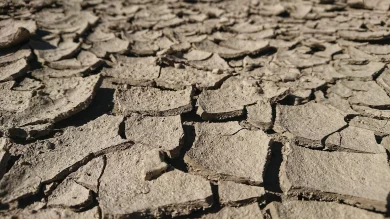
Copernicus data shows that rising temperatures accelerate the loss of snow and ice and are associated with more frequent and severe extreme phenomena, including heatwaves, droughts, and record sea temperatures, from the Arctic region to the Mediterranean.
In 2025, the seas around Europe recorded their highest average surface temperature since measurements began. This was the fourth consecutive year in which this indicator reached a new record.
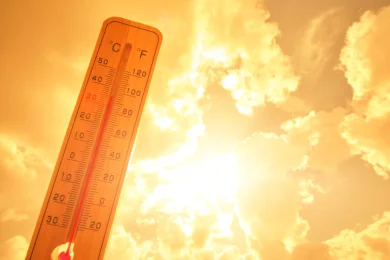
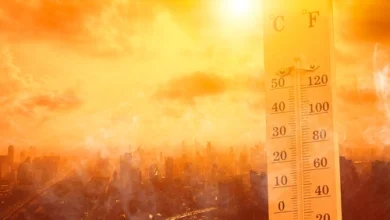
The report mentions heatwaves on the continent, including the second most severe heatwave recorded in Europe. Subarctic Fennoscandia experienced the longest and most severe heatwave in July, with temperatures near or within the Arctic Circle exceeding 30°C.
Warmer conditions fueled more intense wildfires. Approximately 1,034,550 hectares burned in 2025, the largest area recorded.
The climate impact increasingly affects biodiversity in marine and terrestrial ecosystems and puts pressure on water flows in Europe.
Commissioner for Defense and Space, Andrius Kubilius, stated that the report confirms the importance of the European Earth observation system.
"The European State of the Climate report shows once again that climate change is a reality for Europe, highlighting the importance of an independent, global Earth observation system. Copernicus provides the information we need to guide decisions that will shape a more resilient, sustainable, and stronger future for Europe," said Kubilius.
The European Commission states that the report once again emphasizes the urgency of reducing net greenhouse gas emissions to zero, enhancing resilience to climate impact, and accelerating the transition to clean energy through more renewable sources and higher energy efficiency.
Commissioner for Climate, net zero emissions, and clean growth, Wopke Hoekstra, stated that Copernicus data confirms the extent of climate impact on European societies and economies.
"Copernicus data provides a sobering report and confirms once again that Europe is the fastest-warming continent. Today's European State of the Climate report shows the devastating and widespread impact of climate change on societies, economies, and our environment. This has a cost that continues to rise and is yet another reminder that clean energy is the best and only way forward for Europe," said Hoekstra.
The European Union has committed to becoming climate neutral by 2050. The EU has also adopted targets and legislation to reduce net greenhouse gas emissions by at least 55% by 2030 and by 90% by 2040, compared to 1990 levels.
According to data mentioned by the Commission, the EU's net greenhouse gas emissions decreased by another 2.5% between 2023 and 2024. The total reduction in EU emissions has thus reached 39% below 1990 levels.
In 2025, renewable energy provided nearly half of Europe's electricity, at 46.4%. Solar energy reached a new record contribution, accounting for 12.5% of electricity production.
The Commission states that the EU's preparedness for climate risks is a priority and that it will present, later this year, an integrated framework for European climate resilience and risk management.
Copernicus is the Earth observation component of the EU's space program. The program provides freely accessible data and operational services, offering updated information about the planet and its environment.
The European State of the Climate report is published annually by the Copernicus Climate Change Service and provides data on climate evolution in Europe, extreme phenomena, changes in oceans, snow, ice, ecosystems, and relevant indicators for climate policies.
The data from the report is used by European institutions for assessing climate risks, preparing adaptation policies, and monitoring changes affecting the territory, economy, and population of the EU. In 2025, the combination of above-average temperatures across almost the entire continent, record seas, extensive wildfires, and pressure on water resources indicates an acceleration of already observable climate effects in Europe.
https://2eu.brussels/en/news/copernicus-confirms-that-europe-is-the-fastest-warming-continent
Latest News
23:06
22:49
22:37
22:22
22:03
See more news
NEWS ON THE SAME TOPICS