Carnegie Europe warns that heat waves are becoming a security vulnerability for Europe




Always see our news on Google
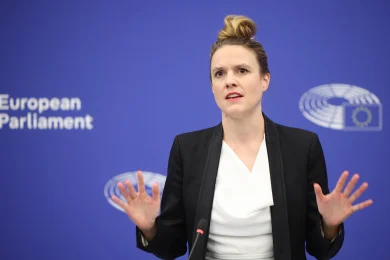
Heat waves are becoming a security problem for Europe, not just a public health crisis, warns Rym Momtaz, editor in chief of Strategic Europe at Carnegie Europe. In a comment published on June 30, 2026, she argues that Western European states are not prepared even for predictable climate phenomena, despite increasingly presenting themselves as geopolitical actors capable of responding to military, economic, and security crises.
In short
Rym Momtaz says that heat waves reveal a strategic vulnerability of Western Europe.
The comment links climate adaptation to Europe’s ability to withstand geopolitical crises.
Transport, hospitals, schools, kindergartens, agriculture, and urban economy have been affected by extreme temperatures.
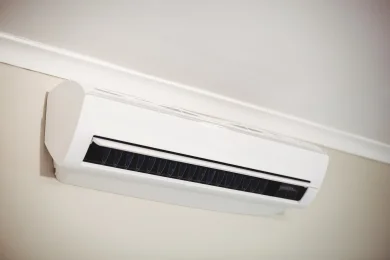
The author argues that the debate about air conditioning is not minor, as it concerns the ability of institutions to protect lives and infrastructure.
She calls for faster and more pragmatic adaptation, combining building cooling, innovation, simpler standards, and a global climate strategy.
Western Europe has entered a new wave of extreme heat, the third of its kind since the end of May, according to the comment published by Carnegie Europe. Momtaz writes that such episodes are expected to become more frequent, yet several wealthy states in the western part of the continent continue to struggle with basic adaptation measures.
The public dispute over air conditioning in Belgium, France, Germany, and the United Kingdom is used in the text as an example of a broader problem. For the author, the blockage is not just about the comfort of homes or offices, but about the inability of some public systems to transform quickly in the face of already known threats.
Momtaz compares the slow response to the climate crisis with the pressure produced by the changing transatlantic relationship. She writes that the brutal methods of American President Donald Trump pushed Europe more quickly towards taking on its own defense than the deaths caused by heat waves did for climate adaptation.
The central argument is that a Europe paralyzed by extreme temperatures conveys strategic weakness. If civil and dual-use infrastructure fails in an anticipated phenomenon, the ability to respond to military or hybrid crises becomes less credible.
The author questions why an adversary like Vladimir Putin would not take advantage of a moment when Western Europe is paralyzed by heat. In the logic of the text, infrastructure that serves the population in peacetime matters in security scenarios: railways, hospitals, schools, urban centers, care networks, and economic chains.
During the heat wave described by Carnegie Europe, essential infrastructure was heavily strained. Momtaz mentions train tracks affected by temperatures, railway delays, ventilation and air conditioning issues in trains, overcrowded carriages, hospitals without adequate cooling, and schools or kindergartens with indoor temperatures exceeding 30 degrees Celsius.
Agriculture has also been affected. The text mentions farm animals that suffered or died, land affected by drought, and a disrupted urban economy as workers were forced to improvise care for children and elderly relatives.
Momtaz also criticizes official responses deemed insufficient. She cites recommendations such as avoiding outings during the hottest hours or institutional reserves against air conditioning units. In her opinion, such reactions do not inspire confidence in the ability of governments to manage more complex crises.
The comment rejects the idea that adapting to heat would contradict the green transition. The author argues that building insulation, shading, revegetation, and energy efficiency rules are necessary but not sufficient after several consecutive days and nights of very high temperatures. In such conditions, indoor cooling can save lives, especially for the elderly, sick, and children.
France is presented as a case where the calculation should be simpler, due to the low-carbon energy mix, largely based on nuclear energy. Momtaz argues that the cost-benefit analysis of air conditioning should include deaths caused by heat and the geopolitical signal sent by infrastructure that cannot function under extreme conditions.
The text does not only call for the installation of air conditioning units. It calls for a broader change of approach: local adaptation, simpler standards, faster innovation, economic growth, and a more active global diplomatic strategy to reduce the effects of climate change.
Momtaz notes that Europe has shown, at other times, that it can transform quickly. She mentions the economic and social reforms of Sweden in the 1990s, the digitalization of Estonia after 2007, the change in Finland's security model, and European responses such as the post-COVID-19 recovery fund or the use of the European Peace Facility after Russia's invasion of Ukraine.
The problem, in her analysis, is that such steps have not been pushed far enough and fast enough. The climate crisis and the security crisis are already present, and Europe cannot defend its way of life if its basic infrastructure fails in the face of known risks.
Latest News
19:10
19:05
18:49
18:42
18:38
See more news
NEWS ON THE SAME TOPICS