Chinese air conditioning is gaining ground in Europe, and the ECFR sees a new strategic dependency.
2eu.brussels


EU
Foto Credit: - / Wavebreak / Profimedia

Always see our news on Google
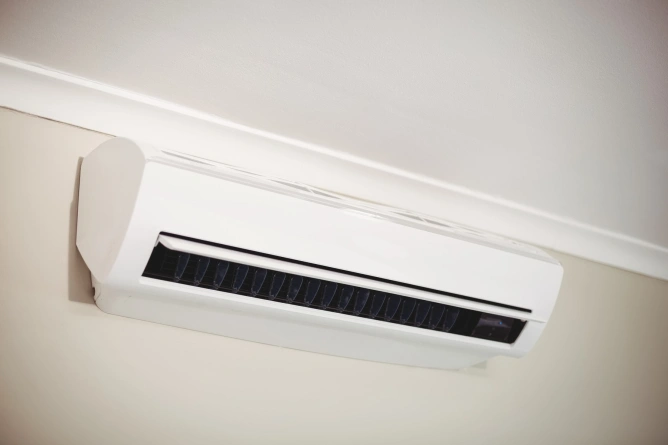
The growth of European demand for air conditioning against the backdrop of extreme temperatures strengthens the position of Chinese manufacturers in the EU market and raises a broader issue regarding Europe's technological dependencies, according to an analysis published by the European Council on Foreign Relations. China produces over 80% of the world's air conditioning units, Chinese exports to the EU increased by 43% in the first half of 2026, and Chinese brands now account for 41% of the European market, compared to 27% in 2023. ECFR argues that Europe can continue to purchase technology from China, but should simultaneously develop alternative suppliers and the capacity to produce or rapidly expand technologies deemed important.
In short, China produces over 80% of the air conditioning units sold worldwide, and its exports to the EU increased by 43% in the first half of 2026. Chinese brands now represent 41% of the European air conditioning market, up from 27% in 2023, according to data presented by ECFR. The analysis links this expansion to the growing need for adaptation to heat but warns that a quick solution to climate vulnerability could create another vulnerability if Europe becomes dependent on a small number of external suppliers. ECFR does not propose withdrawing China from European supply chains nor producing all critical technologies in the EU. The recommendation is to maintain viable trade alternatives through partnerships, incentives, public procurement, and common standards. The author uses China's industrial policy as a lesson for Europe: Beijing has not accepted its economic dependencies as permanent but has invested for decades to build its competencies and options in sectors considered strategic.
Heat waves are transforming cooling from a product primarily associated with comfort into an increasingly important component of the adaptation of European infrastructure and buildings. The ECFR analysis starts from the effects of the summer of 2026 on schools, rail transport, energy production, and health to show that reducing emissions is no longer the only climate issue facing Europe. European societies must simultaneously adapt to the already higher temperatures, and households are responding by purchasing portable air conditioning units.
For this demand, the Chinese industry is in a dominant position. China produces over 80% of the world's air conditioning units, and exports to the European Union increased by 43% compared to the previous year in the first half of 2026. The share of Chinese brands in the European market reached 41%, up from 27% in 2023, meaning that nearly two out of five units sold in the European market now come from Chinese manufacturers.
ECFR emphasizes that this position is not explained solely by lower costs and high production capacity. Chinese companies have adapted products to European market conditions, including the difficulties of installing traditional units in buildings and local regulations. The analysis gives the example of Midea's PortaSplit model, designed to reduce barriers created by high costs and the complexity of installing fixed systems.
Chinese manufacturers have also adopted refrigerants with a lower climate impact to comply with European environmental standards. The combination of industrial scale, product adaptation, supply chains, and technological capacity allows companies to respond quickly when international demand changes.
Chinese authorities and commentators present this evolution as evidence of the complementarity between the economies of China and the EU. In this interpretation, Europe needs efficient and affordable products to adapt to climate changes, and the Chinese industry has the capacity to provide them quickly, which would demonstrate the advantages of maintaining a close trade relationship.
However, the ECFR analysis challenges the conclusion that Europe should accept the current structure of trade as a natural and permanent arrangement of production. The author notes that China did not follow this logic when its position in the global economy was different and has used industrial policy for decades to alter its comparative advantages.
Since the reforms launched during Deng Xiaoping's era to the Made in China and Dual Circulation strategies, Beijing has pursued the development of sectors it considers important even when Chinese companies initially lacked competitive positions. Subsidies, preferential financing provided by state banks, coordinated public investment funds, public procurement, favorable access to infrastructure and land, and policies regarding production localization and technology transfer have contributed to the expansion of Chinese industrial capacities.
According to the analysis, China's current five-year plan emphasizes "autonomy and controllability" for technologies that support critical infrastructures, including energy systems. The goal is not complete isolation from the global economy but reducing situations where external dependency could limit Beijing's ability to act in sectors considered strategic.
ECFR believes that this logic, more than the specific tools used by China, may be relevant for Europe. The author does not recommend copying the Chinese industrial model and warns that the EU does not have a centralized state capable of directing capital and supporting companies through commercial losses to achieve politically set goals.
The identified lesson is narrower: dependencies that can become strategic constraints should not be treated as permanent, industrial competitiveness cannot be evaluated solely by current production costs, and Europe should maintain real alternatives for the technologies it may need under different economic or geopolitical conditions.
Air conditioning is used in the analysis as an example of this broader issue. As temperatures rise, cooling can become an important infrastructure, in a way comparable to heating or water supply. Europe will need more solutions, and air conditioning units represent only one of them.
ECFR lists alongside these energy-efficient cooling technologies, passive solutions, evaporative cooling, reflective coatings, building renovations, and stricter construction standards. Technological diversification can reduce both energy consumption and dependence on a single type of product or supplier.
The author does not argue that all these solutions must be developed and produced within the European Union. The proposal is for Europe to maintain a sufficiently diversified network of suppliers and production capacities so that it can change sources when conditions change.
The examples presented go beyond the cooling sector. Singapore and Gulf states have accumulated experience in efficient systems such as neighborhood-level centralized cooling and could become partners for Europe in developing such solutions. In the battery sector, South Korea is already an important supplier and represents, according to ECFR, 78% of the installed battery capacity in Europe.
Japan is cited as an example of diversifying the supply of rare earths through partnerships with Australia, Malaysia, and Vietnam, while India has doubled its solar cell production capacity in the first half of 2026 through localization incentives that also cover components further up the supply chain, such as ingots and polysilicon.
China would continue to be part of European clean technology supply chains in such a model. ECFR does not propose economic decoupling or complete replacement of Chinese suppliers, and China's industrial capacity remains too important for such a strategy to be realistic in many areas.
The goal would be to have commercial alternatives that can operate at a sufficient scale if disruptions, geopolitical tensions, or changes in trade policies occur. Europe could support these alternatives through mutual access to public procurement markets, targeted incentives, and common standards for products.
This approach is close to the European concept of reducing economic risks, but the analysis emphasizes the industrial capacity behind diversification. Having multiple suppliers on paper is not enough if only one of them can produce the necessary quantities and technologies in a crisis moment.
ECFR links this argument to climate adaptation. Europe has concluded that the effects of climate change cannot be addressed exclusively after they occur. Dikes, air conditioning, or flood management infrastructure are necessary for adaptation, but climate policy simultaneously aims to reduce the cause of the problem by decreasing emissions from fossil fuels.
The author proposes the same logic for economic dependencies. Europe must be able to manage existing trade relationships and vulnerabilities, but at the same time invest in innovation, its own capacities, and partnerships that offer it more options in the future.
The analysis does not assert that China's dominance in the air conditioning market currently represents a threat or that Beijing intends to use this position against Europe. The argument is preventive: a technology that seems a simple consumer good can become more important as the climate changes, and dependency takes on a different significance when access to the product becomes essential for the functioning of society.
ECFR applies the same principle to clean technologies, batteries, raw materials, and other sectors in which Europe depends on concentrated industrial capacities outside the Union. Not every dependency needs to be eliminated, but Europe should be able to distinguish between efficient trade relationships and those that could reduce its capacity to choose in the event of a political, economic, or climate change.
The increase in sales of Chinese air conditioning thus becomes, in the ECFR argument, an example of the intersection of two European issues: adapting to a warmer climate and trying to reduce economic dependencies considered vulnerable. The proposed solution is not to abandon Chinese products but to develop a system in which Europe can continue to buy them without them being the only available option at scale.
The European Council on Foreign Relations is an independent pan-European think tank. The material, published on August 18, 2026, and signed by senior policy fellow for Asia Byford Tsang, is a commentary and represents the author's analysis, not an official position of the European Union nor a collective position of ECFR.
The text uses the increase in European imports of air conditioning units from China as a starting point for a broader argument regarding industrial policy, economic security, and climate adaptation. The central recommendation is for Europe to maintain access to Chinese products and capacities while simultaneously building alternative suppliers and the ability to rapidly expand other solutions when circumstances require.
In short, China produces over 80% of the air conditioning units sold worldwide, and its exports to the EU increased by 43% in the first half of 2026. Chinese brands now represent 41% of the European air conditioning market, up from 27% in 2023, according to data presented by ECFR. The analysis links this expansion to the growing need for adaptation to heat but warns that a quick solution to climate vulnerability could create another vulnerability if Europe becomes dependent on a small number of external suppliers. ECFR does not propose withdrawing China from European supply chains nor producing all critical technologies in the EU. The recommendation is to maintain viable trade alternatives through partnerships, incentives, public procurement, and common standards. The author uses China's industrial policy as a lesson for Europe: Beijing has not accepted its economic dependencies as permanent but has invested for decades to build its competencies and options in sectors considered strategic.
Heat waves are transforming cooling from a product primarily associated with comfort into an increasingly important component of the adaptation of European infrastructure and buildings. The ECFR analysis starts from the effects of the summer of 2026 on schools, rail transport, energy production, and health to show that reducing emissions is no longer the only climate issue facing Europe. European societies must simultaneously adapt to the already higher temperatures, and households are responding by purchasing portable air conditioning units.
For this demand, the Chinese industry is in a dominant position. China produces over 80% of the world's air conditioning units, and exports to the European Union increased by 43% compared to the previous year in the first half of 2026. The share of Chinese brands in the European market reached 41%, up from 27% in 2023, meaning that nearly two out of five units sold in the European market now come from Chinese manufacturers.
ECFR emphasizes that this position is not explained solely by lower costs and high production capacity. Chinese companies have adapted products to European market conditions, including the difficulties of installing traditional units in buildings and local regulations. The analysis gives the example of Midea's PortaSplit model, designed to reduce barriers created by high costs and the complexity of installing fixed systems.
Chinese manufacturers have also adopted refrigerants with a lower climate impact to comply with European environmental standards. The combination of industrial scale, product adaptation, supply chains, and technological capacity allows companies to respond quickly when international demand changes.
Chinese authorities and commentators present this evolution as evidence of the complementarity between the economies of China and the EU. In this interpretation, Europe needs efficient and affordable products to adapt to climate changes, and the Chinese industry has the capacity to provide them quickly, which would demonstrate the advantages of maintaining a close trade relationship.
However, the ECFR analysis challenges the conclusion that Europe should accept the current structure of trade as a natural and permanent arrangement of production. The author notes that China did not follow this logic when its position in the global economy was different and has used industrial policy for decades to alter its comparative advantages.
Since the reforms launched during Deng Xiaoping's era to the Made in China and Dual Circulation strategies, Beijing has pursued the development of sectors it considers important even when Chinese companies initially lacked competitive positions. Subsidies, preferential financing provided by state banks, coordinated public investment funds, public procurement, favorable access to infrastructure and land, and policies regarding production localization and technology transfer have contributed to the expansion of Chinese industrial capacities.
According to the analysis, China's current five-year plan emphasizes "autonomy and controllability" for technologies that support critical infrastructures, including energy systems. The goal is not complete isolation from the global economy but reducing situations where external dependency could limit Beijing's ability to act in sectors considered strategic.
ECFR believes that this logic, more than the specific tools used by China, may be relevant for Europe. The author does not recommend copying the Chinese industrial model and warns that the EU does not have a centralized state capable of directing capital and supporting companies through commercial losses to achieve politically set goals.
The identified lesson is narrower: dependencies that can become strategic constraints should not be treated as permanent, industrial competitiveness cannot be evaluated solely by current production costs, and Europe should maintain real alternatives for the technologies it may need under different economic or geopolitical conditions.
Air conditioning is used in the analysis as an example of this broader issue. As temperatures rise, cooling can become an important infrastructure, in a way comparable to heating or water supply. Europe will need more solutions, and air conditioning units represent only one of them.
ECFR lists alongside these energy-efficient cooling technologies, passive solutions, evaporative cooling, reflective coatings, building renovations, and stricter construction standards. Technological diversification can reduce both energy consumption and dependence on a single type of product or supplier.
The author does not argue that all these solutions must be developed and produced within the European Union. The proposal is for Europe to maintain a sufficiently diversified network of suppliers and production capacities so that it can change sources when conditions change.
The examples presented go beyond the cooling sector. Singapore and Gulf states have accumulated experience in efficient systems such as neighborhood-level centralized cooling and could become partners for Europe in developing such solutions. In the battery sector, South Korea is already an important supplier and represents, according to ECFR, 78% of the installed battery capacity in Europe.
Japan is cited as an example of diversifying the supply of rare earths through partnerships with Australia, Malaysia, and Vietnam, while India has doubled its solar cell production capacity in the first half of 2026 through localization incentives that also cover components further up the supply chain, such as ingots and polysilicon.
China would continue to be part of European clean technology supply chains in such a model. ECFR does not propose economic decoupling or complete replacement of Chinese suppliers, and China's industrial capacity remains too important for such a strategy to be realistic in many areas.
The goal would be to have commercial alternatives that can operate at a sufficient scale if disruptions, geopolitical tensions, or changes in trade policies occur. Europe could support these alternatives through mutual access to public procurement markets, targeted incentives, and common standards for products.
This approach is close to the European concept of reducing economic risks, but the analysis emphasizes the industrial capacity behind diversification. Having multiple suppliers on paper is not enough if only one of them can produce the necessary quantities and technologies in a crisis moment.
ECFR links this argument to climate adaptation. Europe has concluded that the effects of climate change cannot be addressed exclusively after they occur. Dikes, air conditioning, or flood management infrastructure are necessary for adaptation, but climate policy simultaneously aims to reduce the cause of the problem by decreasing emissions from fossil fuels.
The author proposes the same logic for economic dependencies. Europe must be able to manage existing trade relationships and vulnerabilities, but at the same time invest in innovation, its own capacities, and partnerships that offer it more options in the future.
The analysis does not assert that China's dominance in the air conditioning market currently represents a threat or that Beijing intends to use this position against Europe. The argument is preventive: a technology that seems a simple consumer good can become more important as the climate changes, and dependency takes on a different significance when access to the product becomes essential for the functioning of society.
ECFR applies the same principle to clean technologies, batteries, raw materials, and other sectors in which Europe depends on concentrated industrial capacities outside the Union. Not every dependency needs to be eliminated, but Europe should be able to distinguish between efficient trade relationships and those that could reduce its capacity to choose in the event of a political, economic, or climate change.
The increase in sales of Chinese air conditioning thus becomes, in the ECFR argument, an example of the intersection of two European issues: adapting to a warmer climate and trying to reduce economic dependencies considered vulnerable. The proposed solution is not to abandon Chinese products but to develop a system in which Europe can continue to buy them without them being the only available option at scale.
The European Council on Foreign Relations is an independent pan-European think tank. The material, published on August 18, 2026, and signed by senior policy fellow for Asia Byford Tsang, is a commentary and represents the author's analysis, not an official position of the European Union nor a collective position of ECFR.
The text uses the increase in European imports of air conditioning units from China as a starting point for a broader argument regarding industrial policy, economic security, and climate adaptation. The central recommendation is for Europe to maintain access to Chinese products and capacities while simultaneously building alternative suppliers and the ability to rapidly expand other solutions when circumstances require.
Sources

Latest News
23:13
Montenegrin authorities expelled the founder of the Russian military blog Rybar
23:02
Donald Trump announced that Russia will begin massive diesel deliveries to the US and the global market, following a discussion with Vladimir Putin
22:58
A Romanian woman was killed in Spain, and her husband, suspected of the murder, allegedly later committed suicide
22:25
A Romanian man who went missing in Italy was found dead in a river
22:21
A magnitude 7.6 earthquake occurred off the coast of Panama / Tsunami warnings were issued
See more news
NEWS ON THE SAME TOPICS



Personalized news feed, AI-powered search, and notifications in a more interactive experience.




.webp)