



The Greens are calling for a European plan to address heatwaves, with protection for buildings and workers and a timetable for phasing out fossil fuels



Always see our news on Google
Terry Reintke calls for funding to adapt to extreme temperatures, alongside reducing the causes of warming. The group’s proposals include cooling schools and hospitals, protecting workers, and supporting vulnerable households, while the Commission prepares a European climate resilience framework.
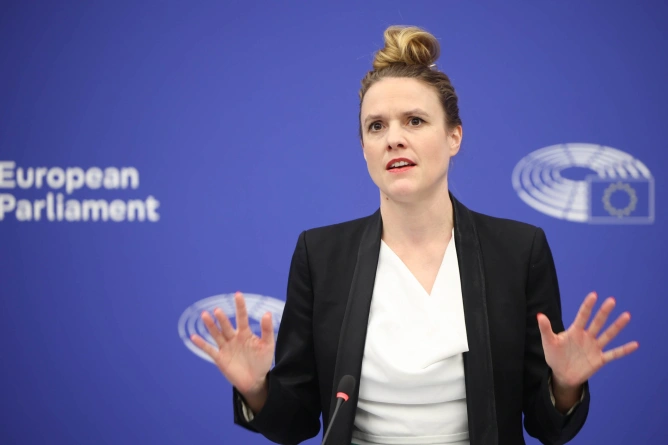
The Greens/European Free Alliance Group calls on Ursula von der Leyen to present a funded action plan for heatwaves and other extreme weather events, together with a clear timetable for phasing out fossil fuels. At the briefing in Strasbourg, the group’s co-president, Terry Reintke, argued that protecting people from the effects of warming and reducing emissions must be pursued simultaneously, without adaptation replacing policies to limit climate change.
In brief
1.The Greens are calling for measures to cool buildings and protect workers, prioritizing exposed people and low-income households. Reintke wants the plan for extreme events to have funding, rather than remain a statement of intent.
2.The group is also calling for a binding timetable for phasing out fossil fuels. The dates and fiscal instruments in the letter to the Commission are proposals from the Greens, not adopted European measures.
3.The Commission is preparing an integrated framework for climate resilience and risk management, scheduled for the second half of 2026. Its consultation highlighted calls for stable funding, risk assessment, and the use of nature-based solutions.
4.The Socialists argue that climate damage affects competitiveness, while the ECR emphasizes prevention, civil protection, and the responsibility of national authorities. Positions differ on the policies needed, without indicating agreement on the Greens’ plan.
Reintke described adaptation as action targeting the places where people live and work. She cited urban green spaces as a tool against heat and called for accelerating nature restoration measures. In her argument, the European response must go beyond emergency interventions and reduce exposure before the next episode of extreme temperatures.
The heatwave plan published by the Greens in July calls for support to cool schools, hospitals, and care centers, as well as priority assistance for vulnerable homes. For workers, the group proposes mandatory breaks, drinking water, shade, and adjusted schedules during very hot periods. The proposal combines investment with changes to work organization.
These interventions serve different functions. In its explanations of extreme heat, the Commission states that trees provide shade and cool the air by releasing water vapor. Air conditioning can protect vulnerable people, but its use increases electricity consumption and releases heat into the street. This underlines the need to combine building cooling with urban space planning, rather than relying on a single solution.
Funding is one of the requests addressed to the Commission president. Reintke’s letter of 8 September proposes a 50% tax on windfall profits in the fossil fuel sector as a new EU own resource. The document also calls for reforming fiscal rules to mobilize resilience funds, without presenting a detailed implementation budget.
The same letter calls for eliminating coal by 2030, gas by 2035, and oil by 2040. Reintke explained at the briefing that replacing Russian gas with gas from other countries does not eliminate the fuel’s climate impact. For the Greens, securing supply and reducing emissions must be addressed together, and investment in adaptation does not justify postponing the phase-out of fossil fuels.
The economic argument was also invoked by Iratxe García, president of the Socialists and Democrats Group. At her own briefing, she argued that drought and heat affect economic activity, mentioning difficulties for river transport and water-dependent production. García rejected presenting climate policy as an adversary of competitiveness and called for both adaptation and reducing the causes of warming.
The ECR formulates its priorities through prevention, resilient infrastructure, and well-equipped civil protection services, including firefighting aircraft. The group calls for primary responsibility to remain at national and local level. In its economic agenda, the ECR supports affordable energy from all available sources, including nuclear, and climate policies that protect jobs and industrial capacity.
The Commission is already preparing an integrated framework for climate resilience and risk management, with adoption of the package scheduled for the second half of 2026, following an impact assessment. According to the Commission, consultation participants called for harmonized risk assessments and stable funding. This timetable does not confirm the adoption of the tax or the fossil fuel deadlines requested by the Greens.
Reintke called for the State of the Union address to provide a concrete response on the plan for extreme events and its funding. The debate is scheduled for 16 September in Strasbourg. The measures requested for buildings and workers, the source of the money, and the binding nature of future rules remain to be determined through the initiatives and negotiations to follow.
Latest News
16:26
16:19
16:09
15:57
15:56
See more news
NEWS ON THE SAME TOPICS
.webp)



.webp)
.webp)


