The drought and storms of 2026 have shown how quickly a water, transport, or electricity problem can spread to other services and economic activities, the European Environment Agency (EEA) warns. In a briefing published on 3 November, the agency analyzes transport bottlenecks on the Rhine, damage caused by Storm Kristin in Portugal, and the shutdown of nuclear reactors on the Danube. Its conclusion is that protecting each facility separately is not enough: operators and authorities must prepare the entire system for situations in which several networks are affected simultaneously.
In brief The EEA analyzes three cases from 2026 to explain cascading effects: the drought on the Rhine, Storm Kristin in Portugal, and pressures on electricity generation in Romania and Hungary. On the Rhine, the loads of some barges fell to approximately 20% of capacity, while rates on the Rotterdam–Karlsruhe route rose from about 45 to 150–155 euros per tonne between the end of June and 31 July. In Portugal, more than one million customers were left without electricity at the height of the storm, and power outages also affected telecommunications. At Cernavodă, both reactors were shut down preventively and safely because of the low level of the Danube. The figure of approximately 2 billion euros per year for drought-related energy losses comes from JRC modeling published in 2020. Triodos’s estimate of an impact of around 1% on EU GDP in 2026 is a private analysis of extreme heat. The two figures are not official tallies of this year’s damage and should not be added together. The agency recommends designing for the future climate, assessing interdependencies between networks, stress tests, functional alternatives, and coordination between operators. The briefing does not create new legal obligations, and the European climate resilience law presented in October is still a proposal.
Transport networks, power plants, communication systems, and water supplies are often managed separately, although they depend on one another. A power plant may be intact but unable to generate electricity without cooling water. A mobile phone mast may remain undamaged but stop working if it loses its electricity supply. For people and companies, the consequence is an interruption of a service even where the weather event has caused no direct damage.
The EEA analysis brings together case studies and links them to the risks identified in the 2024 European Climate Risk Assessment. It is not a complete inventory of the damage in 2026. Its purpose is to show where disruptions spread and how well alternatives can function when several countries or sectors are affected by the same event.
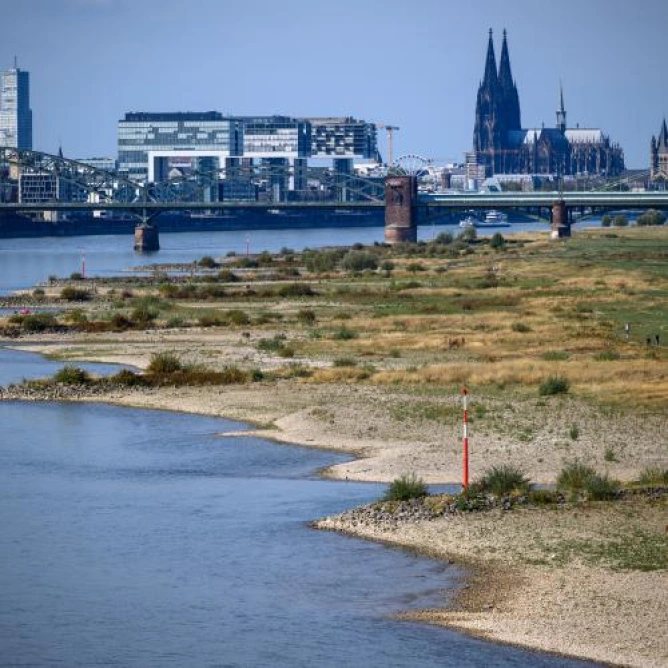
On the Rhine, drought and high summer temperatures sharply reduced the capacity of a transport corridor essential to European industry. According to data compiled by the agency, at the Kaub station on the Middle Rhine, the water level fell below 10 centimeters on 14 August, compared with the previous minimum of approximately 25 centimeters in 2018. The gauge reading is not the actual depth of the navigable channel; it does, however, indicate the conditions that limit vessel loads.
At the end of July, some barges passing through the Kaub area were carrying approximately 250 tonnes, around 20% of their usual load. For tankers on the Rotterdam–Karlsruhe route, the rate rose from about 45 euros per tonne at the end of June to 150–155 euros per tonne by 31 July. The reduction in loads therefore also meant more expensive transport for businesses dependent on the river.
Chemical manufacturer Covestro declared force majeure for products from its Dormagen facility because road and rail transport could not fully replace the capacity lost on the waterway. Evonik reported production restrictions at Marl. The EEA also cites an estimate that replacing one barge may require up to 150 trucks, depending on the cargo and capacity. Shifting flows to roads or railways can transfer bottlenecks to other networks, affecting supplies, production, and delivery deadlines.
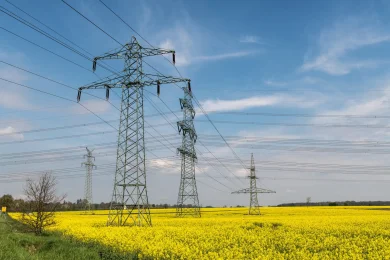
In Portugal, Storm Kristin on 28 January hit electricity, transport, and telecommunications simultaneously. Distribution operator E-REDES reported more than one million customers without electricity at the peak and more than 6,000 kilometers of affected network. Transmission system operator REN recorded 61 very-high-voltage pylons knocked down and 774 kilometers of lines out of service, approximately 7% of its network.
Preventive measures and alternative routes kept the national electricity transmission system operating, except for some local interruptions near the Zêzere substation, which was partially destroyed. Distribution to consumers, however, suffered much more severely: two weeks after the storm, approximately 30,000 customers in the worst-affected area still had no electricity.
Unstable power supplies were one of the main causes of telecommunications outages, which affected about 200,000 fixed connections and 300,000 mobile-phone users, according to the briefing. At the same time, 345 complete road closures and disruptions on 11 railway sections were recorded. Without reliable communications and access routes, response and service restoration in turn become more difficult.
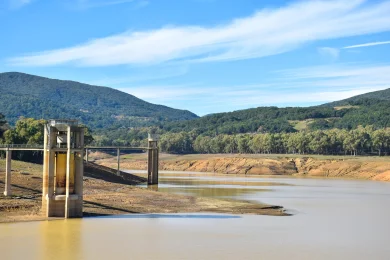
In the Danube basin, drought exposed the dependence of electricity generation on water availability. At Cernavodă, Unit 1 was controlled-shut down on 28 July and Unit 2 on 13 August 2026, according to the National Commission for the Control of Nuclear Activities (CNCAN). The authority states that the shutdowns were preventive, carried out safely, and had no radiological consequences for the population or the environment. The two reactors normally provide approximately one-fifth of Romania’s electricity generation.
The temporary loss of this generation came at a time when reduced flows were also limiting hydropower production, while heat was increasing demand for air conditioning. In Hungary, the Danube’s low level and high temperature led to power reductions and temporary shutdowns at the Paks nuclear power plant, which normally provides approximately 40% of the country’s electricity generation, the EEA reports.
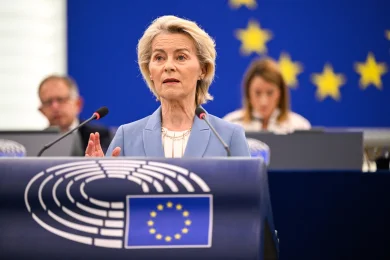
Imports and cooperation between operators helped compensate for the reductions in generation. Following coordination meetings on 11 and 19 August, the European Commission stated that regional supply remained stable and that there were no short-term risks that available generation and imports would be unable to cover consumption, although the balance was strained. In its 11 August assessment, the Commission also highlighted the contribution of voluntary demand reductions, particularly in Hungary.
Interconnections therefore help one country cover a temporary shortfall, but they do not eliminate the risk: if drought and heatwaves simultaneously reduce generation in several countries, the energy available for import may also become scarce. This is one reason why the EEA calls for assessments to track networks and cross-border dependencies, not just the condition of a power plant or an electricity line.
Costs go beyond repairs. A business may lose production because of a lack of energy or raw materials even if its own facilities are undamaged. More expensive transport, delays, and the use of reserve capacity transmit the effects to other companies and regions.
To illustrate exposure to drought, the EEA cites an estimate according to which energy accounts for approximately 23% of average annual economic losses caused by drought in the EU and the United Kingdom, around 2 billion euros. The proportion appears in the 2020 JRC report on the effects of drought, in the chart for the 1981–2010 reference climate period. The losses are modeled and expressed at 2015 prices; they do not represent energy damage measured in 2026.
The modeling starts from the relationship between drought intensity and losses reported at country level, then allocates costs among sectors using their sensitivity to drought and their economic share. The authors warn of limited data on damage and uncertainty in the estimates. Effects on ecosystems that have not been monetized are not included in this calculation.
Separately, a Triodos Bank analysis published in August estimates that the effects of extreme heat on agriculture, energy, transport, and labor productivity could reduce EU GDP in 2026 by approximately 1% compared with the level that would have been reached without these effects. It is a private estimate, based in part on assumptions for the rest of the summer, not a final statistical result. It does not measure critical infrastructure alone and cannot be added to the annual JRC estimate.
The EEA proposes six areas for action. The first is to use the future climate in the design, maintenance, and assessment of investments, rather than relying exclusively on historical observations. The second is to examine the entire system: networks, suppliers, essential services, and consequences in other countries. The third is to periodically test resilience against scenarios in which several components fail simultaneously.
The agency also recommends checking alternatives across sectors: additional routes, backup power, early warning, and emergency procedures that remain usable during an extended event. Cooperation among operators, regulators, administrations, and emergency services must clarify responsibilities and dependencies. Finally, where targeted repairs and upgrades no longer provide sufficient protection, systems may need to be redesigned, relocated, or reorganized.
These recommendations add to the existing European framework for the resilience of essential service operators. The Directive on the Resilience of Critical Entities, adopted in 2022, provides for risk assessment and measures to prevent and respond to incidents. The climate resilience framework presented by the Commission on 27 October 2026 likewise aims at advance preparation for risks and is accompanied by a proposal for a European law that must be adopted by Parliament and the Council.
The EEA briefing introduces no new legal obligations. It does, however, show what investments need to focus on: continuity of services for citizens and companies, including when infrastructure on which a network depends becomes temporarily unavailable.