Commission prepares joint energy purchases through a market operator and seeks to extend support for industry



Always see our news on Google
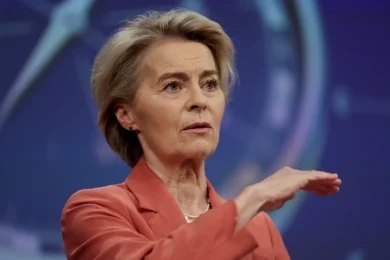
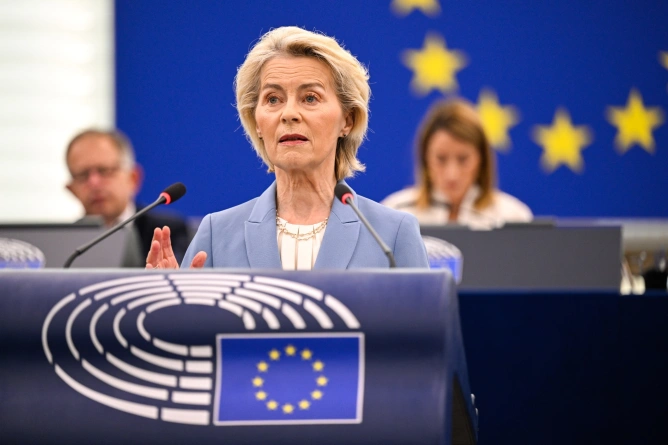
The European Commission will create a new team to aggregate energy demand and wants to move from simply connecting buyers and suppliers to joint purchasing carried out through a market operator, Ursula von der Leyen announced in the European Parliament. The European executive also intends to extend temporary support for the industries most exposed to high energy costs and open a strategic dialogue with European refineries to reduce costs and secure supplies, including for defense.
The European Commission is preparing a new mechanism for joint energy purchases, under which demand from the Member States would be aggregated and a market operator would be tasked with making joint purchases, Ursula von der Leyen, President of the European Commission, announced in the plenary session of the European Parliament on 6 October. The executive thus wants to take further the model used during the energy crisis triggered after the reduction of gas deliveries from Russia, moving from facilitating contact between buyers and suppliers to a more centralized form of aggregation and purchasing.
In brief:
The Commission will create a new team to aggregate energy demand from the EU and intends to entrust a market operator with carrying out joint purchases.
The mechanism is not yet operational. The Commission has not announced the operator, the volume to be purchased, the launch schedule, or the legal act under which it will operate.
Ursula von der Leyen announced that the temporary aid framework for the industrial sectors most exposed to energy costs would be extended, but did not specify the new expiry date in her speech.
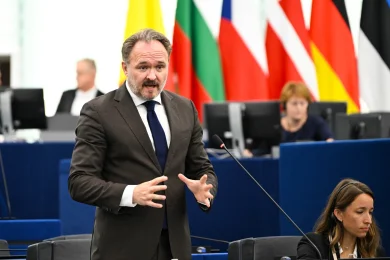
The Commission will also open a strategic dialogue with European refineries, led by Commissioners Dan Jørgensen and Andrius Kubilius, to reduce costs and ensure supplies, including for defense needs.
In the longer term, the Commission links the response to high prices with electrification, investment in grids, and reducing dependence on imported oil and gas.
Von der Leyen placed energy at the center of her intervention on preparations for the European Council of 15–16 October. According to figures presented by the Commission President, gas prices have risen by 140% since the end of February, diesel prices have doubled, and the additional cost of fossil fuel imports for Europe has reached approximately EUR 100 billion.
The Commission considers that these costs simultaneously affect households and the competitiveness of European industry. Von der Leyen warned that the pressure could increase as winter approaches and argued that the response must combine immediate measures with structural interventions that reduce Europe's exposure to the volatility of international fossil fuel markets.
One of the immediate measures announced is the new team for demand aggregation. The Commission's starting point is that the Member States have different energy mixes and therefore purchase energy in a fragmented manner.
The EU has already used demand aggregation following the 2022 gas crisis. The EU Energy Platform enabled buyers in the Member States to pool their needs and created mechanisms through which suppliers could respond to aggregated European demand.
Von der Leyen says, however, that the new stage must go further. Instead of limiting the European instrument to bringing demand and supply into contact, the Commission wants buyers' needs to be aggregated and then a market operator to be able to carry out the joint purchases in practice.
The difference is important. A matchmaking system identifies available volumes and facilitates the relationship between buyers and suppliers, but contracts are concluded by the participants. The model now described by the Commission President would introduce an additional level, in which the joint purchase would be executed through a designated operator.
The Commission did not specify in its speech who this operator might be, through what procedure it would be selected, which energy sources would be included in the mechanism, what volumes could be purchased, or when the first purchases would begin. The announcement must therefore be treated as a measure in preparation, not as an already functioning system.
The new mechanism is expected to build on the experience gained through the current EU Energy and Raw Materials Platform. This brings together the European instruments developed to aggregate demand, facilitate relations with suppliers, and, more recently, expand cooperation to hydrogen and raw materials.
The Commission is simultaneously addressing the costs borne by industry. Von der Leyen recalled that the executive introduced in the spring a temporary state aid framework for the sectors most affected by the energy crisis and announced that it would be extended.
The current Middle East Crisis Temporary State Aid Framework, adopted on 29 April, allows Member States to provide temporary support to sectors heavily affected by price increases, including energy-intensive industries. In its current form, the framework is scheduled to operate until 31 December 2026.
Von der Leyen did not specify in her speech until what date it would be extended, nor did she announce the formal adoption of the amendment to the framework. Therefore, the Commission's political commitment to an extension must be distinguished from the legal act that will establish the new conditions and duration.
The Commission President also insisted on how support should be provided. Aid should be targeted, not distributed generally, in order to limit budgetary costs and avoid further stimulating energy demand.
This approach is in line with AccelerateEU, the set of measures presented by the Commission in April in response to the new fossil fuel price shock. The strategy combines the possibility of temporary interventions for households and exposed economic sectors with measures to reduce consumption of imported fuels in the long term.
A second new intervention concerns European refineries. The Commission will organize a strategic dialogue with the sector to examine costs and how Europe can protect its supplies.
The dialogue will be led by Dan Jørgensen, European Commissioner for Energy and Housing, and Andrius Kubilius, European Commissioner for Defense and Space. The involvement of the defense portfolio reflects the fact that the availability of refined products is not treated solely as a commercial or energy issue.
Von der Leyen said that the objective is both to reduce costs and to guarantee the supplies Europe needs, including for defense. The speech does not, however, announce a financing scheme for refineries, new obligations for companies, or direct intervention in prices.
The dialogue should therefore be treated as a stage in policy preparation. The Commission is expected to discuss the matter with industry before determining whether additional measures are necessary and what form they might take.
The short-term response is linked to a broader strategy to reduce dependence on oil and gas imports. Von der Leyen argued that Europe remains vulnerable as long as a significant share of its energy consumption depends on external markets over which the EU has no control.
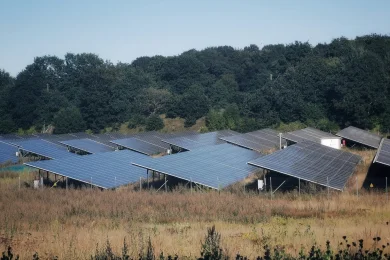
The Commission proposes accelerating electrification and domestic clean energy production. According to figures presented by von der Leyen, more than 80 GW of renewable capacity was installed last year, but approximately six times as much capacity is still awaiting grid connection.
The issue is therefore not only how much energy Europe can produce, but also how quickly infrastructure can connect new capacity and transport energy to consumers and industry.
Von der Leyen linked this issue to the European grid package and the investments needed in cross-border infrastructure. The Commission considers interconnections and grids to be a component of competitiveness, since infrastructure differences contribute to large price differences between Member States.
Electrification is the second structural pillar. At present, electricity accounts for less than a quarter of the EU's final energy consumption. The Commission aims to double this share by 2040 and intends to present additional measures in the coming months to implement this direction.
Von der Leyen estimates that achieving this objective could reduce Europe's annual bill for fossil fuel imports by approximately EUR 260 billion. This is an estimate presented by the Commission for the effects of broader electrification, not a saving already achieved.
The new team for demand aggregation must be understood in this broader context. In the immediate term, the Commission is trying to use the collective weight of European buyers to negotiate more effectively for the energy the EU continues to need. In the long term, the strategy is to reduce the volume that must be purchased on external markets.
For industry, the three elements complement one another: temporary support for companies affected by the price shock, joint purchases to strengthen the position of European buyers, and structural investments that should reduce dependence on fossil fuels.
What changed with the announcement of 6 October is primarily the ambition regarding joint purchases. The Commission is no longer speaking only about a platform that brings demand and supply together, but about the possibility for a market operator to carry out joint purchases on behalf of aggregated demand.
The next step will be to define the mechanism. For the announcement to produce concrete effects, the Commission must determine the operator, the energy products concerned, how companies and states will participate, the timetable, and the legal framework for the purchases.

Latest News
22:57
22:53
22:42
22:30
22:28
See more news
NEWS ON THE SAME TOPICS