The Commission checks whether the compensation of 42.2 million euros granted to some investors in solar energy constitutes illegal state aid.



Always see our news on Google
An arbitration tribunal has ordered Romania to compensate ten investors following the modification of the green certificate scheme, and the state has transferred money into an account opened in the name of the beneficiaries. The Commission preliminarily considers that the ruling and its implementation may constitute state aid incompatible with the internal market, but the investigation has not yet established the final outcome.
The European Commission has opened an in-depth investigation into the compensation of 42.2 million euros, plus interest and other costs, which Romania was obliged to pay to a group of ten investors in solar energy. The institution is checking whether the arbitral ruling and the payment made for its implementation provide companies with an economic advantage that violates EU state aid rules.
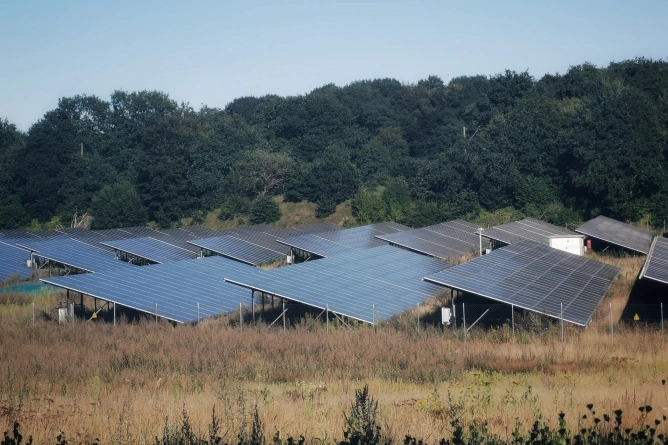
The investors own stakes in five photovoltaic plants that benefited from the Romanian support scheme through green certificates. They argued that the changes introduced by Romania starting in 2013 reduced the revenues they would have expected to obtain, and the arbitration tribunal ruled in February 2024 that the state violated the Energy Charter Treaty.
In short
1. An arbitration tribunal has ordered Romania to pay ten investors 42.2 million euros, plus interest and additional costs, for the modification of the support scheme granted to photovoltaic plants.
2. Romania has notified the Commission's ruling and informed the institution that it has made a payment into an account opened in the name of the compensation beneficiaries.
3. The Commission preliminarily considers that the arbitral ruling and its implementation constitute state aid and that the measure may be incompatible with the internal market.
4. The investigation will also examine whether the arbitration between EU investors and Romania circumvented the jurisdiction of national courts and the Court of Justice of the European Union.
5. The opening of the procedure allows Romania, investors, and other interested parties to submit observations and does not represent a final decision regarding the legality of the compensations.
Romania created the green certificate scheme to support the production of electricity from renewable sources. Eligible producers received certificates for the electricity produced, which they could sell to suppliers obliged to purchase a certain number, thus generating additional income compared to the sale of energy.
The Commission approved the scheme in July 2011 under state aid rules. Romania subsequently modified the mechanism in 2013, 2014, and in the following years, and the relevant changes were approved by the Commission in May 2015 and December 2016.
Ten companies that invested in five solar plants initiated arbitration proceedings against Romania following these modifications. The group argued that they should be compensated for the support that the plants would have received if the Romanian authorities had not changed the green certificate scheme.
The arbitration tribunal found that Romania violated the Energy Charter Treaty and issued the ruling on February 20, 2024. The established compensation is 42.2 million euros, plus interest and additional costs that are not quantified in the Commission's document.
Romania has notified the ruling within the European state aid procedures. The state informed the Commission that it has made a payment into an account opened in the name of the beneficiaries, but the document does not specify the amount paid, the date of the transfer, or whether the investors could use the money.
The Commission considers, at this stage, that the compensation and its implementation meet the conditions to be treated as state aid. Investors would receive from public resources a compensation that other companies in a comparable situation do not receive, which may create a selective advantage and affect competition and trade within the internal market.
This is a preliminary assessment. The Commission must establish within the investigation whether there is indeed state aid, what its value is, and whether the measure can be declared compatible with the internal market.
A measure qualified as state aid is not automatically illegal. Member states can provide public support if it is notified and approved or if it falls under an exception provided by European legislation. However, the Commission states that aid that violates other EU law norms cannot be declared compatible.
The investigation therefore also focuses on the basis of the arbitration. The dispute was between investors from the European Union and Romania, which makes it an intra-EU arbitration. The Commission considers that such procedures based on the Energy Charter Treaty can circumvent the judicial system of the Union and the role of the Court of Justice in the definitive interpretation of European law.
The Court of Justice established in the Achmea ruling of 2018 that arbitration mechanisms between investors and states provided for by bilateral treaties concluded between member states are incompatible with EU law. In the Komstroy ruling of 2021, the Court specified that neither the arbitration clause in the Energy Charter Treaty can be applied to disputes between an investor from one member state and another member state.
The Commission will analyze whether the ruling regarding solar energy investors and the payment made by Romania violates the obligation of states to ensure effective judicial protection, the competence of the Court of Justice to interpret EU law, and the autonomy of the European legal order.
The investigation does not establish that investors cannot seek protection or compensation for the modification of a support scheme. Companies can challenge national measures and seek compensation before the competent courts in member states, which can ask the Court of Justice to clarify the interpretation of European law.
The Renewable Energy Directive adopted in 2018 obliges states to avoid modifying the support granted to projects in a way that negatively affects already conferred rights and undermines the economic viability of investments. The Commission specifies that such a provision did not exist in 2013, when Romania began to change the scheme contested by investors.
Romania and other interested parties can submit observations within the investigation. The Commission will analyze the information received before deciding whether the compensation constitutes incompatible state aid and what measures should be taken.
In the case of a negative conclusion, Romania could be obliged to no longer implement the ruling or to recover the aid paid, if the legal conditions for recovery are met. The Commission has not yet reached such a conclusion and has not issued a recovery order at this stage.
The investigation is registered under number SA.113263. The non-confidential version of the opening decision will be published after resolving the information considered confidential.
The Romanian green certificate scheme was created to attract investments in renewable energy production and to contribute to national and European objectives in the field. The changes introduced starting in 2013 aimed to adjust the level of support, including by delaying the granting of certificates and reducing their number for certain technologies.
The dispute analyzed by the Commission refers to the compensation granted to investors for the effects of these changes and not to the general legality of solar energy or support for renewable sources. The Commission had approved the changes made to the scheme in the context of previous state aid decisions.
The European Union has withdrawn from the Energy Charter Treaty, with the withdrawal taking effect on June 27, 2025. Romania separately notified its withdrawal on May 22, 2026, and this is set to take effect on May 23, 2027.
Latest News
20:17
19:52
19:46
19:15
19:09
See more news
NEWS ON THE SAME TOPICS

.webp)