The European Commission says that the heatwave in June caused at least 3,500 deaths and is sending rescEU planes to France and Portugal.




Always see our news on Google
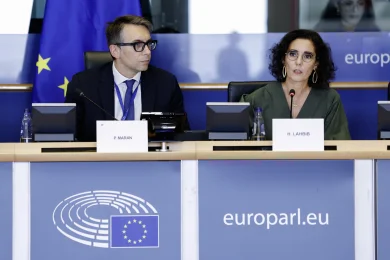
European Commissioner Hadja Lahbib said in the European Parliament that at least 3,500 deaths can be attributed to the heatwave in June, and France reported over 2,000 excess deaths just for the last week of the month. At the same time, wildfires started unusually early in 2026, and the EU sent nine rescEU planes to France and Portugal.
At least 3,500 deaths can be attributed to the heatwave in June, said European Commissioner Hadja Lahbib in the European Parliament, where she warned that Europe is already facing the direct effects of the accelerated warming of the continent: record temperatures, drought, wildfires, pressure on hospitals, closed schools, affected workplaces, and deteriorating infrastructure.
In short
1. The Commission says that at least 3,500 deaths can be attributed to the heatwave in June.
2. France reported over 2,000 excess deaths for the last week of June.
3. In 2025, over one million hectares burned in the EU, the highest level recorded.
4. The EU has prepared 22 planes, five helicopters, and 22 ground firefighting teams through rescEU and the European Civil Protection Pool.
5. Nine rescEU planes were recently sent to Portugal and France.
Hadja Lahbib said that Europe is the continent that is warming the fastest and that the effects are no longer abstract. Heatwaves and drought are already affecting daily life, and wildfires are becoming more frequent, earlier, and harder to manage.
According to the commissioner, 2026 has broken records again. Just a few weeks after the historic temperatures in June, another major heatwave is approaching. The last episode had serious effects: labor productivity decreased, schools were closed, workplaces were suspended, hospitals were overwhelmed, roads were damaged, railway tracks were deformed, and agricultural crops were affected.
The most severe consequences were for people. Lahbib said that at least 3,500 deaths can be attributed to the heatwave in June. France reported, on July 3, over 2,000 excess deaths for the last week of June, and these figures are still preliminary estimates.
The Commission specified that, until now, the Union's Civil Protection Mechanism has not been activated for emergencies directly related to the heatwave. Instead, heatwaves increase the risk of fires, and this is already evident in the requests for assistance to combat the fire.
In 2025, over one million hectares burned in the European Union, the highest level recorded. Wildfires triggered 19 requests for assistance through the Union's Civil Protection Mechanism, also the highest number recorded so far.
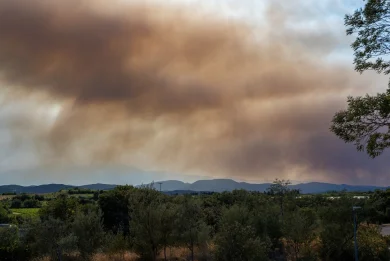
The 2026 fire season started unusually early. The Commission says that the European mechanism had already been activated twice by the end of April and the beginning of May. In recent days, Portugal and France have requested help due to severe fires.
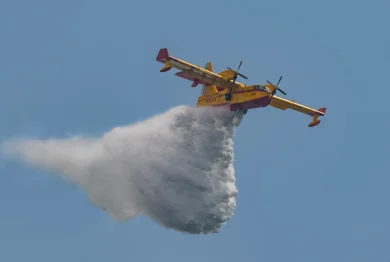
The EU sent nine rescEU planes: three to Portugal and six to France. RescEU is the European reserve used when national capacities are exceeded or when member states need rapid additional support.
For the current season, the EU has prepared through rescEU and the European Civil Protection Pool 22 firefighting planes, five helicopters, and 22 certified ground firefighting teams in 10 countries. Additionally, 777 firefighters from 14 countries are stationed in Cyprus, Greece, Italy, France, Spain, and Portugal.
The Commission says that the lessons from last year have led to strengthened capacities in the southern Union. A new European regional firefighting station has been created in Cyprus for quicker interventions when needs arise in the region.
The EU's response is not limited to intervention. The Commission says it supports member states in prevention, preparedness, response, and recovery after disasters, although national authorities remain primarily responsible for civil protection.
An important role is played by data and technology. The EU invests in drought monitoring, early detection, and rapid action, including through Copernicus services for emergency management. The Commission promotes analysis tools, assessments between states, funding, cross-border cooperation, and the exchange of best practices.
In March 2026, the Commission adopted a communication on managing the risk of wildfires, complemented by a Council recommendation. Together with member states, the Commission will develop implementation guidelines and a EU funding portal for integrated wildfire risk management.
These tools should improve data, increase public awareness, and support international commitment. For citizens, the practical part is that preparedness means not only planes sent in time for fires but also prevention, plans, better warnings, and money for risk reduction before disasters occur.
The European Union Solidarity Fund remains another important tool. It provides financial support to member states and candidate countries affected by natural disasters and helps cover emergency and reconstruction costs.
The Commission also mentioned the role of cohesion policy and the Recovery and Resilience Mechanism. European funds can finance prevention, preparedness, and reconstruction, and recovery plans include investments and reforms to increase resilience to natural disasters.
Lahbib said that the European executive is also preparing a new European Integrated Framework for Climate Resilience, which is expected to be adopted later in 2026. This should provide a more coherent approach to adapting Europe to rapidly increasing climate risks.
Heatwaves and wildfires show that civil protection is no longer just a matter of post-disaster intervention. In conditions where hospitals, schools, transport, agriculture, and workplaces are directly affected, preparedness for heat and fire becomes part of public safety infrastructure.
Commissioner Hadja Lahbib's speech was delivered on July 8, 2026, in the European Parliament, in Strasbourg, during the debate on the EU's response to heatwaves and wildfires.
Latest News
23:04
22:36
22:16
22:01
21:44
See more news
NEWS ON THE SAME TOPICS