search icon
search icon
Flag Arrow Down
Română
Română
Magyar
Magyar
English
English
Français
Français
Deutsch
Deutsch
Italiano
Italiano
Español
Español
Русский
Русский
日本語
日本語
中国人
中国人

Change Language

arrow down
  • Română
    Română
  • Magyar
    Magyar
  • English
    English
  • Français
    Français
  • Deutsch
    Deutsch
  • Italiano
    Italiano
  • Español
    Español
  • Русский
    Русский
  • 日本語
    日本語
  • 中国人
    中国人
Sections
  • News
  • Exclusive
  • INSCOP Surveys
  • Podcast
  • EU
  • Diaspora
  • Republic of Moldova
  • Politics
  • Economy
  • Current Affairs
  • International
  • Sport
  • Health
  • Education
  • IT&C knowledge
  • Arts & Lifestyle
  • Opinions
  • Elections 2025
  • Environment
About Us
Contact
Privacy policy
Terms and conditions
Quickly scroll through news digests and see how they are covered in different publications!
  • News
  • Exclusive
    • INSCOP Surveys
    • Podcast
    • EU
    • Diaspora
    • Republic of Moldova
    • Politics
    • Economy
    • Current Affairs
    • International
    • Sport
    • Health
    • Education
    • IT&C knowledge
    • Arts & Lifestyle
    • Opinions
    • Elections 2025
    • Environment
154 new news items in the last 24 hours
  1. Home
  2. Environment

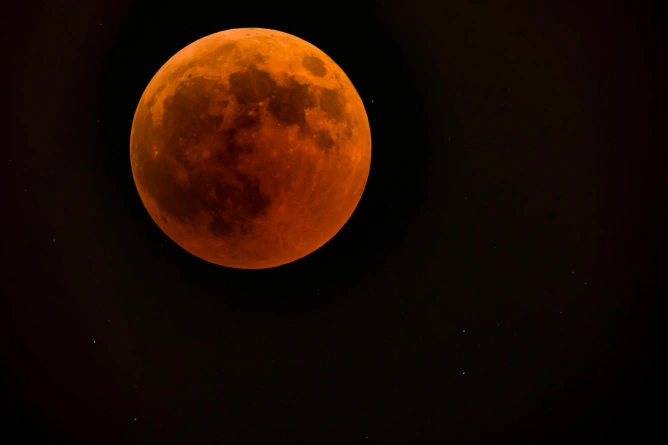
North America, Australia, and New Zealand will experience a total lunar eclipse, known as a 'blood moon', which will take place soon.

Lara Maior
whatsapp
facebook
linkedin
x
copy-link copy-link
3 March 2026, 06:52
main event image
Environment
Yossef (Maksym) Zilberman (Duboshko) / Alamy / Profimedia
google-preference

Always see our news on Google

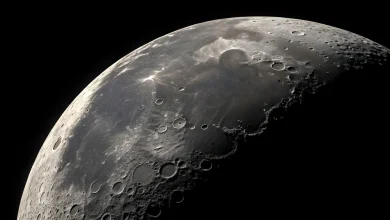
A rare total lunar eclipse, called a 'blood moon', will be visible in North America, Australia, and New Zealand, according to The Guardian. During this phenomenon, the Moon will take on a deep red and orange hue due to the Earth's shadow blocking most of the sunlight. Dr. Rebecca Allen, an astrophysicist at Swinburne University, explains that this phenomenon will be the last opportunity to observe a total lunar eclipse for nearly three years. The eclipse will be visible in the evening in East Asia and Australia, throughout the night in the Pacific, and early in the morning in North and Central America, but it will not be observable in Africa or Europe. The phenomenon is due to the filtering of light through the Earth's atmosphere, creating a spectacular image of the Moon.

Sources

sursa imagine
Mediafax
Eclipsă totală de Lună. „Blood moon”, un spectacol astronomic rar
sursa imagine
Timis Online
Luna Plină și Eclipsă de Lună în Fecioară

Latest News

23:05

The Trump administration will ban imports of humanoid robots and electric inverters from China

22:59

The Tate brothers are requesting bail in the USA, and the decision will be made in August.

22:44

Romania has obtained a tranche of 800 million euros from the PNRR for the modernization of heating systems. The bill has passed through committees, providing funding solutions.

22:28

PSD criticizes the Bolojan Government after the approval of the Memorandum for unblocking positions in the healthcare system: "Suddenly, the Government found the necessary funds"

22:20

The passengers of the cruise ship stranded on the Danube due to drought have been evacuated.

See more news

NEWS ON THE SAME TOPICS
event image
IT&C knowledge
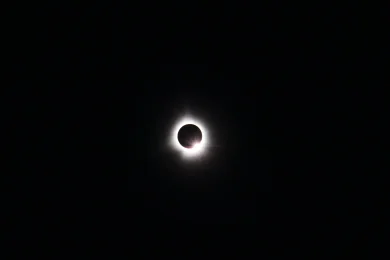
On August 12, 2026, a total solar eclipse will be visible from continental Europe, after nearly three decades. The totality phase will cross Greenland, Iceland, and northern Spain.
event image
International
Hotel bookings in a town in New Zealand are running out two years in advance for the total solar eclipse on July 22, 2028.
event image
IT&C knowledge
Experts are tracking a SpaceX rocket stage that could impact the Moon on August 5. NASA warns that observing the impact from Earth is unlikely.
event image
Current Affairs
The rare conjunction of Venus-Jupiter, visible from Romania on June 9, 2026
event image
International
The asteroid 2026 JH2, with a width of up to 35 meters, will pass by Earth on Monday at an altitude of 91,000 km, closer than some satellites.
event image
Environment
The summer solstice of 2026 will take place on June 21 at 11:24, bringing over 15 hours of daylight in Romania. This day marks the beginning of astronomical summer.
app preview
Personalized news feed, AI-powered search, and notifications in a more interactive experience.

app preview app preview
Lunar eclipse north america Australia New Zealand Dollar

Editor’s Recommendations

main event image
Current Affairs
2 hours ago

The government has approved the Memorandum for filling approximately 6,900 vacant positions in hospitals and ambulance services.

Sources
imagine sursa
imagine sursa
imagine sursa
imagine sursa
main event image
Politics
2 hours ago

Ilie Bolojan announced the withdrawal of the Government's decision regarding the National Strategy for Biodiversity Conservation 2026-2030

Sources
imagine sursa
imagine sursa
imagine sursa
app preview
Personalized news feed, AI-powered search, and notifications in a more interactive experience.

app preview
app store badge google play badge
  • News
  • Exclusive
  • INSCOP Surveys
  • Podcast
  • EU
  • Diaspora
  • Republic of Moldova
  • Politics
  • Economy
  • Current Affairs
  • International
  • Sport
  • Health
  • Education
  • IT&C knowledge
  • Arts & Lifestyle
  • Opinions
  • Elections 2025
  • Environment
  • About Us
  • Contact
Privacy policy
Cookies Policy
Terms and conditions
Open source licenses
All rights reserved Strategic Media Team SRL

Technology in partnership with

anpc-sal anpc-sol