Autumn Eurobarometer: security and defense at the top of European priorities



Always see our news on Google
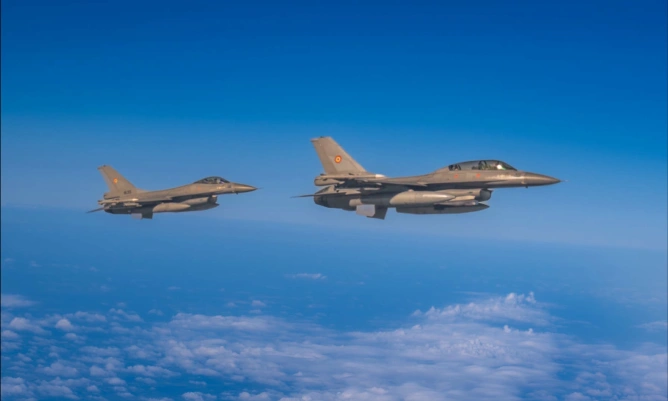
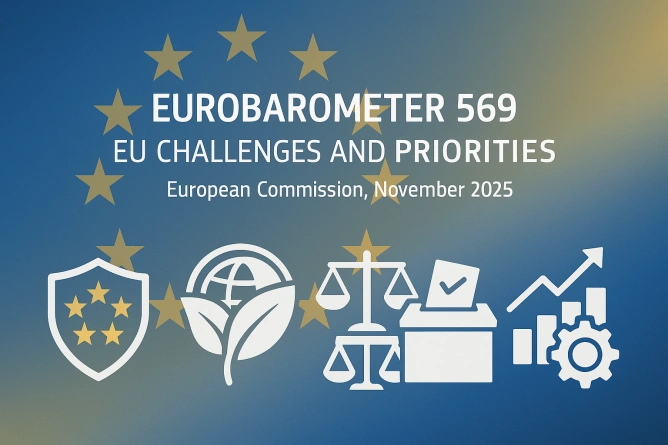
Brussels, November 2025 – In Romania, security and defense are the number 1 area that the EU should address as a priority, 37 percent, followed by the war in Ukraine, 26 percent, and climate change and the environment, 19 percent. At the level of the entire Union, the top is similar, but with a greater emphasis than in Romania on migration, 34 percent security and defense, 32 percent irregular migration, 27 percent the war in Ukraine, 26 percent environment. The data comes from the latest Eurobarometer conducted by the European Commission and published in November 2025, based on 25,893 interviews in the EU, of which 1,007 in Romania.
 The war in Ukraine is perceived as a challenge by 58 percent of Romanians, above the EU average of 47 percent, and as a priority for EU action it is mentioned by 26 percent in Romania, respectively 27 percent in the EU. The proximity of the conflict, Romania's role as a NATO and EU border state, and involvement in transit corridors explain the heightened concern compared to the European average. The high level of public attention confirms support for measures of assistance to Ukraine, strengthening energy resilience, and protecting regional critical infrastructures.
Irregular migration is mentioned as a challenge by 26 percent in Romania, below the EU average of 38 percent, and as a priority for EU action by 16 percent, compared to 32 percent in the EU. The lower perception reflects the geographical position and the fact that Romania is more of a transit country than a main destination. At the European level, these results suggest a Romanian support focused on external border control and operational cooperation, within the framework of solidarity among member states.
 The cost of living is indicated as a challenge by 31 percent of Romanians, slightly above the EU average of 29 percent, although it does not appear as a distinct priority in the list of immediate actions for the EU. The concern is, however, indirectly reflected in priorities related to competitiveness, energy, and consumer protection, with the expectation that European policies will contribute to stabilizing prices and increasing energy efficiency.
Climate change and the environment are considered a challenge by 22 percent in Romania, below the EU average of 29 percent, and a priority for EU action by 19 percent, compared to 26 percent in the EU. The issue remains important, but less pressing than in other member states. For better alignment with public concerns, climate policies can be communicated through direct economic and social benefits, such as jobs, energy-efficient housing, and cleaner transport.
Security and defense are perceived as a challenge by 27 percent of Romanians, slightly below the EU average of 29 percent, but they become the main priority for EU action in Romania, 37 percent, compared to 34 percent in the Union. The results show public support for strengthening European capabilities complementary to NATO and for Romania's participation in coordinated joint procurement, stockpiles, and defense industry at the Union level.
Regarding trust in the European Union, it remains high, and according to Eurobarometer data, Romanians are slightly more trusting than the European average regarding the future of democracy and the EU economy. Regarding democracy, 64% of Romanians declare that they are "very" or "somewhat trusting," compared to 52% at the EU level, and regarding the economy, the level of trust rises to 63% in Romania compared to 48% in the Union. In contrast, the level of concern regarding the security of the Union is comparable to the European average: 69% of Romanians declare themselves "very" or "somewhat concerned," in line with 66% at the EU level.
Romanians continue to associate the European Union with its fundamental values, but to a slightly lesser extent than the European average. Thus, 45% believe that respect for fundamental rights is best embodied by the EU (EU: 55%), 46% link freedom of expression to the Union (EU: 55%), and 47% identify the EU with the maintenance of peace (EU: 49%). In all these cases, the proportion of those who believe that "it represents the EU, as well as other countries" reflecting these values is higher in Romania than in the European average, a sign of a balanced perception of the Union's global role.
The cost of living is indicated as a challenge by 31 percent of Romanians, slightly above the EU average of 29 percent, although it does not appear as a distinct priority in the list of immediate actions for the EU. The concern is, however, indirectly reflected in priorities related to competitiveness, energy, and consumer protection, with the expectation that European policies will contribute to stabilizing prices and increasing energy efficiency.
Climate change and the environment are considered a challenge by 22 percent in Romania, below the EU average of 29 percent, and a priority for EU action by 19 percent, compared to 26 percent in the EU. The issue remains important, but less pressing than in other member states. For better alignment with public concerns, climate policies can be communicated through direct economic and social benefits, such as jobs, energy-efficient housing, and cleaner transport.
Security and defense are perceived as a challenge by 27 percent of Romanians, slightly below the EU average of 29 percent, but they become the main priority for EU action in Romania, 37 percent, compared to 34 percent in the Union. The results show public support for strengthening European capabilities complementary to NATO and for Romania's participation in coordinated joint procurement, stockpiles, and defense industry at the Union level.
Regarding trust in the European Union, it remains high, and according to Eurobarometer data, Romanians are slightly more trusting than the European average regarding the future of democracy and the EU economy. Regarding democracy, 64% of Romanians declare that they are "very" or "somewhat trusting," compared to 52% at the EU level, and regarding the economy, the level of trust rises to 63% in Romania compared to 48% in the Union. In contrast, the level of concern regarding the security of the Union is comparable to the European average: 69% of Romanians declare themselves "very" or "somewhat concerned," in line with 66% at the EU level.
Romanians continue to associate the European Union with its fundamental values, but to a slightly lesser extent than the European average. Thus, 45% believe that respect for fundamental rights is best embodied by the EU (EU: 55%), 46% link freedom of expression to the Union (EU: 55%), and 47% identify the EU with the maintenance of peace (EU: 49%). In all these cases, the proportion of those who believe that "it represents the EU, as well as other countries" reflecting these values is higher in Romania than in the European average, a sign of a balanced perception of the Union's global role.
 The Eurobarometer series has been conducted by the European Commission since 1974 and represents the longest-running public opinion polling instrument in the Union. It tracks the evolution of perceptions of European citizens regarding EU policies, values, and priorities, providing European institutions and member states with a comparable data basis for policy formulation. The results of the Flash Eurobarometer 569 edition – "EU Challenges and Priorities" complement the tradition of the series by including an extensive module on security, defense, and trust in European democracy, reflecting the profound changes in the European geopolitical and economic context.
Latest News
19:10
19:05
19:00
18:55
18:55
See more news
NEWS ON THE SAME TOPICS