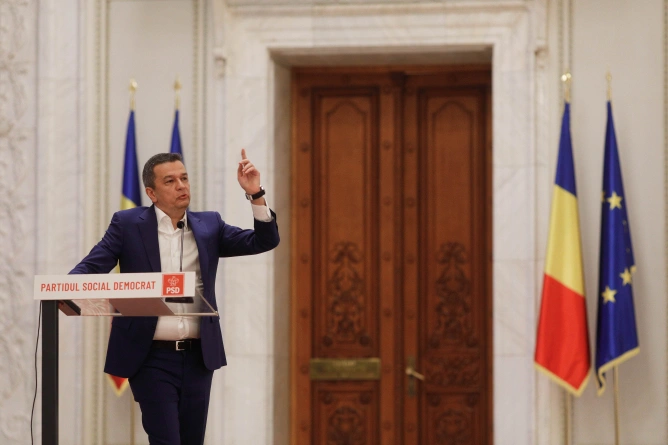
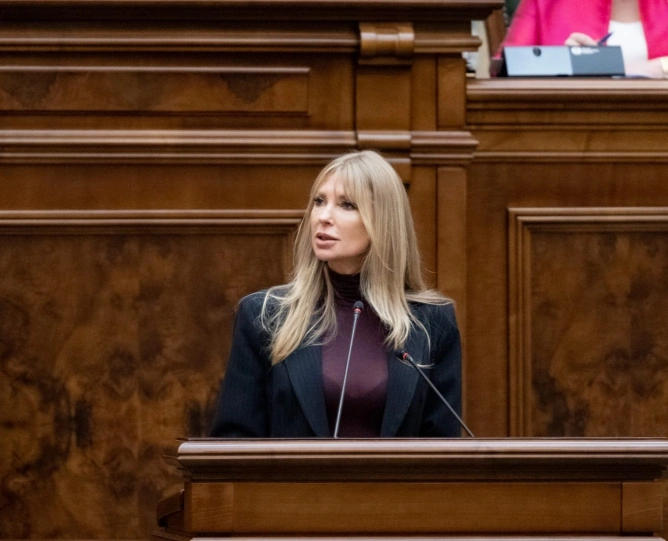
Who is Victoria Stoiciu, the PSD senator who resigned after the party formed an alliance with AUR to submit a motion of no confidence against the Bolojan Government



Always see our news on Google
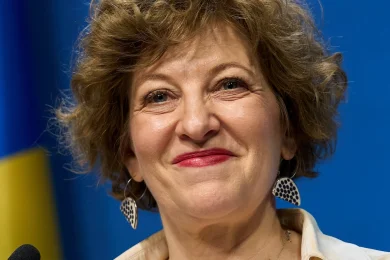
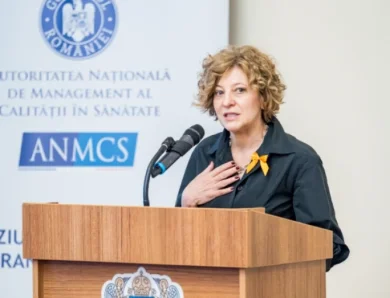
The resignation of Senator Victoria Stoiciu from PSD comes after a period in which she has established herself as one of the articulate voices of the progressive wing of PSD, with a strong profile focused on human rights, combating violence against women, and explicit warnings against political extremism. She has built her image capital through projects such as the femicide law and through public positions that have constantly put her ideological discourse in tension with the party's traditional reflexes.
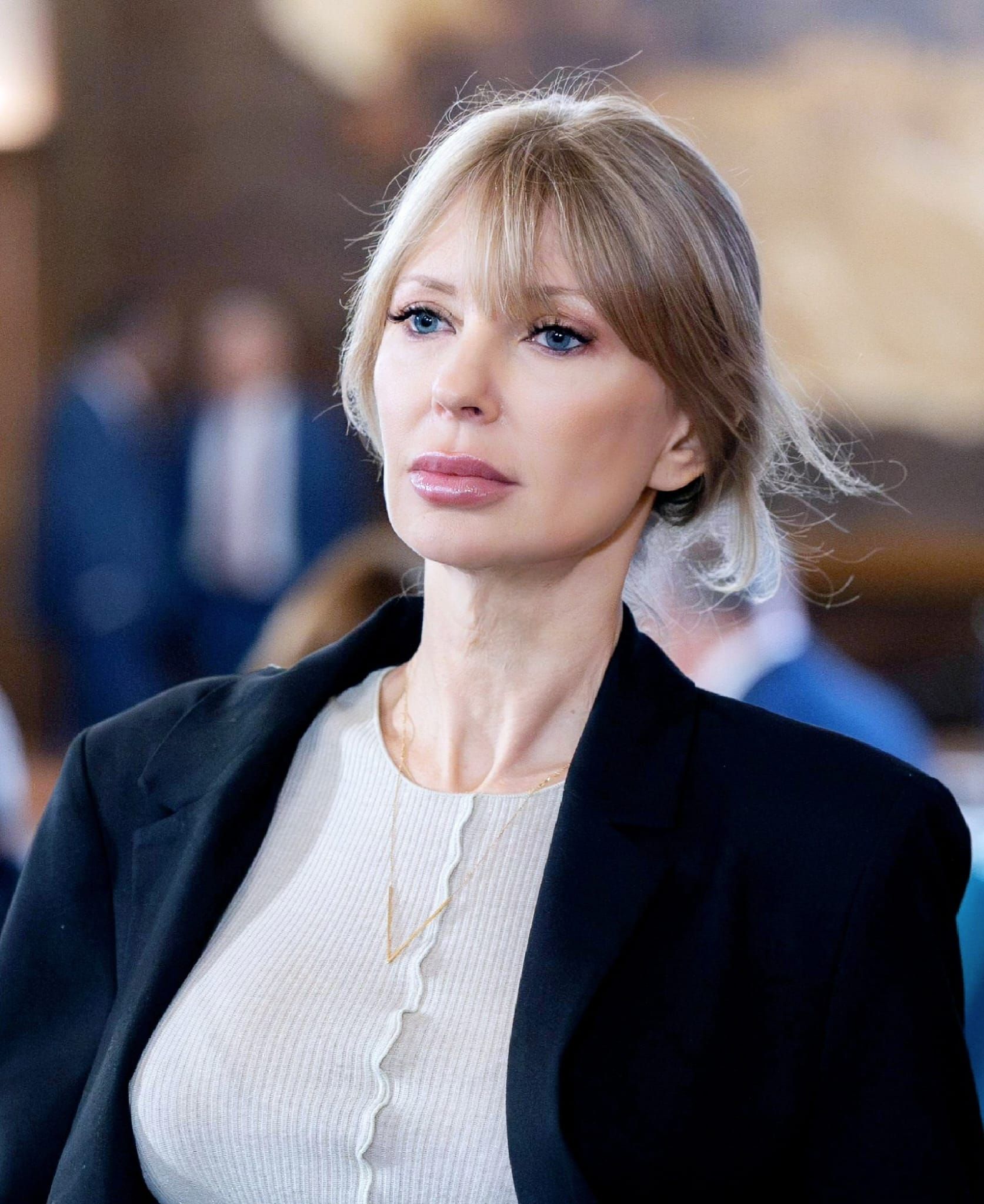
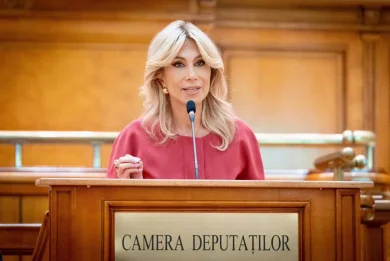
Photo: facebook.com/victoria.stoiciu
The path of Victoria Stoiciu
In 2023, Victoria Stoiciu appears in the central press as a state advisor to Prime Minister Marcel Ciolacu at the Victoria Palace, positioned as a left-wing expert on social policies, with experience at the Friedrich Ebert Foundation.
In 2024, she is promoted on the PSD Vaslui list for the Senate, with the press explicitly noting that she was placed at the top of the list by Marcel Ciolacu, in the context in which the PSD leader was trying to bring figures with intellectual and left-wing profiles into the party.
Also in 2024, she becomes vice president of PSD in Ciolacu's team, which solidifies the political connection: Stoiciu is not just a "list" senator, but part of the leader's inner circle.
Thus, Victoria Stoiciu was elected senator in the Vaslui constituency in the 2024 elections, on the PSD lists, being validated in December 2024.
In the Senate, she was a member of the Committee for Labor, Family, and Social Protection, vice president of the Committee for Human Rights, Equal Opportunities, Cults, and Minorities, as well as a member of special committees for combating domestic violence and human trafficking. These positions have reinforced her image as a politician concerned with the protection of vulnerable groups and the strengthening of the legislative framework regarding fundamental rights.
In the public space, NewsVibe indicates 174 media mentions in the last 12 months, predominantly distributed in mainstream national press – Adevărul, Ziare.com, G4Media, HotNews, Digi24, Libertatea – with a predominantly neutral tone, a sign that her presence has been perceived more as expertise and doctrinal positioning than as a source of internal scandal. The most frequent keywords associated with her name are "Senate", "Committee for Human Rights", "Social Democratic Party", "Nicușor Dan", "AUR", and "George Simion", which outlines a profile situated at the intersection of social rights and the political battle against the far right.
Politically, Stoiciu was also vice president of PSD, responsible for relations with NGOs and civic dialogue, a role in which she tried to connect the party to the agenda of progressive civil society and to the themes of the European left: combating inequalities, social state, protection of minorities, and defending the liberal democratic framework.
The femicide law and the women's rights agenda
The central legislative file with which Victoria Stoiciu has come to prominence is the law on the prevention and combating of femicide, which introduces a distinct category of "femicide" into the Penal Code and creates a firmer protection framework for women victims of violence. The project was promoted in the specialized committees and in plenary as part of a broader package to strengthen legislation on domestic violence, in correlation with the activity of the special committee "Romania without domestic violence", where Stoiciu serves as secretary.
After the law was promulgated, the senator publicly emphasized that this normative act "does not discriminate; human life has equal value", stressing that it is not about hierarchizing victims, but about recognizing a specific pattern of violence, in which women are killed "because they are women". On her Facebook page, she hailed the promulgation as a "victory for the safety of women in Romania", signaling both the symbolic dimension of the law and the pressure exerted by women's rights organizations.
In discursive terms, Stoiciu has repeatedly linked the issue of femicide to the state's failure to protect women in situations of recurrent violence and to the underfunding of social services, which places her in the tradition of social left, which connects the security of vulnerable individuals to the quality of the social state. In interviews and position statements, she has argued that violence against women is not a "private" issue, but a systemic one, rooted in cultural norms, in the way institutions respond to reports, and in the fact that the state does not invest enough in prevention and protection.
Legislatively, her file indicates 41 initiatives, of which 5 are promulgated laws, many with a social or rights profile, which shows a constant activity in areas with a direct impact on daily life: work, family, social protection, human rights. In this architecture, the femicide law becomes the flagship act, which fixes her political mark: a left-wing parliamentarian concerned with the structure of power relations in society, not just with the mechanical administration of budgets.
Warnings against extremism and the "neofascist danger"
Another important vein of Victoria Stoiciu's profile is the series of firm warnings against the rise of AUR and George Simion, whom she described as the expression of a "neofascist wave" that threatens Romanian democracy. In a comprehensive interview for Libertatea, given in May 2025, she explicitly spoke about the "danger of a neofascist drift" and stated that Romania is facing "a danger without precedent in the last 35 years".
Supporting Nicușor Dan, a right-wing candidate, in the second round, Stoiciu offered one of the defining formulations for her political discourse: "We choose between liberal democracy and authoritarian extremism", rejecting the idea that left-wing voters are choosing only "between two right-wing candidates, one more to the right than the other". At that time, she also stated the now-referenced phrase: "In the face of the extremist danger, neutrality is not an option", explicitly demanding that PSD "firmly condemn the extremism represented by George Simion and support the democratic direction represented by Nicușor Dan".
The interview also includes a harsh metaphor directed at the AUR leader: "When Simion declares himself 'pro-European', it is like when a saboteur puts on a worker's suit and enters a factory to destroy it from within", Stoiciu arguing that such a political project undermines "the foundation of the European project" and opens the way to a possible "RoExit". She compares the scenario of a Simion government to Viktor Orbán's model, warning that the result would be an "elective autocracy" with economic stagnation, exodus, and loss of European funds.
However, her critical discourse against extremism does not stop at AUR, but also turns towards mainstream parties, including PSD, which she accuses of having fueled, through "neoliberalism" and the failure of the social state, the ground on which anger and resentment grow. Stoiciu explains the rise of extremism by stating that "we produced growth, but not inclusion" and that post-communist democracy "has created huge expectations and delivered structured inequality", which has generated a "deep, silent emotion" that "now erupts, shaking Romania".
In the long term, she links the fight against extremism to the reconstruction of the social state, arguing that "the rise of extremism cannot be stopped with neoliberal policies", but only with "authentic left-wing policies that combat exclusion, reduce inequalities, and respond to social frustrations". In this sense, she positions herself as an internal voice calling for PSD to "move from administration to rebuilding an authentic left-wing identity, capable of inspiring, mobilizing, and giving people a societal project to believe in".
Criticism of PSD and internal tensions
Even though she has formally remained within the party until now, Victoria Stoiciu's discourse has repeatedly included criticisms of PSD, both regarding how it manages its relationship with extremism and regarding its ideological nature.
1. Criticism of neutrality in the face of extremism
In the 2025 interview, Stoiciu explicitly addresses PSD when she says that "neutrality is not an option", emphasizing that the party "must make a clear and firm gesture" and position itself unambiguously against George Simion. Although she does not mention names from the leadership, the message targets the general strategy of PSD, implicitly accused of political calculation and lack of courage in assuming a clear pro-liberal democracy line.
2. Criticism of the "administrative" drift
Stoiciu states that PSD is perceived "mainly as an administrative party, dominated by cadres who are skilled in European projects, in public administration", but insists that "it is not enough", because people "seek meaning, belonging, direction". This is a direct reproach to the transformation of PSD into a technocratic actor, concerned with the absorption of funds and infrastructure, but without a coherent ideological left-wing project.
3. Criticism of drifts towards neoliberalism
The senator reproaches not only PSD but the entire spectrum of mainstream parties for having accepted, in recent decades, "35 years of neoliberalism" that have "weakened democracy" and concentrated power and wealth "in the hands of a few". In her logic, PSD would have contributed to the "failure of the social state" and to the inability to build an education and social mobility system that would reduce the frustration accumulated among disadvantaged categories – exactly those electoral segments that AUR is addressing today.
4. Public tensions with coalition partners
Although it is not a direct criticism of PSD, the exchange of remarks with PNL first vice president Ciprian Ciucu, on the topic of education measures and responsibility for "ruining the budget", has shown a willingness to publicly defend a consistent left-wing discourse in front of the liberal governing partner. In this episode, Stoiciu defended the need for social and educational investments, which has fueled the perception that she represents in PSD a current that refuses the exclusively austerity logic.
Overall, in the last two years, explicit or implicit criticisms of PSD can be found in several interviews and position statements, but they mainly converge in these three directions: the lack of a firm condemnation of extremism, the slide towards an "administrative" party, and the acceptance of the neoliberal paradigm, with a direct impact on inequalities. The exact number of interventions in which she criticized PSD is not publicly quantified, but from monitoring NewsVibe and from the national press, we can speak of a series of recurring episodes of doctrinal and strategic criticism, especially in the year 2025, when the subject of extremism was central in the electoral debate.
Resignation from PSD, after the party formed an alliance with AUR for the censure motion against the Bolojan Government
Victoria Stoiciu's resignation from PSD comes in the context of a period of major political tension: the withdrawal of PSD from the Bolojan Government and the mass resignation of social-democratic ministers, an event in which the party leadership presented the departure from government as a "political act" of withdrawing support for the prime minister. While the party recalibrates its positioning in relation to PNL and the evolution of extremism, the departure of a senator who has become a symbol of the "ideological" left wing raises questions about the internal space for a consistent doctrinal discourse.
From an image perspective, the resignation of a senator known for the femicide law and for her strong anti-extremist voice hits PSD precisely in the urban-educated segment where the party was trying to restore its credibility through the "new wave" of political figures, closer to civil society. In the medium term, she could become a rallying point for left-wing voters disappointed with PSD and skeptical of economic liberalism, but willing to defend the democratic framework – an electoral profile that risks otherwise to migrate either towards abstentionism or to oscillate between mainstream parties and civic alternatives.
For the political scene, Victoria Stoiciu's departure raises three stakes:
whether PSD will continue to lose articulate left-wing voices, remaining rather an administrative and local power party;
whether a new left-wing pole can coalesce around figures like Stoiciu, with both social discourse and a firm pro-democratic stance;
how the fight against extremism will evolve, in a context where anti-neofascist voices within traditional parties choose to leave or position themselves at the margins of the system.
*****Synthesis made with the help of a data monitoring flow provided by the NewsVibe Romania media monitoring platform. The analysis, data, and images presented have been enhanced with the help of Machine Learning and Artificial Intelligence tools.
Latest News
15:29
15:19
15:16
15:07
15:03
See more news
NEWS ON THE SAME TOPICS
.webp)