search icon
search icon
Flag Arrow Down
Română
Română
Magyar
Magyar
English
English
Français
Français
Deutsch
Deutsch
Italiano
Italiano
Español
Español
Русский
Русский
日本語
日本語
中国人
中国人

Change Language

arrow down
  • Română
    Română
  • Magyar
    Magyar
  • English
    English
  • Français
    Français
  • Deutsch
    Deutsch
  • Italiano
    Italiano
  • Español
    Español
  • Русский
    Русский
  • 日本語
    日本語
  • 中国人
    中国人
Sections
  • News
  • Exclusive
  • INSCOP Surveys
  • Podcast
  • EU
  • Diaspora
  • Republic of Moldova
  • Politics
  • Economy
  • Current Affairs
  • International
  • Sport
  • Health
  • Education
  • IT&C knowledge
  • Arts & Lifestyle
  • Opinions
  • Elections 2025
  • Environment
About Us
Contact
Privacy policy
Terms and conditions
Quickly scroll through news digests and see how they are covered in different publications!
  • News
  • Exclusive
    • INSCOP Surveys
    • Podcast
    • EU
    • Diaspora
    • Republic of Moldova
    • Politics
    • Economy
    • Current Affairs
    • International
    • Sport
    • Health
    • Education
    • IT&C knowledge
    • Arts & Lifestyle
    • Opinions
    • Elections 2025
    • Environment
44 new news items in the last 24 hours
  1. Home
  2. Politics

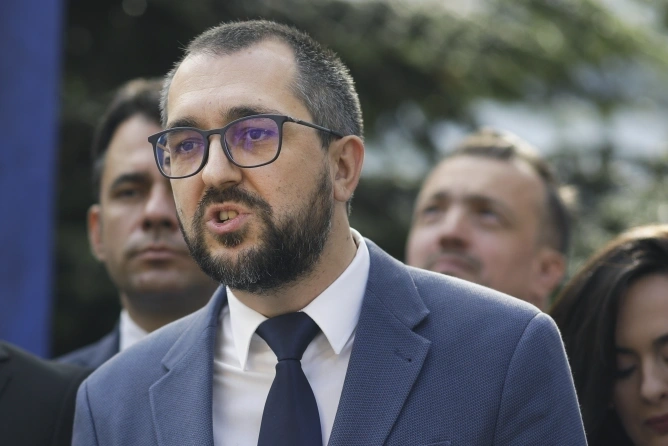
Vlad Voiculescu on the new pharmaceutical legislation: "Romania can use this law to become much stricter with manufacturers"

2eu.brussels
whatsapp
facebook
linkedin
x
copy-link copy-link
15 December 2025, 14:58
main event image
Politics
Foto: Inquam Photos / Malina Norocea
google-preference

Always see our news on Google

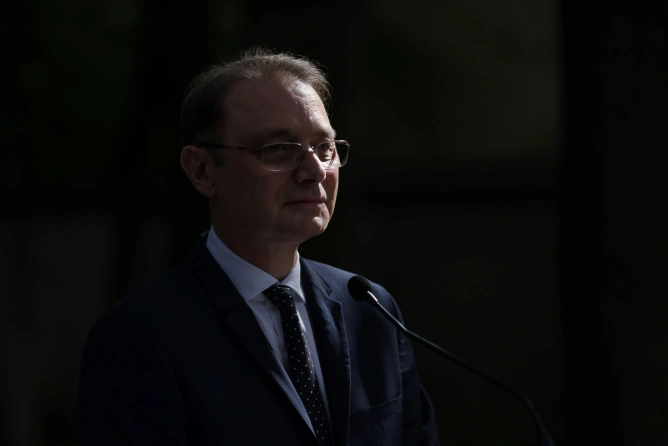
The new European pharmaceutical reform promises to provide Romania with the necessary levers to stop the chronic drug crisis and to prevent the exodus of innovative companies, warns MEP Vlad Voiculescu.


Brussels, December 15, 2025 — In an analysis of the recent provisional agreement on EU pharmaceutical legislation, MEP Vlad Voiculescu explained how the new rules will change the way Romanian patients access treatments. The reform aims not only to accelerate innovation but also to ensure an equitable distribution of medicines, so that Eastern states are no longer disadvantaged compared to those in the West.


In short


Romania will be able to access a European mechanism for redistributing stocks in case of crisis.


The definition of "unmet medical needs" will be strict to avoid unjustified extensions of monopolies on expensive medicines.


Romanian companies risk migrating fiscally to other EU states not because of the new legislation, but due to internal unpredictability.


One of the most serious problems of the Romanian healthcare system – the periodic disappearance of essential medicines – could be alleviated by the new obligations imposed at the community level. Voiculescu emphasizes that the authorities in Bucharest will no longer be alone in facing large producers.


"Romania can use this legislation to become much stricter with producers and quicker in response. Our country will have access to a European mechanism that allows the redistribution of stocks between states in crisis situations," said the MEP.


He added that producers will be required to have clear plans to prevent shortages, and if the Romanian authorities firmly implement these rules, they can avoid critical situations and obtain emergency solutions directly from the EU.


Regarding the extension of patent protection periods, a sensitive subject for the CNAS budget, Voiculescu insists that incentives should go only towards real innovation, not towards minor modifications of old medicines ("evergreening").


"Authorities must reject extensions of protection for medicines that only bring minor improvements, without real clinical benefits. This way, abuses are avoided and incentives remain directed only towards authentic innovations," he explained.


To protect vulnerable patients, the MEP supports a definition of "unmet medical needs" that includes serious diseases in poor regions, validated by independent experts.


Regarding the impact on IT and HealthTech entrepreneurs, Voiculescu draws attention to the fact that European tools for reducing bureaucracy, such as the Unified European Company (S.EU), are useful, but cannot compensate for the fiscal instability at home.


"Some companies may choose to register in another member state for a more stable fiscal environment, but this phenomenon is not determined by the new pharmaceutical legislation, but by the internal economic situation. (...) Romania needs to reduce its own bureaucracy if it wants to maintain added value in the country," warned Vlad Voiculescu.


The implementation of the new directives will fall to the National Agency for Medicines (ANMDMR) and the Ministry of Health, institutions that will need to quickly integrate the new rules to benefit from European solidarity mechanisms.


https://2eu.brussels/ro/stiri/vlad-voiculescu-despre-noua-legislatie-farmaceutica-romania-poate-folosi-aceasta-lege-ca-sa-devina-mult-mai-stricta-cu-producatorii

Latest News

08:14

Earthquake with a magnitude of 5.0 near the port city of Suez, Egypt. Authorities have not reported any casualties or damages.

07:54

The electrical grid of Cuba has failed again, leaving the island of 10 million inhabitants in darkness.

07:40

The Parliament is convened for a new extraordinary session between August 3 and 6 for the approval of the National Strategy for Biodiversity Conservation.

07:22

The USA and Japan, the first joint intervention in the yen market since 2011

07:09

Superliga: Rapid Bucharest defeats CFR Cluj 3-1 and climbs to first place in the standings

See more news

NEWS ON THE SAME TOPICS
event image
Health
The European Parliament demands guarantees that cleaner water will not make medicines more expensive.
event image
Health
The European Parliament and the Council have reached an agreement on reducing shortages of critical medicines.
event image
EU
Members of the European Parliament call for lower taxes and a longer transition for the new European tobacco taxation.
event image
EU
Consumers can request the repair of certain products even after the expiration of the legal warranty.
event image
EU
The European Union strengthens criminal rules against corruption in all member states
event image
EU
The new EU regulations for the protection of water against PFAS, pesticides, and microplastics come into force.
app preview
Personalized news feed, AI-powered search, and notifications in a more interactive experience.
app preview app preview
vlad voiculescu EU legislation pharmaceutical industry
app preview
Personalized news feed, AI-powered search, and notifications in a more interactive experience.
app preview
app store badge google play badge
  • News
  • Exclusive
  • INSCOP Surveys
  • Podcast
  • EU
  • Diaspora
  • Republic of Moldova
  • Politics
  • Economy
  • Current Affairs
  • International
  • Sport
  • Health
  • Education
  • IT&C knowledge
  • Arts & Lifestyle
  • Opinions
  • Elections 2025
  • Environment
  • About Us
  • Contact
Privacy policy
Cookies Policy
Terms and conditions
Open source licenses
All rights reserved Strategic Media Team SRL

Technology in partnership with

anpc-sal anpc-sol