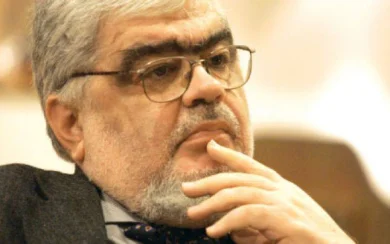
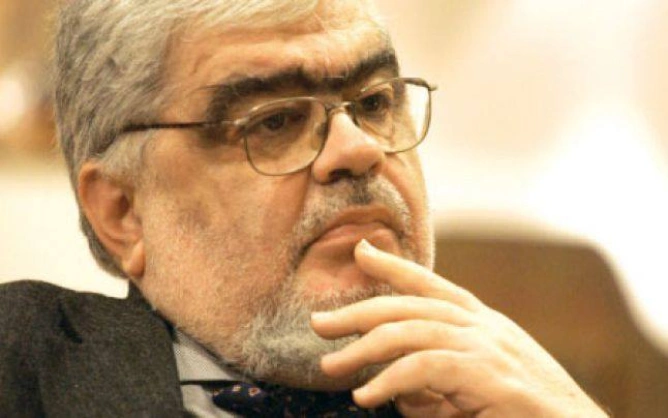
Andrei Pleșu, Dilema.ro: The Snow



Always see our news on Google
Every time it snows, I am reminded of Păltiniș. Of the Păltiniș I experienced in the 1970s-1980s, together with a handful of friends. We would manage, from time to time, to get a few days off and some money, so we could afford short episodes of refuge around Mr. Noica. He awaited us with a paternal good mood, set a rigorous schedule of walks, reading, and conversation ("trismeron" if it was three days, "hexameron" if it was six), invited us to share our projects, and read us excerpts from his latest "production."
We would go ecstatic to the forest canteen, drinking, in the evening, hot tea, into which we were encouraged to add two or three drops of brandy, and we would forget the sour grays of the "current events" of that time. We returned home full of confidence in ourselves, in fate, and in ideas. For a while, it seemed to us that everything was possible, that we would succeed in being ourselves, despite the circumstances with a smell of sulfur. Mr. Noica gave us air, courage, and rhythm. He was our only source of energy and scholarly calm. We always left Păltiniș amazed that such a character exists, that we had the chance to meet him, and that one can live at a supreme level in a scandalously indigenous material: we were exasperated by the 11 degrees in his room (in winter), the reddish-violet color of his semi-ungloved hands, the sink without drainage in which he washed (in fact, an improvised arrangement of pots and basins), and the penetrating cold in the bathroom on the ground floor of the cabin, which, out of a spirit of economy, he did not allow us to warm with any makeshift electric heater. We could hardly believe that a man like him, "manipulated" by books and hope, had to serve ten years of compulsory residence and five in prison. It was the great meeting of our youth, the great opportunity, the tender miracle of an infinitely constructive communion.
I had to go through a revolution, to savor the benefits of freedom and democracy, to find out – from all sorts of "realistic" publishers and combatants – that our Păltiniș experience (and, fundamentally, not only ours) was a falsehood, a form of manipulation, a crypto-communist maneuver, organized by the Securitate to anesthetize the civic sense of the population. It could be said that, without Păltiniș, we would have overthrown Ceaușescu twenty years earlier.
All sorts of neurotic justiciaries, scandal-mongers, informers, or simply ignorant people are working hard to rewrite history. Noica was a "guru" of communism, a diligent collaborator, a cunning propagandist. The disciples are also suspicious. About me, for example, I find out that I was either a run-of-the-mill informant, or a Soviet agent, or an exponent of the German section of the KGB. The "Tescani" was also a subtle arrangement to propel me to the top, after I would have prepared the revolution in secret meetings with Iliescu and Măgureanu. More recently, I am told that a former newspaper run by a former journalist (helped by a former poet) "reveals," through the pen of a former Securitate general, that Păltiniș was a small cell of the English services. The bibliography for Plato and Heidegger came directly from British Intelligence. If that is the case, it is incredible how little they invested in us "patrons" and with what modest results. James Bond washing himself in a basin and sleeping at 11 degrees Celsius! What decadence!
All this team of professional slanderers works, from my point of view, in vain. No one will take from my heart the snows of Păltiniș, the mix of poverty and exaltation of the meetings there, the experience of goodness and nobility that the spirit of that place made possible. No one. And even less so some rascals who have made a profession out of dirtying the snow…
Latest News
23:04
22:36
22:16
22:01
21:44
See more news
NEWS ON THE SAME TOPICS