search icon
search icon
Flag Arrow Down
Română
Română
Magyar
Magyar
English
English
Français
Français
Deutsch
Deutsch
Italiano
Italiano
Español
Español
Русский
Русский
日本語
日本語
中国人
中国人

Change Language

arrow down
  • Română
    Română
  • Magyar
    Magyar
  • English
    English
  • Français
    Français
  • Deutsch
    Deutsch
  • Italiano
    Italiano
  • Español
    Español
  • Русский
    Русский
  • 日本語
    日本語
  • 中国人
    中国人
Sections
  • News
  • Exclusive
  • INSCOP Surveys
  • Podcast
  • EU
  • Diaspora
  • Republic of Moldova
  • Politics
  • Economy
  • Current Affairs
  • International
  • Sport
  • Health
  • Education
  • IT&C knowledge
  • Arts & Lifestyle
  • Opinions
  • Elections 2025
  • Environment
About Us
Contact
Privacy policy
Terms and conditions
Quickly scroll through news digests and see how they are covered in different publications!
  • News
  • Exclusive
    • INSCOP Surveys
    • Podcast
    • EU
    • Diaspora
    • Republic of Moldova
    • Politics
    • Economy
    • Current Affairs
    • International
    • Sport
    • Health
    • Education
    • IT&C knowledge
    • Arts & Lifestyle
    • Opinions
    • Elections 2025
    • Environment
122 new news items in the last 24 hours
  1. Home
  2. IT&C knowledge

Astronomers face difficulties in observing the cosmos due to satellites

Medeea Stănescu
whatsapp
facebook
linkedin
x
copy-link copy-link
20 August 2026, 15:50
main event image
IT&C knowledge
Foto: Shutterstock
google-preference

Always see our news on Google

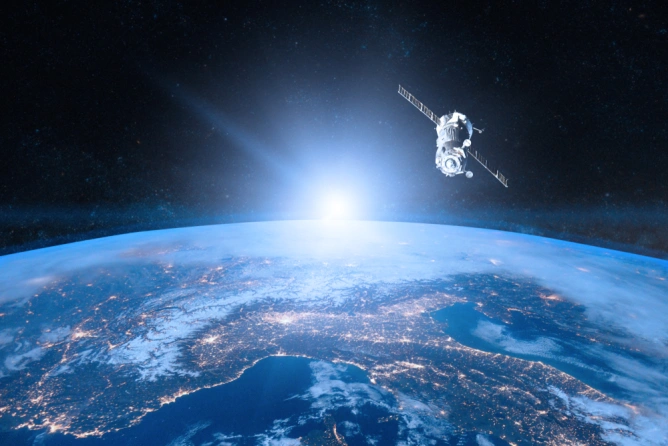
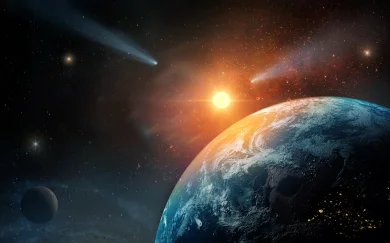
The study conducted by the 'European Southern Observatory' (ESO) highlighted the increasing difficulties faced by astronomers in observing the cosmos as the number of satellites in orbit grows.

Currently, there are approximately 15,000 satellites, and proposals to launch over 1.7 million, including very bright satellites, could significantly degrade astronomical observations. The trails of light left by satellites interfere with the quality of photographs of the night sky, affecting telescope observations. Astronomer Olivier Hainaut explained that each satellite crossing the field of view of a telescope leaves a bright line, and the accumulation of these can erase portions of the telescope's spatial view. The study was conducted through simulations at the Paranal Observatory in Chile, and the impact depends on the number and brightness of the satellites.

Although there are concerns, researchers emphasize the importance of satellite internet services and the need to balance technological innovations with scientific discoveries.

Sources

sursa imagine
G4Media
STUDIU: Creşterea numărului de sateliţi pe orbită afectează observaţiile astronomice
sursa imagine
Agerpres
Creșterea numărului de sateliți pe orbită afectează observațiile astronomice (studiu)

Latest News

20:36

Three Romanians were caught red-handed while stealing products from a supermarket in Germany

20:28

Spain's Civil Guard arrested a Romanian man suspected of stealing 860 meters of copper cable from the Madrid-Barcelona line.

20:07

Seven defendants indicted for the illegal burial of over 860 tons of waste near the Brașov bypass

20:00

UDMR threatens a motion against the Niculescu Government if the PSD reform is adopted through a confidence vote

19:27

A woman from Covasna died after her car collided head-on with a bus on DN1, in Predeal

See more news

NEWS ON THE SAME TOPICS
event image
International
Germany warns that Russian satellites could disrupt Elon Musk's Starlink network
event image
International
The US and China are developing satellites capable of tracking, capturing or disabling other spacecraft
event image
IT&C knowledge
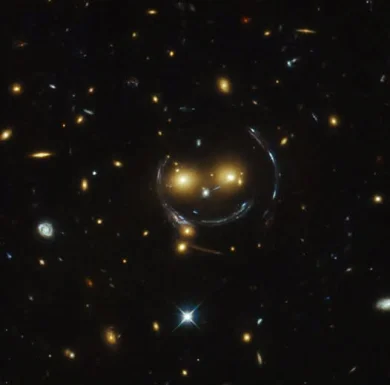
NASA published an image of a “cosmic smile” created by the gravitational lens of a galaxy cluster observed by Hubble
event image
Economy
Amazon Leo Orders Six Additional Launches with European Ariane 6 Rocket
event image
EU
Satellites can detect environmental crimes, but images do not automatically become evidence in court
event image
IT&C knowledge
Astronomers have detected the most distant fast radio burst, produced in a young galaxy more than 10 billion years ago
app preview
Personalized news feed, AI-powered search, and notifications in a more interactive experience.
app preview app preview
satellites astronomy impact

Editor’s Recommendations

main event image
Politics
4 hours ago

Remus Ștefureac: Half of Romanians would vote for a new party amid a political and economic crisis

main event image
Opinions
3 hours ago

Sever Voinescu: Which kind of extremism do you prefer, right-wing or left-wing?

main event image
Exclusive
7 hours ago

ANALYSIS Nvidia licenses for China: from a donation for the White House ballroom to allegations of political influence

main event image
Politics
10 hours ago

INSCOP Director Remus Ștefureac announces Nicușor Dan’s level of trust in opinion polls: “Such a figure has nothing to do with reality”

Sources
imagine sursa
main event image
Exclusive
4 hours ago

SPECIAL Informat.ro / Romania in the European press: Top topics from the past two weeks. Security in the Black Sea remains in the spotlight of European publications

app preview
Personalized news feed, AI-powered search, and notifications in a more interactive experience.
app preview
app store badge google play badge
  • News
  • Exclusive
  • INSCOP Surveys
  • Podcast
  • EU
  • Diaspora
  • Republic of Moldova
  • Politics
  • Economy
  • Current Affairs
  • International
  • Sport
  • Health
  • Education
  • IT&C knowledge
  • Arts & Lifestyle
  • Opinions
  • Elections 2025
  • Environment
  • About Us
  • Contact
Privacy policy
Cookies Policy
Terms and conditions
Open source licenses
All rights reserved Strategic Media Team SRL

Technology in partnership with

anpc-sal anpc-sol