search icon
search icon
Flag Arrow Down
Română
Română
Magyar
Magyar
English
English
Français
Français
Deutsch
Deutsch
Italiano
Italiano
Español
Español
Русский
Русский
日本語
日本語
中国人
中国人

Change Language

arrow down
  • Română
    Română
  • Magyar
    Magyar
  • English
    English
  • Français
    Français
  • Deutsch
    Deutsch
  • Italiano
    Italiano
  • Español
    Español
  • Русский
    Русский
  • 日本語
    日本語
  • 中国人
    中国人
Sections
  • News
  • Exclusive
  • INSCOP Surveys
  • Podcast
  • EU
  • Diaspora
  • Republic of Moldova
  • Politics
  • Economy
  • Current Affairs
  • International
  • Sport
  • Health
  • Education
  • IT&C knowledge
  • Arts & Lifestyle
  • Opinions
  • Elections 2025
  • Environment
About Us
Contact
Privacy policy
Terms and conditions
Quickly scroll through news digests and see how they are covered in different publications!
  • News
  • Exclusive
    • INSCOP Surveys
    • Podcast
    • EU
    • Diaspora
    • Republic of Moldova
    • Politics
    • Economy
    • Current Affairs
    • International
    • Sport
    • Health
    • Education
    • IT&C knowledge
    • Arts & Lifestyle
    • Opinions
    • Elections 2025
    • Environment
54 new news items in the last 24 hours
  1. Home
  2. International

The asteroid (152637) 1997 NC1 will pass close to Earth on Saturday evening, without risk of collision.

Cristiana Dida
whatsapp
facebook
linkedin
x
copy-link copy-link
24 June 2026, 15:10
main event image
International
Foto: Pixabay
google-preference

Always see our news on Google

The European Space Agency (ESA) announced that the asteroid (152637) 1997 NC1 will pass close to Earth on Saturday at 11:14 GMT, traveling at a speed of 8.9 km/s.

It will be 2,559,461 kilometers away from Earth, equivalent to 6.66 Earth-Moon distances, which makes the risk of collision zero. Juan Luis Cano from ESA's planetary defense office mentioned that such a close pass of an asteroid of this size is rare, and the bright Moon could hinder observation. Discovered in 1997, the asteroid is estimated to be between 750 and 1,650 meters in size, but estimates vary.

Observations will be possible from the northern hemisphere during the approach, and from around the world at the closest point, and then from the southern hemisphere. The asteroid can be admired with small telescopes or large binoculars.

Sources

sursa imagine
Observator news
Un asteroid va trece sâmbătă seara pe lângă Terra. Poate fi văzut cu telescopul sau binoclul
sursa imagine
B1TV
Un asteroid se apropie de Terra la o distanță rar întâlnită. Fenomenul va putea fi urmărit sâmbătă
sursa imagine
Antena3
Un asteroid poate fi văzut sâmbătă pe cer. Va trece la cea mai mică distanță față de Pământ înregistrată în ultimele patru secole

Latest News

23:03

Macron warns that reducing support for Ukraine would impose an unjust peace and pave the way for a new war

22:34

RO-Alert in Tulcea: The Ministry of National Defence detected a new air target east of Snake Island / Two F-16 aircraft took off

22:16

Health Minister Alexandru Rogobete Calls for Coverage of Reconstruction of Both Breasts After Bilateral Mastectomy

21:55

U.S. Army tests autonomous military robots / Vehicles operate in groups and identify targets without GPS

21:16

Canada and the Philippines have concluded negotiations for a free trade agreement, which could enter into force in 2027

See more news

NEWS ON THE SAME TOPICS
event image
International
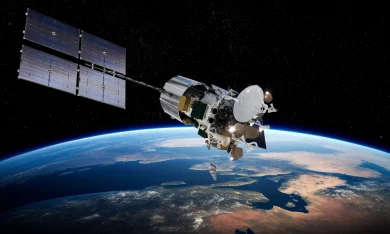
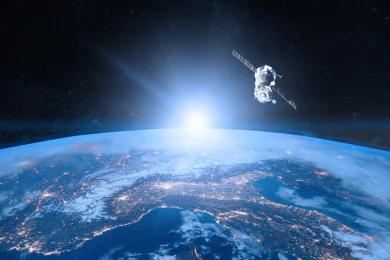
A Russian satellite approached to within 500 meters of a satellite used by Ukraine
event image
IT&C knowledge
Astronomers face difficulties in observing the cosmos due to satellites
event image
IT&C knowledge
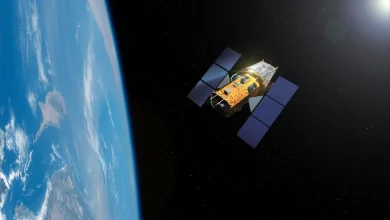
NASA's Swift telescope reentered the atmosphere uncontrollably, 22 years after its launch / The debris fell over Sumatra
event image
IT&C knowledge
NASA will launch the Nancy Grace Roman Space Telescope on Sunday, a mission dedicated to mapping the cosmos and unraveling the mysteries of physics.
event image
IT&C knowledge
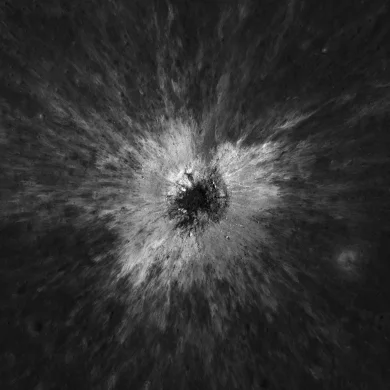
NASA has discovered a huge crater on the Moon formed by an impact in 2024
event image
IT&C knowledge
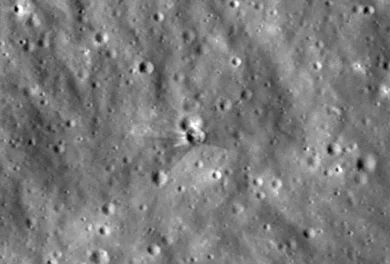
NASA has published images of the crater formed on the Moon after the Falcon 9 rocket stage crashed on August 5.
app preview
Personalized news feed, AI-powered search, and notifications in a more interactive experience.
app preview app preview
asteroid Earth telescop observer

Editor’s Recommendations

main event image
Opinions
13 November 2026, 15:38

Sever Voinescu: Which kind of extremism do you prefer, right-wing or left-wing?

main event image
Exclusive
Yesterday 09:01

SPECIAL "The Efficiency Trap": why Artificial Intelligence promises us free time, but brings us more work and burnout

app preview
Personalized news feed, AI-powered search, and notifications in a more interactive experience.
app preview
app store badge google play badge
  • News
  • Exclusive
  • INSCOP Surveys
  • Podcast
  • EU
  • Diaspora
  • Republic of Moldova
  • Politics
  • Economy
  • Current Affairs
  • International
  • Sport
  • Health
  • Education
  • IT&C knowledge
  • Arts & Lifestyle
  • Opinions
  • Elections 2025
  • Environment
  • About Us
  • Contact
Privacy policy
Cookies Policy
Terms and conditions
Open source licenses
All rights reserved Strategic Media Team SRL

Technology in partnership with

anpc-sal anpc-sol