Înainte de reintrarea necontrolată a observatorului Swift în atmosferă, NASA a lansat Telescopul Spațial Nancy Grace Roman, o misiune dedicată cartografierii cosmosului și studierii unor fenomene precum exoplanete, stele explodând și găuri negre. Roman a fost pus pe orbită la 16 iulie și este programat să ajungă treptat la distanțe mari de Pământ, cu un buget de peste 4 miliarde de dolari și capacitate de observație rapidă, menit să accelereze ritmul de colectare a datelor în comparație cu observatoarele anterioare.
NASA's Swift telescope reentered the atmosphere uncontrollably, 22 years after its launch / The debris fell over Sumatra
Raluca Ioana Draghici


IT&C knowledge
shutterstock.com

Always see our news on Google
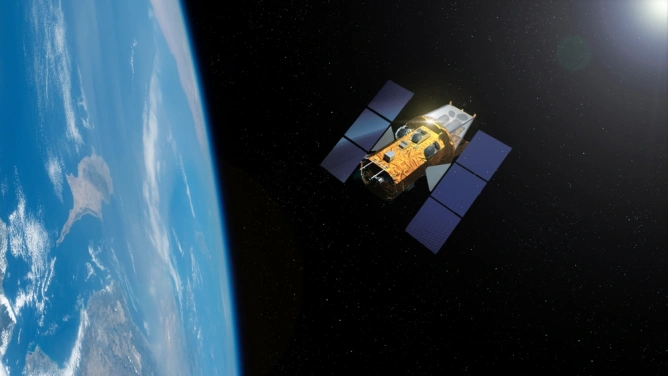
NASA’s Swift space telescope, weighing approximately 1,450 kilograms, reentered Earth’s atmosphere uncontrolled on Wednesday, November 4, 22 years after its launch. According to the U.S. Space Force, the reentry took place at 12:39 GMT over northern Sumatra. NASA estimated that most of the observatory, which was the size of a minibus, would burn up in the atmosphere, while the risk of potential fragments injuring people was approximately one in 2,100.
Swift, renamed the Neil Gehrels Swift Observatory in 2018, was launched in November 2004 to study gamma-ray bursts. The telescope detected these phenomena, rapidly transmitted their coordinates to other observatories, and directed its instruments toward the source in approximately one minute. Over two decades, it identified more than 2,000 gamma-ray bursts and 1,400 supernovae.
The observatory had no thrusters to maintain its altitude, and atmospheric drag accelerated its descent. A private rescue mission launched by Katalyst Space failed after problems with the LINK spacecraft’s propulsion and attitude-control systems. Swift made its final scientific observation on October 20.
Context: NASA și-a extins recent flota de observatoare orbitale prin lansarea Telescopului Spațial Nancy Grace Roman
Sources


Latest News
12:12
A 45-year-old man died after his horse-drawn cart was hit from behind by a car in Cantemir District, Republic of Moldova
12:07
Russia sells gold from reserves to cover the budget deficit (The Moscow Times)
12:01
TeleLiban has introduced Talia, Lebanon’s first artificial intelligence-generated news anchor
12:01
The U.S. Secretary of Homeland Security announces the continuation of migrant deportations after the Republicans’ defeat in the midterm elections
11:51
Alexandru Rus proposes a national government intelligence system based on data and artificial intelligence
See more news
NEWS ON THE SAME TOPICS
.webp)
International
A flight of the U.S. Air Force to Antarctica was diverted to New Zealand due to a warning about dangerous space activity.
IT&C knowledge
NASA is launching the new space telescope, named after the first woman in a leadership position at the agency
IT&C knowledge
PHOTO │ NASA has published images of the crater formed by the impact of a SpaceX rocket with the Moon

Personalized news feed, AI-powered search, and notifications in a more interactive experience.


 (1).webp)



.webp)