search icon
search icon
Flag Arrow Down
Română
Română
Magyar
Magyar
English
English
Français
Français
Deutsch
Deutsch
Italiano
Italiano
Español
Español
Русский
Русский
日本語
日本語
中国人
中国人

Change Language

arrow down
  • Română
    Română
  • Magyar
    Magyar
  • English
    English
  • Français
    Français
  • Deutsch
    Deutsch
  • Italiano
    Italiano
  • Español
    Español
  • Русский
    Русский
  • 日本語
    日本語
  • 中国人
    中国人
Sections
  • News
  • Exclusive
  • INSCOP Surveys
  • Podcast
  • EU
  • Diaspora
  • Republic of Moldova
  • Politics
  • Economy
  • Current Affairs
  • International
  • Sport
  • Health
  • Education
  • IT&C knowledge
  • Arts & Lifestyle
  • Opinions
  • Elections 2025
  • Environment
About Us
Contact
Privacy policy
Terms and conditions
Quickly scroll through news digests and see how they are covered in different publications!
  • News
  • Exclusive
    • INSCOP Surveys
    • Podcast
    • EU
    • Diaspora
    • Republic of Moldova
    • Politics
    • Economy
    • Current Affairs
    • International
    • Sport
    • Health
    • Education
    • IT&C knowledge
    • Arts & Lifestyle
    • Opinions
    • Elections 2025
    • Environment
157 new news items in the last 24 hours
  1. Home
  2. IT&C knowledge

NASA has discovered a huge crater on the Moon formed by an impact in 2024

Adrian Rusu
whatsapp
facebook
linkedin
x
copy-link copy-link
17 September 2026, 06:52
main event image
IT&C knowledge
Credit: NASA / UPI / Profimedia
google-preference

Always see our news on Google

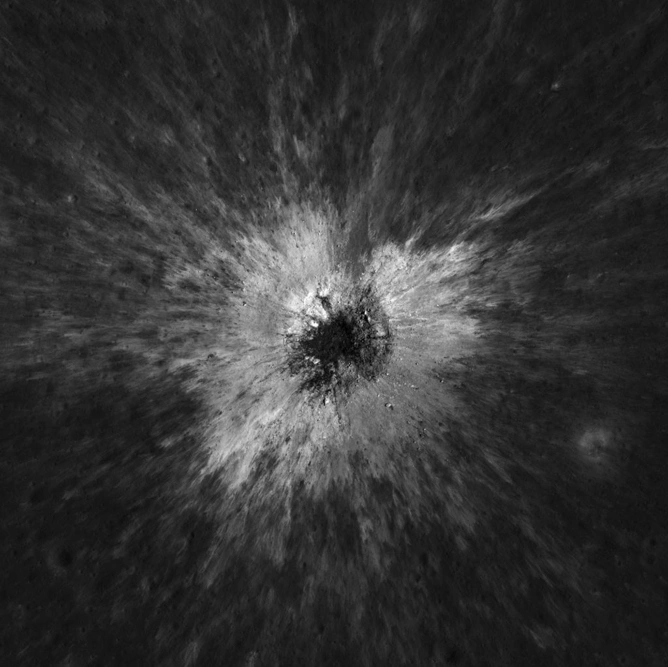
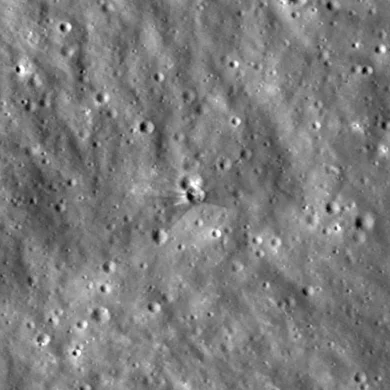
NASA has identified a huge crater on the Moon, formed by an impact that occurred between April and May 2024 and initially went unnoticed. The crater, named McGetchin, is approximately 222 meters in diameter and up to 43 meters deep.

According to researchers, it is the largest recently formed crater discovered so far in the solar system. The impact was likely caused by a comet or asteroid, and an event of this magnitude is estimated to occur approximately once every 132 years.

The crater was discovered almost by chance by Robert Wagner, an American researcher analyzing data transmitted by the Lunar Reconnaissance Orbiter Camera, the instrument aboard NASA’s probe that has been orbiting the Moon since 2009. On a map of the lunar surface, the researcher noticed an unusually large bright spot surrounded by a dark halo.

McGetchin is three times larger than the previous record-holder for a recently formed lunar crater and exceeds Rome’s Colosseum in size. The discovery provides important information about cosmic impacts and comes amid NASA’s plans to build a base for astronauts on the Moon.

ی,

Sources

sursa imagine
Hot News
NASA a descoperit un crater nou pe Lună, mai mare decât Colosseumul din Roma
sursa imagine
Stirile ProTV
Un nou crater uriaș a fost descoperit pe Lună cu ajutorul unei sonde a NASA. Ce spun cercetătorii. FOTO - Știrile ProTV
sursa imagine
News.ro
Un nou crater descoperit pe Lună cu ajutorul unei sonde a NASA
sursa imagine
Le Monde
NASA discovers new, massive crater on the Moon
sursa imagine
Antena3
NASA a descoperit un crater pe Lună, de o dimensiune record. Este mai mare decât Colosseumul din Roma

Latest News

12:48

Update / Railway accident in Spain: at least 39 dead in Toledo

12:47

Ursula von der Leyen was not questioned in person by the EPPO in the Pfizergate case / Kövesi warns about political pressure

12:38

Real Madrid officially apologized after Kylian Mbappe's statements

12:31

Kelemen Hunor calls for a carefully considered administrative reform and consultation with communities before localities are merged

12:30

The AUR group in the Chamber of Deputies summons Prime Minister Luca Niculescu to “Prime Minister’s Hour” on November 2, 2026, to explain the budget deficit situation

See more news

NEWS ON THE SAME TOPICS
event image
IT&C knowledge
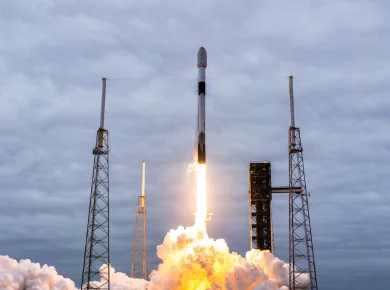
PHOTO │ NASA has published images of the crater formed by the impact of a SpaceX rocket with the Moon
event image
IT&C knowledge
A SpaceX rocket out of control will crash on the Moon, forming a 27-meter crater.
event image
IT&C knowledge
NASA has published images of the crater formed on the Moon after the Falcon 9 rocket stage crashed on August 5.
event image
IT&C knowledge
NASA has confirmed that a higher stage of a SpaceX rocket crashed on the Moon, leaving behind a crater.
event image
Current Affairs
A SpaceX rocket will collide with the Moon/ The impact will provide research opportunities on the lunar composition
event image
IT&C knowledge
NASA: The upper stage of a SpaceX rocket will accidentally crash on the Moon on Wednesday, without posing a danger to Earth.
app preview
Personalized news feed, AI-powered search, and notifications in a more interactive experience.
app preview app preview
Nasa asteroid comet Robert Wagner

Editor’s Recommendations

main event image
International
3 hours ago

Update / Israel Elections - Netanyahu’s camp leads after counting 50% of the ballots

Sources
imagine sursa
imagine sursa
main event image
INSCOP Surveys
1 hour ago

The Diaspora Barometer, conducted by INSCOP RESEARCH for the BANCA TRANSILVANIA group: The Diaspora is increasingly connected with ROMANIA

main event image
Exclusive
2 hours ago

Exclusiv Monitorul Miniștrilor by NewsVibe: October 22–28, 2026 / The most visible ministers in the first week of activity of the Niculescu Government

main event image
Current Affairs
37 minutes ago

Nostalgia for Ceausescu is a warning sign for Romanian democracy, CEPA cautions

Sources
imagine sursa
app preview
Personalized news feed, AI-powered search, and notifications in a more interactive experience.
app preview
app store badge google play badge
  • News
  • Exclusive
  • INSCOP Surveys
  • Podcast
  • EU
  • Diaspora
  • Republic of Moldova
  • Politics
  • Economy
  • Current Affairs
  • International
  • Sport
  • Health
  • Education
  • IT&C knowledge
  • Arts & Lifestyle
  • Opinions
  • Elections 2025
  • Environment
  • About Us
  • Contact
Privacy policy
Cookies Policy
Terms and conditions
Open source licenses
All rights reserved Strategic Media Team SRL

Technology in partnership with

anpc-sal anpc-sol