search icon
search icon
Flag Arrow Down
Română
Română
Magyar
Magyar
English
English
Français
Français
Deutsch
Deutsch
Italiano
Italiano
Español
Español
Русский
Русский
日本語
日本語
中国人
中国人

Change Language

arrow down
  • Română
    Română
  • Magyar
    Magyar
  • English
    English
  • Français
    Français
  • Deutsch
    Deutsch
  • Italiano
    Italiano
  • Español
    Español
  • Русский
    Русский
  • 日本語
    日本語
  • 中国人
    中国人
Sections
  • News
  • Exclusive
  • INSCOP Surveys
  • Podcast
  • EU
  • Diaspora
  • Republic of Moldova
  • Politics
  • Economy
  • Current Affairs
  • International
  • Sport
  • Health
  • Education
  • IT&C knowledge
  • Arts & Lifestyle
  • Opinions
  • Elections 2025
  • Environment
About Us
Contact
Privacy policy
Terms and conditions
Quickly scroll through news digests and see how they are covered in different publications!
  • News
  • Exclusive
    • INSCOP Surveys
    • Podcast
    • EU
    • Diaspora
    • Republic of Moldova
    • Politics
    • Economy
    • Current Affairs
    • International
    • Sport
    • Health
    • Education
    • IT&C knowledge
    • Arts & Lifestyle
    • Opinions
    • Elections 2025
    • Environment
154 new news items in the last 24 hours
  1. Home
  2. IT&C knowledge

Can living human cells contribute to powering the next generation of data centers?

Ana-Maria Tapescu
whatsapp
facebook
linkedin
x
copy-link copy-link
9 April 2026, 06:57
main event image
IT&C knowledge
Foto: shutterstock.com
google-preference

Always see our news on Google

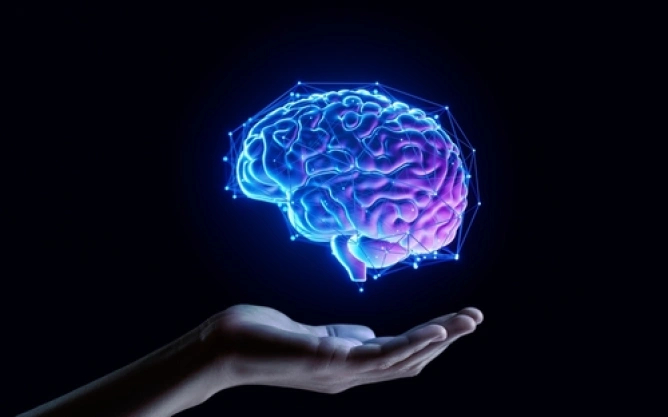
Cortical Labs, an Australian startup, is investigating the possibility of integrating living human cells into computing infrastructure, developing a system called CL1. This combines lab-grown neurons with silicon hardware, transforming them into programmable components. The process starts with stem cells, which become neurons and are placed on specialized chips. CL1 introduces a concept called "wetware," where neurons respond to electrical stimuli, replacing traditional transistors. The company already has 120 CL1 units operating in a small data center in Melbourne and intends to expand the accessibility of these systems.

This approach could revolutionize AI model training, simulation of neurological diseases, and hybrid computing architectures, due to the energy efficiency and adaptability of biological systems. However, the technology is still in its early stages, with open questions regarding scalability and ethics. Innovation in computing is no longer limited to faster chips but can also come from biological systems.

Sources

sursa imagine
Control F5
Can Human Neurons Power the Next Generation of Data Centers?

Latest News

20:01

Sylvester Stallone criticizes the war in Iran and suggests that he has changed his perspective on Donald Trump

19:54

The Dacia Senza Frontiere Association brings the memory of Romanian soprano Elena Teodorini back to Europe’s attention through a cultural project carried out in Italy and San Marino

19:43

FIFA accused of ignoring warnings about the eligibility of the DR Congo goalkeeper for the 2026 World Cup playoff

19:41

Transilvania Investments Alliance is selling its majority stakes in Independența Sibiu and Mecanica Codlea to Transilvania Construcții

19:35

UEFA is investigating the allegation that an Israeli player spat at a member of Ireland's staff at halftime during the match in Serbia

See more news

NEWS ON THE SAME TOPICS

event image
IT&C knowledge
Neuralink vs. BrainCo: Innovations in neurotechnology with or without surgical interventions
event image
EU
Europe’s AI ambitions are running up against the limits of its power grids
event image
Exclusive
IT News Review by Control F5 Software: EU considers it necessary to monitor high-risk AI systems
event image
EU
Imec Calls for European Biological Data Infrastructure to Develop AI-Driven Medicines
event image
Opinions
Andrei Cornea: How AI Will Kill Us
app preview
Personalized news feed, AI-powered search, and notifications in a more interactive experience.
app preview app preview
live human cells data center artificial intelligence neurons Cortical Labs

Editor’s Recommendations

main event image
Politics
3 hours ago

Sorin Grindeanu will negotiate with Luca Niculescu to see whether he “is compatible with the PSD’s governing program” / “All my colleagues have expressed their outrage”

Sources
imagine sursa
imagine sursa
imagine sursa
imagine sursa
imagine sursa
+1
main event image
Exclusive
4 hours ago

Hanning Case: a possible historic security breach / A story involving spies, kidnappings, and a list of precedents

main event image
Current Affairs
45 minutes ago

CNAIR announces the resolution of the TollRo problems. Drivers will not be fined if they tried to pay during the malfunctions

Sources
imagine sursa
imagine sursa
imagine sursa
imagine sursa
imagine sursa
main event image
Exclusive
8 hours ago

ANALYSIS Luca Niculescu and the power equation: an independent prime minister in search of a majority

app preview
Personalized news feed, AI-powered search, and notifications in a more interactive experience.
app preview
app store badge google play badge
  • News
  • Exclusive
  • INSCOP Surveys
  • Podcast
  • EU
  • Diaspora
  • Republic of Moldova
  • Politics
  • Economy
  • Current Affairs
  • International
  • Sport
  • Health
  • Education
  • IT&C knowledge
  • Arts & Lifestyle
  • Opinions
  • Elections 2025
  • Environment
  • About Us
  • Contact
Privacy policy
Cookies Policy
Terms and conditions
Open source licenses
All rights reserved Strategic Media Team SRL

Technology in partnership with

anpc-sal anpc-sol