The European Commission has approved a state aid scheme of 150 million euros for electricity storage in Romania




Always see our news on Google
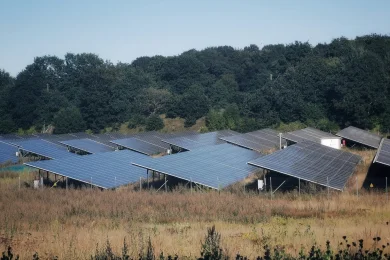
The European Commission has authorized a Romanian scheme of 150 million euros for the installation of at least 2,174 MWh of new electricity storage capacities, through grants for standalone batteries funded by the Modernization Fund. This measure is the first approved for Romania under the Clean Industrial Deal state aid framework and aims to more efficiently integrate renewable energy into the national system. The European Commission has approved a state aid scheme of 150 million euros for electricity storage in Romania. The scheme approved by the Commission will support the installation in Romania of at least 2,174 MWh of new electricity storage capacities, through standalone battery systems selected through competitive bidding. The European Commission has approved a Romanian state aid scheme worth 150 million euros, equivalent to 764 million lei, for the installation of at least 2,174 MWh of new electricity storage capacities, considering that the measure is compatible with EU state aid rules and contributes to the objectives of the Clean Industrial Deal and the transition to a net-zero economy.
In short The approved scheme has a value of 150 million euros and targets the installation of at least 2,174 MWh of new electricity storage facilities. The aid will take the form of direct grants for new standalone battery storage systems. The funding will come from the Modernization Fund, and beneficiaries will be selected through a competitive bidding procedure. The Commission approved the scheme based on the Clean Industrial Deal State Aid Framework, adopted on June 25, 2025. The European executive considers that the measure is necessary, appropriate, and proportional for integrating variable renewable energy into the Romanian electricity system. The aid must be granted by December 31, 2030. The Commission qualifies the scheme as the first measure of Romania approved under CISAF.
The scheme notified by Romania aims to increase electricity storage capacity to facilitate smoother integration of variable renewable sources into the national electricity system. In the Commission's assessment, the central stake of the measure is the flexibility of the energy system, at a time when the expansion of production from renewable sources makes storage a key element for balancing the grid and ensuring supply security.
The aid will be granted in the form of investment support through direct grants for new standalone battery storage systems. Beneficiaries will be selected through competitive bidding, and the funding will come from the Modernization Fund. The Commission emphasizes that the scheme complies with the conditions set out in CISAF as it has a budget and an estimated volume, the support is awarded through a competitive process, and the aid will be granted before December 31, 2030.
In its approval, the Commission concluded that the scheme is "necessary, appropriate, and proportional" to accelerate the transition to a net-zero economy and to facilitate the development of economic activities relevant to the implementation of the Clean Industrial Deal. From the perspective of EU law, the assessment is made based on Article 107(3)(c) of the Treaty on the Functioning of the European Union and the conditions set out in CISAF.
Executive Vice-President Teresa Ribera placed the measure in the broader logic of decarbonization and energy security. She stated that this is the first scheme of Romania approved under CISAF and explained that it will contribute to the installation of new storage capacities, "a key element for the large-scale integration of renewable energy into the energy mix." In the same statement, Ribera directly linked the project to the EU's climate objectives and the resilience dimension of the energy system, stating that the measure will contribute to "a cleaner, safer, and more resilient electricity supply." In the Romanian version of the quote, the message is: "This is the first scheme of Romania under CISAF. It will contribute to the installation of a new electricity storage capacity, which is an essential factor for the large-scale integration of renewable energy into the energy mix. The measure will contribute to a cleaner, safer, and more resilient electricity supply, in line with the EU's climate objectives and the Clean Industrial Deal."
The approval also has a relevant procedural dimension for Romanian energy files. The Commission does not directly finance individual projects through this decision, but authorizes the national framework through which Romania can grant state aid for storage under the conditions set by European rules. For this reason, the scheme opens space for implementation through competitive calls, but does not identify specific beneficiaries at this stage.
The Clean Industrial Deal State Aid Framework was adopted by the Commission on June 25, 2025, to allow member states to accelerate the green transition in key sectors of the net-zero economy. The framework allows, among other things, measures for the expansion of renewable energies and energy storage, temporary support for energy prices in the case of energy-intensive users, measures for decarbonizing industrial processes, support for production capacities in the field of clean technologies, and risk reduction tools for private investments.
In the case of Romania, the approved scheme is funded from the Modernization Fund, an instrument powered by ETS revenues and intended to support the energy transition in eligible member states. In the current energy architecture, storage is treated by the Commission as necessary infrastructure for integrating variable production from renewable sources and for strengthening the resilience of the electricity system.
https://2eu.brussels/ro/stiri/comisia-europeana-a-aprobat-o-schema-de-ajutor-de-stat-de-150-milioane-euro-pentru-stocarea-energiei-electrice-in-romania
Latest News
20:46
20:46
20:45
20:39
20:27
See more news
NEWS ON THE SAME TOPICS
.webp)