The inevitable metamorphosis of the European Union



Always see our news on Google
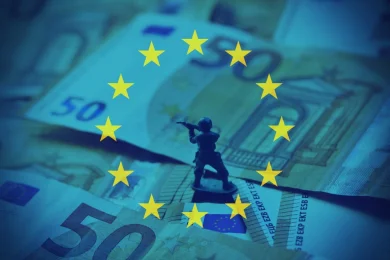
A patient who has been in a coma since 2003, awakened today, would be bewildered by many things, including the role of the European Union as a security actor. One of his last memories would be the first European Union Security Strategy, which began with the phrase: "Europe has never been more prosperous, safer, and freer." How did it come to pass that, in 2025, the European Union would launch the Action for the Security of Europe (SAFE), a financial instrument in the form of loans, amounting to 150 billion euros, dedicated to urgent investments in the field of defense?
In the scale of history, the journey has been remarkably short. The naturalness with which we relate today to the European Union as a security actor shows how profound the transformation has been.
The first shock, the eurozone crisis (2010–2013), heralded a decade of crises for the Union: from the euro crisis to the migration crisis (2015–2016) and up to the COVID-19 pandemic. Despite their severity and prolongation, none of these crises is directly correlated with the new role of the European Union as a security actor.
In the second half of the 2010s, the European security architecture was caught between two worlds. On one hand, the Minsk I and II agreements represented a last gasp of the logic of "great powers," in which France, Germany, and the United Kingdom supported the trilateral agreements between Ukraine, Russia, and the OSCE. In the following years, the European Union took on, through programmatic documents, an increasingly clear role as a security actor, launching initiatives that laid the foundations for today’s ecosystem.
The starting moment of this transformation was the annexation of Crimea by the Russian Federation in 2014, and the undeclared war waged by today's "little green men" in eastern Ukraine. In 2016, the EU adopted the Global Strategy for Foreign and Security Policy (EUGS). In 2017, a package of complementary initiatives was launched: Permanent Structured Cooperation (CSP/PESCO), the European Defence Fund (EDF), the Military Planning and Conduct Capability (MPCC), and the Coordinated Annual Review on Defence (CARD).
In 2019, Ursula von der Leyen took on the first "geopolitical Commission," aiming to transform the economic, diplomatic, cultural, and military capital of the Union into a global geopolitical posture alongside the USA and China. In the same year, the European Defence Fund (EDF) became operational, followed by a new joint NATO-EU declaration, which reaffirmed cooperation between the two organizations and promoted the concept of "strategic autonomy," initially launched by French President Emmanuel Macron. In March 2021, the European Peace Facility (EPF) was created, with an initial budget of 5.69 billion euros, used also to support Ukraine after the 2022 invasion.
2022 was a turning point. In March 2022, the Strategic Compass was launched, a document being drafted at the time of the invasion and adjusted to reflect the reality of large-scale war on the continent. The document provides for the creation of a Rapid Deployment Capability (RDC) within the Common Security and Defence Policy (CSDP), with decisions on use adopted unanimously in the EU Council, at the proposal of the High Representative. In 2023, a new joint EU-NATO declaration followed, expanding cooperation to hybrid threats, energy infrastructure, and cybersecurity. Also in 2023, the Regulation on strengthening the European defence industry through common procurement (EDIRPA) was adopted, designed as a temporary mechanism for joint procurement, in light of stock depletion after donations to Ukraine.
In March 2024, the European Commission adopted the EDIRPA work program and launched calls for proposals in three directions: munitions (from small arms to artillery, mortars, and missiles), air and missile defense, and platforms and replacement of old systems, marking the transition from the legislative framework to the operational phase. Also in 2024, the first Industrial Strategy in the field of defense was adopted, which sets a target of 40% for coordinated procurement at the European level and promotes common standards.
In 2025, SAFE was adopted, and Romania appears as the second beneficiary of the program, with allocations of 16.6 billion euros. There is still confusion in the public space, including in communications from the Ministry of Investments and European Projects, according to which Romania "receives" this money. In fact, these are loans, at competitive rates and long maturities, contracted based on the EU's maximum rating, which allow for more favorable costs than those usually obtained on national markets.
The path of the European Union over the last decade is marked by four major trends: 1) the transition from political initiatives to operational mechanisms and common action and funding tools; 2) pooling resources, from financing and production to procurement and stocks; 3) exponential growth in allocated amounts, from 5.69 billion euros in 2021 (EPF) to 150 billion euros in 2025 (SAFE); 4) the Europeanization of production capabilities, with minimum European origin shares for components in funding programs.
Why this metamorphosis? The most important element is the organic nature of the process. There is broad consensus among European states that security challenges exceed national capacities. The EU is a "first-tier" geopolitical actor alongside the USA and China, while, taken individually, even the richest European states are closer to the level of the richest American states. It is a long process of awareness of the relative decline of European power on the global stage, which began at least with the Suez Canal crisis (1956) and culminated, at the European level, with the Minsk agreements – a last manifestation of a logic of "great power" European.
A natural question is: what does this status mean for NATO? The answer: a lot, but not in a zero-sum logic. NATO is an alliance without a substantial common budget (about 3 billion euros annually), while the combined military spending of the 32 member states reaches about 1.35 trillion euros, of which approximately 70% goes to the USA. NATO is, essentially, an aggregator of political will and national capabilities, which facilitates interoperability through common standards and operational plans. The European Union, with an annual budget of about 190 billion euros (to which loan instruments and additional contributions are added), is a political and economic actor that can strengthen the capabilities of states through funding and coordination. From this results a natural synergy between the two organizations.
The vote for Brexit, Donald Trump's first term (including the NATO summit in Brussels in 2018), the rise of China, Russian revisionism, India's diplomacy, competition for influence in Africa, internal crises of the EU, and the prolonged focus on "normative power" – all these have contributed to accelerating the transformation, forced by circumstances, of the European Union into a security actor.
In the coming years, these trends are likely to consolidate. Not all programmatic documents will be fully implemented, but the entire European project has always functioned as a laboratory of ideas and compromises, and defense initiatives are no exception. Most likely, the direction is set, and the motivations – internal and external – that generated the change will continue to shape the European Union in the coming decades. The positive part is that this change, although profound, has already been assimilated relatively quickly by both European institutions and citizens.
https://2eu.brussels/articol/defencecyber/metamorfoza-inevitabila-a-uniunii-europene
Latest News
21:01
20:56
20:31
20:25
20:22
See more news
NEWS ON THE SAME TOPICS