Europe must prepare its defense for scenarios with less American support



Always see our news on Google
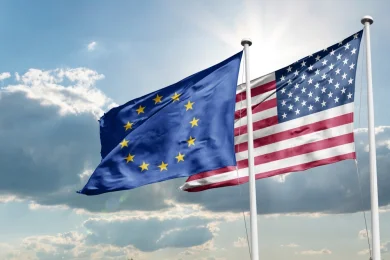
A CEPS, RUSI, Clingendael and IEP report warns that Europe must rapidly reduce its dependencies on the United States and build a stronger European defense capability. The document proposes three complementary paths: a more European NATO, a new European security multilateralism, and a defense cooperation led by the European Union.
Europe must strengthen its defense for scenarios in which the United States reduces military support, blocks decisions in NATO, or reallocates strategic resources to other regions. A report published by CEPS, RUSI, Clingendael, and IEP argues that European states cannot afford to exclude any option and must advance simultaneously on three fronts: a more European NATO, a new European multilateralism, and a defense cooperation led by the European Union.
In short
The report states that Europe is at a critical juncture, driven by Russia's war against Ukraine, hybrid threats, and uncertainties regarding the future role of the United States in NATO.
The authors recommend prioritizing the "Europeanization" of NATO by increasing the role of Europeans in command structures, planning, capabilities, and political coordination.
The report also proposes a new European multilateralism, based on groups of states that are capable and willing to act when NATO becomes politically or operationally blocked.
The third path is defense cooperation led by the European Union, focusing on capability development, integration of the Ukrainian defense industry, utilizing the SAFE instrument, and operationalizing the mutual defense clause in EU treaties.
The document recommends military spending of 3.5% of GDP by 2035 for military capabilities, with the possibility of revising this if the United States reduces its presence more quickly.
The report starts from the idea that European security has entered a phase of structural uncertainty. Russia is described as a short- and long-term threat through its war against Ukraine, destabilizing actions, de facto control over Belarus, and presence in the territory of the Republic of Moldova. The authors note that Moscow is trying to re-establish its influence over Central and Eastern Europe and perceives NATO as an adversary.
At the same time, the report treats the United States as an essential but less predictable ally. The authors argue that American policy can create scenarios in which Washington reduces its involvement in Europe, conditions security guarantees, or blocks decisions within the Alliance. In such a context, Europe must keep the United States close while simultaneously reducing dependencies on American weapons, software, and strategic capabilities.
The first proposed path is a more European NATO. The report recommends that Europeans gradually take on more command positions currently held by Americans, contribute more to executing regional plans, and prepare structures capable of functioning with reduced or absent American support. The authors believe that the position of Supreme Allied Commander in Europe should remain, for the time being, held by an American officer to maintain the military commitment of the United States and the credibility of extended nuclear deterrence.
An important recommendation is the reconstitution of a "Eurogroup" within NATO. This would be a permanent political coordination mechanism among European allies, transparent to the rest of the Alliance, for strategic dialogue, joint capability development, and organizing military posture in regions such as the eastern flank, the Arctic, and the Mediterranean.
The report also recommends a geographical reorganization of some command structures. Examples include increasing land command capabilities in Finland, transferring responsibility for the eastern flank from the joint command in Brunssum to a new land command in Poland, and creating a European NATO headquarters in Brunssum for operations led by Europeans, in coordination with NATO structures.
The second path is a new European multilateralism. The report starts from the scenario in which the United States or another ally would make NATO dysfunctional from within by delaying or blocking political decisions or by hindering operational command in a collective defense situation. For such scenarios, the authors recommend connecting and strengthening existing minilateral arrangements among European states.
The report proposes that these groups have structures compatible with NATO, planning capability, command and control, information sharing, common procurement, and, where necessary, multinational forces. In the authors' vision, there should be at least one minilateral structure for each NATO regional plan.
A more sensitive proposal is the creation of a European Security Council as a consultation and decision-making mechanism for a coalition of European states willing to act. The report notes that this idea has been supported by CEPS, Clingendael, and IEP/Bocconi, but not by RUSI. The difference in position is significant because it shows that the report does not present a single line on all institutional solutions.
The third path is defense cooperation led by the European Union. The authors believe that the EU has a comparative advantage in transforming spending into concrete investments, especially through support for member states, associated countries, candidates, and close partners such as Norway, Ukraine, and the United Kingdom.
The report calls for the removal of obstacles that prevent NATO and the EU from creating maximum synergies in capability development. NATO should share more information with relevant EU structures, including the European Defense Agency and the European Commission, and the EU should treat close partners like the United Kingdom as equal actors in certain funding and cooperation instruments.
In the industrial area, the report recommends rebalancing the European Union's defense relationships with the United Kingdom, Ukraine, and other non-EU allies in NATO. The SAFE instrument, valued at 150 billion euros, should be opened to a wider range of strategically aligned states, especially the United Kingdom, and the integration of Ukraine's defense industry into the European defense single market should be accelerated.
The authors warn that Europe needs more than just money. The report notes that NATO allies have agreed on a target of 3.5% of GDP for military capabilities by 2035, plus 1.5% for defense-related spending. The main issue becomes the effective use of these resources for deterrence, defense, and reducing industrial fragmentation.
Capability deficits are presented as extensive. The report mentions integrated air and missile defense, anti-drone systems, precision strike capabilities in depth, munitions, military mobility, personnel, training, and command structures. In air defense, NATO's plans to multiply the necessary systems are described as a difficult target for both European allies and the United States.
Another risk is time. European assessments regarding when Russia could rebuild sufficient military capacity to threaten the continent vary between three and seven years. The report warns that many states are delaying spending increases until the end of the period, while the tactical adaptation cycles observed in Ukraine are much faster than the usual European procurement and development cycles.
The authors recommend operationalizing the mutual defense clause of the European Union, Article 42 paragraph (7) of the Treaty on European Union. Within the current legal framework, the EU should clarify the obligation of assistance and support, prepare existing command structures, and allow non-EU close states to provide support in the event of armed aggression against a member state.
The report also includes recommendations regarding EU forces and instruments. Rapid deployment capability, rapid response cyber teams, and initiatives related to drones, air defense, space, and the eastern flank should be prepared to supplement national armies. The authors link the protection of external borders and combating hybrid attacks to initiatives such as Eastern Flank Watch and cooperation with Frontex.
The report comes at a time when European defense is being discussed simultaneously through NATO, the European Union, minilateral coalitions, and new industrial instruments. The authors conclude that Europe cannot choose just one path. NATO remains indispensable, but Europeans must be able to function more coherently within the Alliance, prepare action formats among willing and capable states, and use EU instruments for funding, industry, capabilities, and solidarity.
In this dossier, the analysis targets both the military vulnerabilities of Europe and the political architecture through which European states can act in a tougher strategic environment. The stake is not to replace NATO with the EU, but to create a European capability strong enough to support the defense of the continent when American support is uncertain, delayed, or limited.
The report was published in May 2026 by CEPS, RUSI, Clingendael, and IEP, in partnership with the Konrad Adenauer Stiftung Europe. The rapporteur is Steven Blockmans, senior fellow and research director at CEPS, with written contributions from Edward Arnold, Bob Deen, and Daniel Gros. The Task Force was chaired by Sauli Niinistö, former president of Finland.
Latest News
22:52
22:34
22:28
21:56
21:29
See more news
NEWS ON THE SAME TOPICS