ANALYSIS Viktor Orbán and Péter Magyar, decisive duel before the elections: energy, security and positioning against Russia in Hungary's internal game



Always see our news on Google
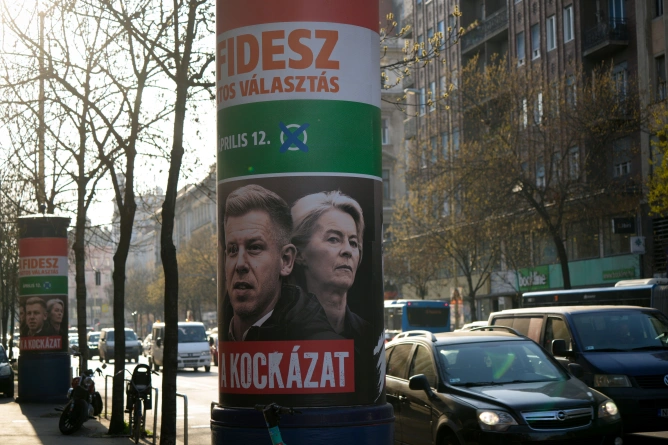
Hungary enters the last week of the campaign in a climate of intense political competition, marked by polarization and a high degree of voter mobilization, in which Viktor Orbán is no longer the only actor with dominant influence over the public agenda, and the central theme becomes the relationship between security, energy, and the relationship with Russia.
The last days before the vote
Political scientist Török Gábor summarizes the atmosphere at the end of the campaign: "it has not been just a month of campaigning, but several years." In his assessment, most voters decided their opinion before the official start of the campaign, but the balance has since tilted in favor of those who anticipate a victory for the opposition, especially the Tisza formation led by Péter Magyar. Török emphasizes a key element for the credibility of the electoral game: the unprecedented distance between independent polls and those close to the government, "such distances, such irreconcilable figures have never been seen before." His analysis suggests that there is no longer room for "campaign atomic bombs" or last-minute revelations with the potential to radically change voting opinions.
The aggregated polling media from Politico shows Péter Magyar and Tisza leading against Fidesz, in a position without precedent compared to the 2022 elections. The latest poll from the Medián institute, considered one of the most accurate in Hungary and conducted on a sample of 5,000 people in five telephone rounds carried out in February and March, indicates that the Tisza party is expected to obtain between 138 and 143 mandates out of a total of 199, thus exceeding the threshold of 133 seats necessary for a two-thirds supermajority.
Fidesz is expected to obtain between 49 and 55 mandates, while the far-right party Mi Hazánk ("Our Homeland") would enter parliament with 5-6 seats. In voting intentions, Medián shows that 48% of those eligible to vote intend to vote for Tisza, compared to 30% for Fidesz, 4% for Mi Hazánk, and 2% for the Democratic Coalition. The government, through the voice of Gulyás Gergely, contests the credibility of the Medián institute, claiming that it publishes data favorable to those who finance it. Gulyás, however, acknowledges that the election is "open," appreciating that Fidesz-KDNP has better chances of victory, but avoiding confirming a potential two-thirds majority scenario. The declared objective of the governing coalition remains to obtain at least 100 parliamentary mandates, the minimum necessary to form a government.
"Ruszkik haza!"
One of the defining images of the last week is the Fidesz rally in Szombathely, where Viktor Orbán faces a slogan that strikes directly at his eastern axis: "Ruszkik haza!" ("Russians, go home!"). The cry, emblematic of the Hungarian Revolution of 1956, is now relaunched against a prime minister accused of turning Hungary into "Russia's servant."
The same slogan has become the hallmark of the massive Tisza rallies led by Péter Magyar, who manages to transform the outrage over Budapest's closeness to Moscow into mobilizing political capital and position himself as Orbán's main rival domestically. In recent days, the narrative about sovereignty thus turns against the prime minister: what for years has been presented as a defense of national interest against Brussels is being rewritten by opponents, led by Magyar, as a humiliating dependence on the Kremlin.
Secret talks between Russian and Hungarian officials
The background of this narrative offers two press revelations that shook the last week of the campaign. The first, published by Bloomberg, targets the transcript of a phone conversation from October between Viktor Orbán and Vladimir Putin. According to a government report obtained by the publication, the Hungarian prime minister allegedly told the Russian president that he is ready to support him in anything, including organizing negotiations in Budapest to end the war in Ukraine. Moreover, Orbán reportedly told Putin a story about a mouse helping a lion, a metaphor for Hungary's position towards Russia. According to the same document, Putin reacted by laughing. The Kremlin had previously confirmed only a few fragments of the conversation, and the full text has now reached the public space.
The second revelation came a day later, through investigations published simultaneously by VSquare, FrontStory, Delfi Estonia, The Insider, and the Ján Kuciak Investigative Center: new details about the phone conversations between Hungarian Foreign Minister Péter Szijjártó and his Russian counterpart Sergey Lavrov. Gulyás dismissed this revelation as well, calling it a discrediting action orchestrated by foreign intelligence services, in which journalist Panyi Szabolcs would be involved, and claimed that Hungarian authorities already know what happened, with the investigation being on a "hot trail." The content of the exchanges between Szijjártó and Lavrov, conducted in the context of the war in Ukraine, directly fueled the opposition's accusations regarding the government's loyalty to the Kremlin. In response to both scandals, Gulyás invoked JD Vance's visit to Budapest as proof that Hungary's relationship with the United States and NATO is normal, contradicting, in his opinion, any accusation of alignment with Moscow.
Energy stakes and security: from Barátság and Turkish Stream to the promised "cheap energy"
In this anti-Russian symbolic framework, the theme of energy is also inscribed, transformed into one of the main battlefields in the last week. At the last press conference of the Kormányinfó type, the regular government briefing where executive decisions are announced and explained before the elections, the minister responsible for coordinating the Prime Minister's Chancellery, Gulyás Gergely, warns of an "imminent energy crisis" for Europe and Hungary, with the risk of price explosions and even fuel shortages. The government's response is clearly formulated: not restriction, but expansion of supply routes, in contrast to Brussels, which seeks to complicate imports of Russian oil and gas, while pushing citizens to reduce consumption.
Gulyás insists that "Hungarians are on the side of good sense," placing the executive in the role of guarantor of economic rationality and energy security. He also recalls the thwarted assassination attempt against the Turkish Stream pipeline by Serbian authorities on Easter Sunday, directly linking this incident to the need to strengthen the security of critical infrastructure for Hungary's supply. At the same time, he evokes the delays and interruptions on the Barátság pipeline, despite Kyiv's agreement to accept European financial support for repairs, signaling that the resumption of flow may take time.
In parallel, Gulyás confirms that MOL is buying American oil, a sign that Budapest is trying to effectively diversify its energy portfolio even while criticizing European policies. Recent statistical data, with an annual inflation rate of 1.8% in March 2026 and a monthly increase of 0.4%, provide the government with the argument of relative macroeconomic stabilization before the vote, aimed at tempering fears regarding the effects of an energy crisis on living standards. At the same time, the opposition led by Péter Magyar is trying to frame this energy debate in terms of loyalty to Russia, arguing that dependence on Russian infrastructure and resources increases Hungary's vulnerability and long-term political costs.
External interference and the international echo of the election
The last week of the campaign is also marked by the entry of external actors into the internal narrative game. American Vice President JD Vance, visiting Budapest, describes Viktor Orbán as "the only solid leader in Europe" regarding security and energy independence and denounces EU leaders who allegedly tried "to destroy Hungary" just because they detest the prime minister. Vance claims that Europeans would pay less for energy if they followed the Hungarian model, thus supporting Fidesz's campaign exactly on the ground that the opposition contests: the relationship with Russia and the rejection of accelerated energy transition.
Domestically, this intervention is used by the government camp to legitimize Budapest's positions against Brussels, but risks fueling the perception of too close an alignment with Washington and along the Trumpist-Orbán axis, constantly criticized by Péter Magyar, who builds his profile also on the idea of a more predictable foreign policy anchored in Euro-Atlantic values. Volodymyr Zelensky, interviewed in the podcast "The Rest is Politics," sends, however, a diametrically opposed message: he does not consider JD Vance's involvement in Orbán's campaign useful, emphasizing that the decision belongs exclusively to Hungarians.
Zelensky goes further and describes how Russia would have helped Iran prepare attacks against American bases, using satellite images of energy and military infrastructure in the Persian Gulf and Israel, data subsequently transmitted to Tehran. He states that the Washington administration ignored these warnings and reproaches Donald Trump's team for not truly understanding Moscow's objectives, which provides an uncomfortable geopolitical backdrop for any attempt to present Hungary's energy and security policy in exclusively technical terms.
At a crossroads in the relationship with the EU
On the European level, the Budapest-Brussels conflict enters the final straight of a 16-year confrontation. Since 2010, Orbán and Fidesz have consolidated a political-legal system that has guaranteed their longevity and allowed them to use the Union as an "external scapegoat," presenting "Brussels" as a threat to progress and sovereignty, while Hungary has continued to consistently benefit from its membership in the European project.
On the eve of the elections, this structural tension remains unresolved, and an unfavorable outcome for Fidesz would raise the question of whether the prime minister would try to return to power later, a scenario that Török Gábor considers uncertain, including because Péter Magyar is trying to present himself as the beginning of a new political cycle, not just a change of personnel. Thus, the last decisive moments before the election show Hungary caught between three axes of pressure: energy dependence and vulnerable infrastructures, the prolonged conflict with European institutions, and the redefinition of the relationship with Russia in a volatile geopolitical context. On Sunday, April 12, Hungarians will decide which of the two visions for the future of their country will prevail.
****Synthesis made with the help of a data monitoring flow provided by the media monitoring platform NewsVibe Romania. The analysis, data, and images presented have been enhanced with the help of Machine Learning and Artificial Intelligence tools
Latest News
23:03
22:44
22:40
22:37
22:34
See more news
NEWS ON THE SAME TOPICS