ANALYSIS. What is the Peace Council proposed by Trump and what are its stakes. What challenges does it represent for Romania



Always see our news on Google
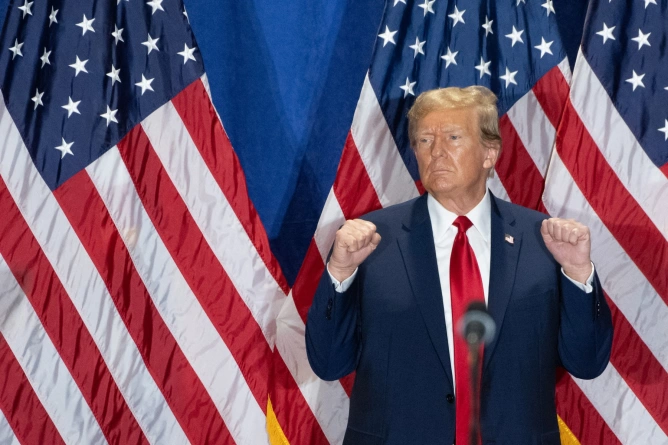
The Board of Peace is a new international "club" of power conceived and personally led by the President of the USA, Donald Trump, which formally starts from the plan for Gaza, but is designed to become an alternative global structure – and potentially a rival – to the UN.
What is the Board of Peace
According to the text on the White House website and the "Charter" analyzed by the press, the Board of Peace is the central instrument of the "Comprehensive Plan to End the Gaza Conflict," with a role in political oversight, resource mobilization, and reconstruction control through an executive structure and a high representative for Gaza.
At the same time, the Charter defines it much more broadly as a permanent body meant "to promote stability, restore lawful governance, and ensure lasting peace in areas affected or threatened by conflict" globally, without explicitly mentioning Gaza.
How it is structured and how it would function
The structure has three levels: the "Board of Peace" at the top (heads of state/government of member countries), an Executive Board made up of political-financial figures close to Trump (Rubio, Kushner, Tony Blair, Witkoff, Rowan, Ajay Banga, etc.) and a Gaza Executive Board that works with the National Committee for Gaza Administration (NCAG) and an International Stabilization Force (ISF).
The Charter grants exceptional powers to the president-chairman of the Board (Donald Trump): he is the only person named in the document, holds the position for life, invites and revokes members, decides the agenda, can block or issue resolutions, and validates all decisions of the Board, even though formally each state has a vote.
Countries can be members for a 3-year term or "permanent members" if they pay 1 billion dollars in "cash funds" into a fund controlled by the president. The central criticism is that access to status and influence becomes conditioned by the ability to pay and Trump’s goodwill, not by universal or legal criteria.
Declared purpose vs. real purpose
The official purpose, in the version of the White House and resolution 2803, is the implementation of a 20-point plan to "end the conflict in Gaza," through: security stabilization (ISF), rebuilding civil institutions, gradually returning to a functional Palestinian governance, and mobilizing international investments.
The implicit purpose, as outlined by Trump’s statements and press analysis, is the creation of a "peace body" parallel to the UN, more "rapid" and completely politically and financially controlled by Washington and Trump’s close business circle, with an extendable mandate to other conflicts (from Ukraine to other regional crises).
How it differs from the UN
The UN is a universal organization based on the 1945 Charter, ratified by states, with explicit principles regarding non-aggression, sovereign equality, and human rights. The Board of Peace does not have a proper treaty basis, is not a UN body, and its Charter deliberately avoids the classic value language of the UN, focusing on the internal rules of the "club" and the role of the president (Trump).
In the UN Security Council, the imbalance comes from the veto power of the 5 permanent members. In the Board of Peace, the imbalance is even more pronounced: Trump has de facto absolute veto power and control over the composition, and "permanence" is bought with 1 billion dollars, which transforms a representational issue into a "pay-to-play" one.
The UN has specialized agencies, human rights monitoring procedures, and public accountability mechanisms. The Board of Peace seems designed as an extremely opaque political-financial consortium, also oriented towards business contracts in post-conflict areas, to the detriment of traditional UN agencies in Gaza.
Who is invited, who has accepted
About 60 states have received invitations, including the EU and key European states, actors from the Middle East and Asia, but also Russia and Belarus, which has triggered an intense debate in Western capitals.
Countries that, according to compiled lists so far, have confirmed participation: the United States (president), Albania, Argentina, Armenia, Belarus, Hungary, Israel, Kazakhstan, Morocco, Paraguay, the United Arab Emirates, Uzbekistan, Vietnam.
Among the invited states that are hesitating or have sent negative signals are: France (explicitly announcing that it will not accept), the United Kingdom, Norway, and other EU members. In response, Trump threatened with 200% tariffs on French wine and champagne, turning the Board of Peace into a tool of commercial pressure.
Reactions and stakes of major actors
The United States (Trump and his circle)
For Trump, the Board of Peace is at the same time an instrument of foreign policy and a personal power project: it allows him to deliver "quick victories" (Gaza, possibly other files), to marginalize the UN, to connect diplomacy with an economic "deal-making" managed by business and family allies (Kushner, Witkoff, Rowan).
The internal stake is political capital: after losing the Nobel Peace Prize in 2025, press evaluations show that the Board of Peace is also a "vanity project," through which the president positions himself as a global architect of peace and prosperity, with his own "imperial court."
Russia and China
The Kremlin has confirmed that Vladimir Putin has received an invitation and "is considering" participation. Possible membership would offer Moscow an alternative forum, where it is not isolated as at the UN, and an opportunity to normalize its status as an essential interlocutor in Ukraine and other theaters, in direct dialogue with Washington.
China, also invited, weighs the costs: acceptance could erode Beijing's narrative as a defender of UN multilateralism, but refusal risks economic retaliation. So far, the messages are cautious and there is no firm public commitment.
The European Union and member states
According to Euronews, the invitations came just as the EU is trying to defuse the conflict with Trump over Greenland and tariffs, which turns the Board of Peace into a transatlantic tension factor: refusal can be "taxed" economically, acceptance risks undermining the UN and fracturing European unity.
France has announced that it "will not respond favorably," citing the absence of reference to Gaza in the Council's Charter and the fact that it seems to challenge "the principles and structure of the UN." Germany and other states are trying to buy time, while leaders from Central Europe (Hungary, possibly allies) are much more open, which amplifies the east-west divides within the EU.
The Middle East and the Arab world
Egypt, Jordan, Qatar, Turkey, and the UAE are essential for implementing the plan on the ground: their people appear in the Gaza Executive Board and in the NCAG, and some capitals see in the Council a chance to influence reconstruction at a lower political cost than through the UN, but also to obtain contracts and investments.
At the same time, there are fears that the Board of Peace will marginalize Palestinian actors and UN agencies, perpetuating an "external administration" of Gaza and anchoring reconstruction in a profit-oriented and security-oriented business model, not towards political rights and Palestinian statehood.
Asia-Pacific and the Global South
Analyses from Southeast Asia describe the Council as an "even more exclusive version of the UN Security Council," where the USA and its close circle of allies practically control the veto and the agenda. Countries like Singapore, Thailand, Indonesia, and Vietnam are advised to avoid quick commitments and not to refuse ostentatiously, to avoid provoking retaliation.
For countries in the Global South, the temptation is access to resources for reconstruction and American favors, but the risk is to be perceived as legitimizing an exclusive format dominated by Washington's interests and authoritarian actors (if Russia, Belarus, and allies officially join).
Can it be more effective than the UN?
Supporters argue that the Board of Peace can act "more quickly" and "more pragmatically" than a Security Council paralyzed by the veto power of permanent members, that it can mobilize private capital on a scale that the UN does not reach, and that it can condition aid on "concrete" results in security and reform.
Critics, however, observe that procedural efficiency does not compensate for the legitimacy deficit: the Council is controlled by a single leader, with a transactional membership model (1 billion for status), which risks turning "peace mediation" into a system of personal loyalties and commercial deals, with rules that can change at Trump’s whim.
In practice, the Council's ability to deliver results depends on: the participation of major powers (EU, China, Russia, India), local acceptance in conflict theaters, and compatibility, or open conflict, with the mandate and agencies of the UN. So far, the proposal has been met with coldness, and the main risk is the fragmentation of the multilateral order, not its coherent replacement.
Stakes for Romania
Romania is among the invited states to join, and the issue has already entered the public and presidential agenda in Bucharest, including through assessments of diplomatic and security implications.
From a strategic perspective, Romania's stake is triple:
Maintaining the privileged relationship with the USA and the pro-American profile in NATO, in a context where refusal could be interpreted in Washington as a signal of distancing.
Avoiding fragmentation of the EU position – unilateral accession, while major European partners refuse or hesitate, would deepen the image of a "dissident ally" and create tensions in Brussels.
Upholding the declared attachment to UN multilateralism and international law, principles constantly invoked in Romania's positions regarding Ukraine, Moldova, and Black Sea security.
Analysis from Romanian and European press suggests that the Presidency and diplomacy in Bucharest are seeking a middle ground: avoiding a hasty decision, coordinating with the EU, and maintaining close dialogue with Washington, possibly through limited engagement formulas (observer, targeted cooperation on Gaza) that do not equate to a blank check for a structure that may undermine the UN.
For Romania, the main risk is being caught between two cardinal loyalties – the USA and the EU – in a context where the Board of Peace becomes explicitly a tool of pressure on Europe (tariffs, linking invitations to other files), while the concrete advantages (role in Gaza, global influence) are uncertain compared to the image cost and the symbolic sum of 1 billion dollars needed for permanent status.
In terms of foreign policy, the Board of Peace is less a "reform of multilateralism" and more a test of alignment: who is willing to enter into a format led by a single leader, with flexible rules and high costs, even at the risk of eroding the UN architecture. Romania will have to define its position based on this test, not just on promises related to Gaza.
Analysis conducted with the support of NewsVibe and Perplexity
Latest News
13:34
13:26
13:24
13:23
See more news
NEWS ON THE SAME TOPICS