The United States, Russia, and Ukraine resumed negotiations on Tuesday, November 10, in Abu Dhabi to end the war in Ukraine. It is the first trilateral meeting since the Geneva round in February, and the context is very different. These are the first talks since the attacks launched by the United States and Israel against Iran, the first since the Republicans lost the midterm elections, and the first in which the Trump administration publicly maintains that Europe must participate directly in the negotiations.
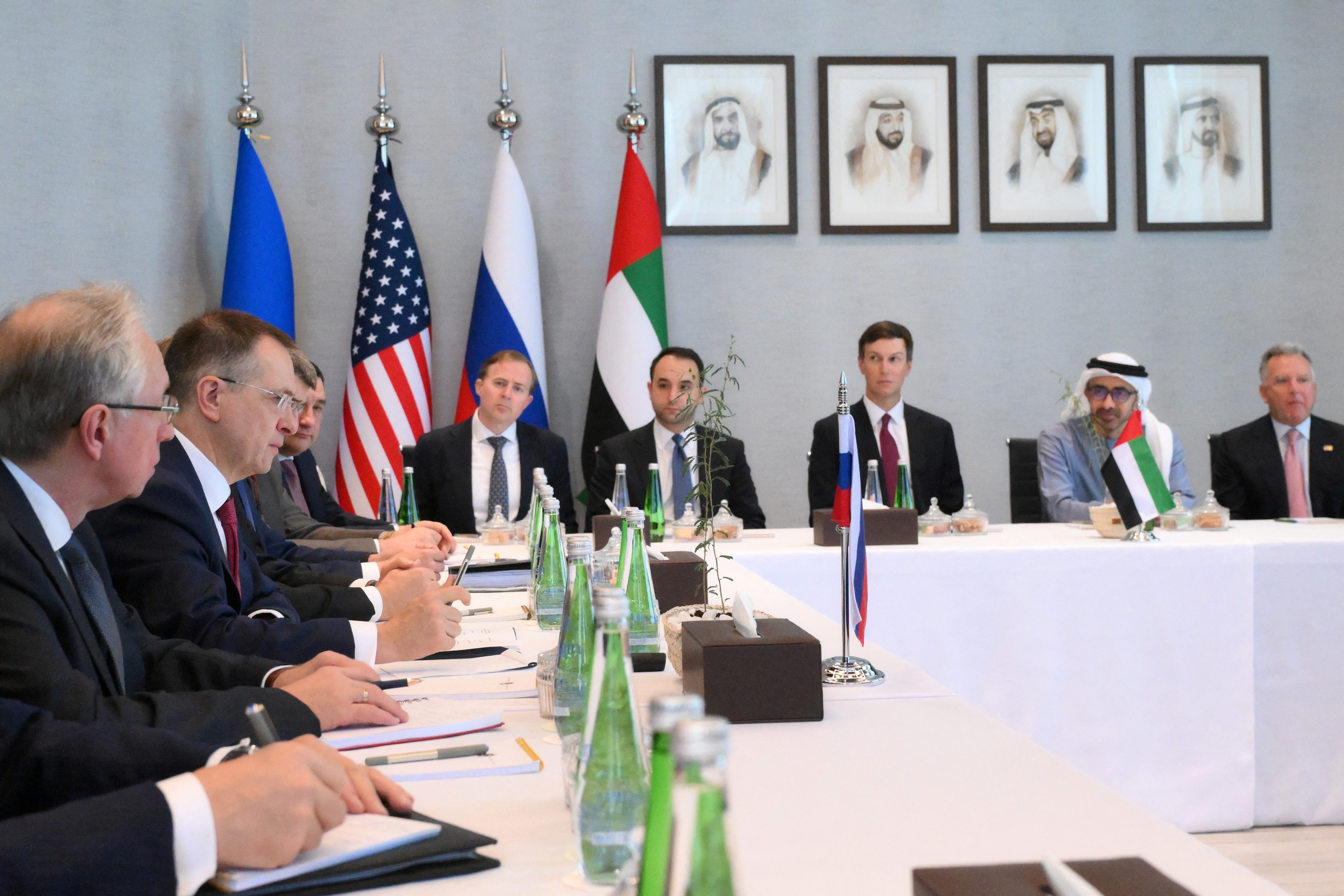
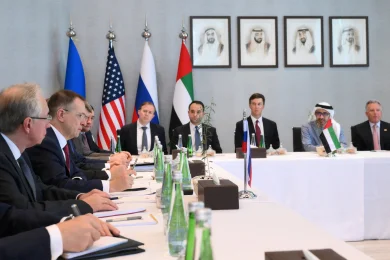
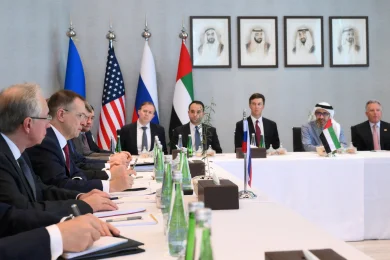
Photograph distributed by the Russian state agency RIA Novosti on November 10, 2026, showing members of the Russian delegation (left) holding talks with the Ukrainian delegation, mediated by the U.S. special envoy, Steve Witkoff (right), and the son-in-law of U.S. President Donald Trump, Jared Kushner (third from right), in Abu Dhabi, amid Russia’s invasion of Ukraine / Grigory SYSOYEV / AFP / Profimedia
The atmosphere at the outset
The day began with a coordination meeting between the Ukrainian delegation, U.S. envoys Steve Witkoff and Jared Kushner, and representatives of the United Kingdom, France, Germany, and Italy, together with NATO and the European Commission. Only afterward did the trilateral talks begin.

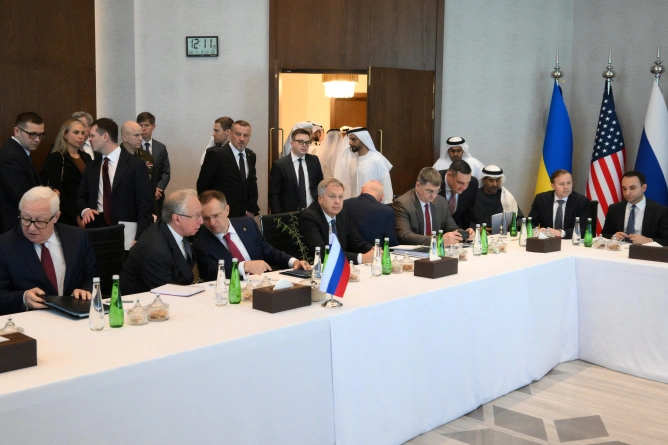
The Ukrainian delegation at the Abu Dhabi peace negotiations, November 10, 2026 / Grigory SYSOYEV / AFP / Profimedia
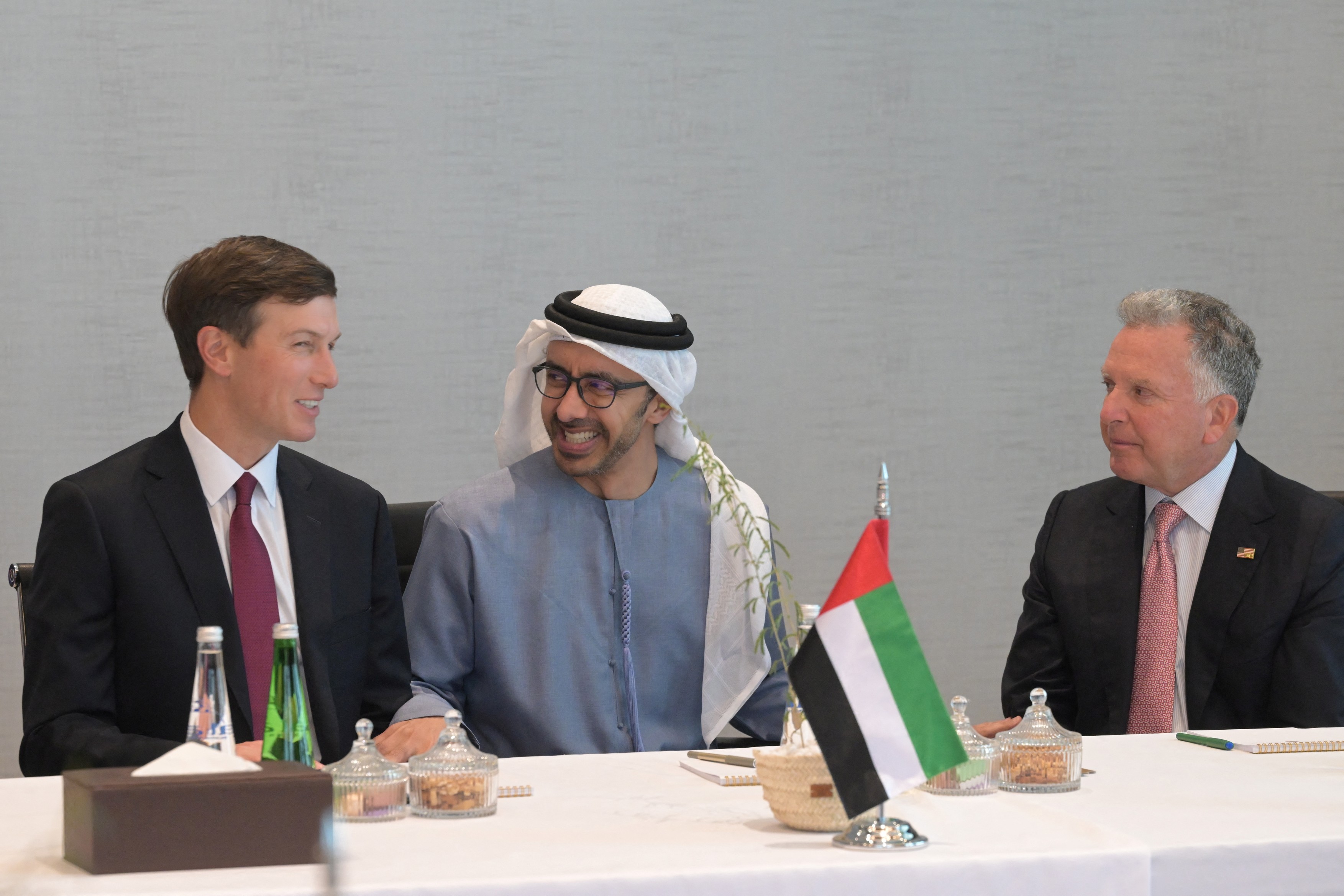
U.S. special envoy Steve Witkoff (right), the United Arab Emirates’ foreign minister, Sheikh Abdullah bin Zayed Al-Nahyan (center), and U.S. President Donald Trump’s son-in-law, Jared Kushner / Grigory SYSOYEV / AFP / Profimedia
Optimism is coming almost exclusively from Washington. Donald Trump said he sees a growing willingness to end the war and that both sides are exhausted after four and a half years (CNBC, cited by NewsVibe).
“It will be a big agreement and it will involve more than Ukraine... I might even say that it could involve all of Europe,” the U.S. president said, according to RTÉ. He also suggested that Ukraine will be “a little bit different,” according to CNN, and warned that “Zelensky must want to end this war,” according to Al Jazeera.
Analysts’ reservations nevertheless remain strong: Politico reports that the aim of the round is to maintain diplomatic momentum, not to produce a final ceasefire.
Who is negotiating
The American side is led by special envoy Steve Witkoff and Jared Kushner, President Trump’s son-in-law. The Ukrainian delegation is led by Rustem Umerov, head of the Foreign Intelligence Service, and includes Kyrylo Budanov, head of the Presidential Office, his deputy, Serhii Kyslytsia, Davyd Arakhamia, leader of the Servant of the People parliamentary faction, and Vadym Skibitskyi, deputy head of military intelligence.interfax.com
Russia sent an expanded team of five delegates and six experts, led by Vladimir Medinsky, an adviser to Vladimir Putin. The delegation includes Deputy Foreign Ministers Sergei Ryabkov and Mikhail Galuzin, FSB operational director Alexei Komkov, and the head of the Main Directorate of the General Staff, Igor Kostyukov, along with generals and experts from the FSB and the Foreign Ministry. The substantial presence of military and intelligence officials shows, according to Euronews, that security issues dominate the agenda.tass
Agenda: security first, territories afterward
A source from the Russian negotiating group, quoted by TASS, says the talks concern the formation of a “new continental security system” for the post-conflict period, in which resolving the Ukraine issue is only one point in a broader discussion about a “comprehensive and indivisible security architecture” for the entire continent. According to U.S. officials cited by Politico, the first day is devoted to security guarantees for Ukraine and reshaping the European security architecture, while the second day will address territorial issues, including the drawing of borders.
The U.S. is calling for a place for Europe
The major new element is American pressure to bring Europe to the negotiating table. “We need Europe at the table,” a U.S. official quoted by Politico said. Washington’s proposal is for Europeans to be brought into the discussions after this trilateral round, with the Abu Dhabi meeting serving as the last one without their full participation. Witkoff and Kushner will try to persuade Russia to accept this (NewsVibe).politico
U.S. officials say Europe needs “much more direct discussion with Russia” and that, regarding security arrangements, “clearly something is not working,” so “we need to build something new that works today.” They insist that NATO remains central to collective defense, but are calling for a fundamental rethinking of the continent’s relationship with Russia. NATO Secretary General Mark Rutte was heavily involved in discussions with the U.S. administration and shared reform ideas. Europeans, meanwhile, fear that Trump could accept Putin’s demands to reduce NATO’s influence in the region.politico
The Kremlin is refusing for now. Dmitry Peskov said European representatives cannot participate because “the trilateral format was agreed from the very beginning.” Europeans are nevertheless present behind the scenes at the adviser level: Jonathan Powell (United Kingdom), Günter Sautter (Germany), Emmanuel Bonne (France), and Fabrizio Saggio (Italy), together with NATO’s Geoffrey Van Leeuwen, Björn Seibert representing the European Commission, and a representative of the European Council. Washington also welcomed phone calls made by the leaders of Finland and Norway to Putin on October 27, considering that Europe needs to communicate more directly with Moscow.
The expectations of both sides
Publicly, Russia is maintaining its maximal demands: control of the entire Donbas, a reduction in the Ukrainian army, and Kyiv’s abandonment of its bid to join NATO. Ukraine is calling for the withdrawal of Russian troops, security guarantees, and a roadmap toward accession to the European Union (EU). Zelensky said the delegations’ main task is to prepare a leaders-level meeting with Putin.
What is happening in private is interesting. A U.S. official said, before the round, that both sides had shown “flexibility” regarding a possible exchange of territories, as reported by Reuters via NewsVibe. A Ukrainian official, however, categorically denied this: territories are discussed only at the leaders’ level and only in exchange for adequate guarantees.rte
The U.S. proposals
Kushner listed four priorities: ending the fighting, credible security guarantees, an economic prosperity plan for Ukraine, and humanitarian measures. He said that “a comprehensive and lasting agreement will also require Russia’s direct engagement with our European partners.” Critics point out that the administration has already announced “significant concessions” to Moscow, including an agreement to purchase Russian diesel, breaking with the logic of sanctions.
Summary prepared with the help of Perplexity.
Context: European officials have urged caution regarding expectations for peace
Meanwhile, Norwegian Prime Minister Jonas Gahr Støre called for moderate expectations, saying that the talks in Abu Dhabi should be treated as a first step, not as a decisive moment. He mentioned that the possible agenda could include a ceasefire in the Black Sea area for transportation, a ceasefire regarding energy infrastructure, freezing the front line, and confidence-building measures, including prisoner exchanges.










 (1).webp)