ANALYSIS Who really controls the crisis in the Strait of Hormuz? Under Trump's ultimatums, Iran's hidden advantage and the dilemmas of Europe and Romania.



Always see our news on Google
Donald Trump presents the crisis in the Strait of Hormuz to the public as a confrontation that the USA is winning, while Iran is said to be "desperate" to reach an agreement, but on the ground, the balance of power looks different: Tehran is exploiting its structural advantage in the strait and converting the blockade into a negotiation tool with major effects on Europe – including Romania.
A flexible ultimatum: how Trump moved the red lines
The current crisis began with a show of force. The White House directly linked the reopening of the Strait of Hormuz to the threat of a massive air campaign against Iranian energy infrastructure. Trump issued a 48-hour ultimatum for Iran to "fully open" the strait, promising "complete destruction" of power plants and other facilities if Tehran does not yield.
American strikes have already targeted a series of military and industrial objectives, including a missile production complex and naval mines in Yazd, as well as urban areas, which Tehran describes as "aggression" and "economic terrorism." Meanwhile, the blockade in Hormuz has led to rising prices for oil, gas, and fertilizers, amplifying economic pressure both in the USA and in Europe.
In this context, Trump began to soften the "red lines." Reuters notes that after threatening devastating strikes on the Iranian energy system, the American president decided to pause and announced an extension of the deadline until April 6, at 8:00 PM EDT (April 7, 0000 GMT), presenting this move as a response to an Iranian request and as proof that "negotiations are going very well." Publicly, Trump insists that the Iranians are "begging" for an agreement and that the USA is "winning" the war, but the extension of the deadline also shows the political and economic constraints Washington is facing.
Why Iran has an advantage in the Strait of Hormuz
Behind the maximalist rhetoric lies a much more nuanced power dynamic. A CNN analysis shows how geography, tactics, and asymmetric warfare tools give Iran a structural advantage in the Strait of Hormuz, despite American conventional superiority.
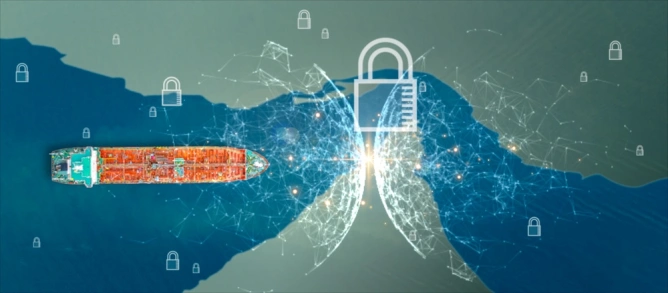
The strait is a "glass neck" about 24 miles wide at its narrowest point, with two navigation channels and limited maneuverability for large ships. Experts cited by CNN describe the area as a true "kill zone," where the reaction time to an attack – whether by missiles, drones, or fast boats – is measured in seconds, and the option to change course is practically nonexistent.
The Iranian advantage rests on three pillars.
First, geography. Iran controls the northern coast of the Persian Gulf and has nearly 1,600 kilometers of coastline from which it can launch anti-ship missiles, drones, mines, and explosive-laden boats, extending the risk area far beyond Hormuz. The terrain – hills, valleys, islands, and dense urban areas – complicates the detection and neutralization of mobile weapon systems.
Second, the asymmetric arsenal. Even though part of Iran's conventional fleet has been degraded, the greatest threat comes from cheap drones, fast boats, crewless ships loaded with explosives, naval mines, and mini-submarines adapted for shallow waters. These means are dispersible, hard to locate, and relatively cheap, making it impossible to completely reduce the risk to commercial traffic, despite the presence of Western naval forces.
Third, the economic and political tool. Iran does not need to sink ships massively to achieve the desired effect: it is enough to raise the perception of risk. The current blockade has shown that Tehran can almost completely halt traffic through Hormuz, blocking about 20% of global oil and LNG volume and severely affecting fertilizer exports, vital for European and global agriculture. Additionally, Tehran is starting to monetize its control over the strait, charging transit fees, including through a fleet of "zombie tankers" with false identities.
The result is that any escort mission becomes a complex operation, in "layers": satellite surveillance, patrol planes, drones, mine clearance, and air defense means, without the guarantee of total security. From this perspective, Iran's advantage does not lie in its ability to militarily defeat the USA, but in its ability to maintain a sufficiently high level of risk to block global energy flows in the long term.
Trump's narrative: maximum pressure and announced victory
In declarative terms, Trump constructs the crisis as a duel in which the USA is close to victory.
The president promises "total destruction" of Iranian energy capabilities, claims that Iran "no longer has a fleet" and that it is "begging" for an agreement, and presents every pause in strikes as a result of progress behind the scenes.
At the same time, he openly criticizes European and regional allies, accusing them of being "paper tigers" and of not taking risks in Hormuz, despite the declared willingness of the United Arab Emirates to participate in a potential multinational force to reopen the strait. The public message to the domestic base is one of strength and control: negotiations are going "very well," Iran would be cornered, and victory – whether military or diplomatic – would be just a matter of days.
However, this narrative contrasts with military assessments and diplomatic reality. Experts cited by CNN and specialized think tanks emphasize that Iran's asymmetric arsenal remains largely intact and that, beyond tactical successes, Washington has failed to neutralize Tehran's ability to block Hormuz. Moreover, the reluctance of European allies to engage in an offensive naval operation undermines the credibility of American threats.
The message from Tehran: denial of negotiations, tough conditions, control over Hormuz
Tehran tells a completely different story. Iranian officials deny the existence of direct negotiations and reject any narrative of "capitulation," presenting Iran as a victim of American aggression, but also as an actor imposing its own conditions.
Foreign Minister Abbas Araghchi has only acknowledged the existence of "messages" conveyed through intermediaries, not "negotiations" in the classical sense. An American document with 15 points, transmitted through Pakistan, was reportedly rejected as "unfair" and "entirely favorable to the USA and Israel," according to sources cited by Reuters and Iranian media. In return, Tehran formulates its own conditions – five points for stopping the war: cessation of aggression, firm guarantees that hostilities will not resume, payment of war reparations, cessation of attacks on the "resistance front," and recognition of Iran's sovereignty over the Strait of Hormuz.
This last point is key to Iran's strategy. Tehran is not satisfied with de facto control over the strait but seeks to obtain a legal and political consecration of this status, including through parliamentary efforts to codify internal rules for controlling and taxing transit. Meanwhile, officials from the Revolutionary Guards explicitly threaten that if the USA strikes Iranian energy infrastructure, Iran will respond by targeting power plants, refineries, and desalination facilities in the region, betting on the "asymmetry of vulnerability" in the Gulf.
Thus, while Trump proclaims an imminent victory, Tehran behaves like an actor with time and maneuvering space. The blockade of Hormuz, even partial, is enough to amplify economic pressure on the USA and Europe, and the refusal to accept the American 15-point plan sends the message that the regime is not negotiating from a position of weakness.
Pakistan, the discreet mediator between Washington and Tehran
Amid these two antagonistic narratives lies Pakistan, which has become one of the main intermediaries between Washington and Tehran. Islamabad is perceived by both the USA and Iran as an actor with sufficiently good relations with both sides and Gulf states to host and facilitate "diplomacy in the shadows."
According to Reuters and NPR, Pakistan is the channel through which the American 15-point document reached Tehran, and Pakistani officials confirm the existence of "indirect discussions" between the parties. The Pakistani foreign minister openly talks about preparing for a potential direct meeting on Pakistani territory, while both Washington and Tehran publicly avoid acknowledging this horizon, so as not to fuel internal perceptions of weakness.
At the same time, Islamabad tries to protect its own regional position, avoiding antagonizing Tehran or Gulf allies. International media have reported that Pakistan has advocated for the removal from Israeli lists of Iranian officials potentially involved in negotiations, to create a minimum space for dialogue. Its role remains that of a facilitator – a "postal service" – rather than a guarantor of a potential agreement, and its ability to transform these contacts into a peace process depends on the political will of Washington and Tehran to accept real compromises.
Europe facing the "Hormuz shock": between bills and geopolitics
For Europe, the crisis in Hormuz is not just a foreign policy issue but a new "stress test" of energy security, shortly after decoupling from Russian gas. The partial blockade in the strait has pushed up prices for oil and LNG, putting pressure on industries and consumers, from refineries to agriculture, through rising fertilizer costs.
Energy policy analyses emphasize that, although the EU has diversified since 2022, replacing some of the Russian gas with LNG from the USA, Qatar, and other sources, maritime routes remain a point of vulnerability: Hormuz is essential for global LNG and oil flows, and any blockade translates into price volatility in the European market. Additionally, pressure on heavy industry – chemicals, metallurgy, cement – risks undermining decarbonization ambitions if member states resort to emergency measures to protect competitiveness.
The European response combines economic measures and political messages. National governments have introduced or reactivated support schemes for consumers and companies, while in Brussels, the Commission and Parliament are discussing strengthening reserves, further diversifying sources, and accelerating investments in network infrastructure. Meanwhile, EU leaders have issued a series of joint statements calling for the reopening of Hormuz, respecting freedom of navigation, and significantly, ceasing strikes on energy and water infrastructure in the region.
On the security dimension, the EU walks a narrow line. European states, along with Japan, have expressed their willingness to participate in "appropriate efforts" to ensure navigation, but avoid committing to an offensive naval operation directly related to Trump's ultimatums. Discussions about the role of European naval missions (Aspides, Atalanta) in protecting critical routes remain cautious, and any potential military presence in the area is conditioned by a multilateral framework and guarantees regarding de-escalation. In Brussels, the crisis also becomes a subject of structural debate: how realistic is a strategy of "strategic autonomy" in an economy still dependent on energy flows from unstable areas and how quickly can Europe reduce its vulnerability to such repeated shocks.
Romania between Euro-Atlantic loyalty and its own vulnerabilities
For Romania, the crisis in Hormuz plays out on three levels: the strategic relationship with the USA, positioning within the EU, and internal energy security.
In security terms, Bucharest quickly responded to signals from Washington, accepting the enhancement of American infrastructure and equipment on Romanian territory as part of the response to the war in Iran. The government presented this decision in the natural key of the strategic partnership and the status of a NATO frontline state on the eastern flank, emphasizing the benefits in terms of security guarantees. Tehran's messages, which warned that it would take into account the positions of states hosting military capabilities used against Iran, add a note of vulnerability: Romania enters, at least declaratively, into the attention perimeter of the Iranian regime.
In relation to the Strait of Hormuz, Bucharest positions itself cautiously. Statements from the prime minister and the defense minister indicate Romania's willingness to participate, after a potential ceasefire agreement, in demining and stabilization missions, using the experience gained in the Black Sea and other theaters. Romania prefers a role as a post-conflict contributor and provider of technical expertise, rather than a participant in the frontline of a naval operation to force the strait.
Diplomatically, Romania has aligned itself with the joint statements of the EU and the G7, calling for the reopening of Hormuz, respecting freedom of navigation, and ceasing strikes on energy and water infrastructure. This alignment strengthens Bucharest's Euro-Atlantic profile but also comes with potential perception costs in relations with states in the Global South, where the discourse about the "double standards" of the West remains strong.
Energetically, Romania is less exposed than other European states deeply dependent on imports, benefiting from internal gas resources and a relatively diversified production mix. However, it is integrated into the European market and feels the volatility of fuel and energy prices, as well as the indirect effects on fertilizers and transport. As such, Romania has had to adopt an emergency ordinance declaring a state of crisis in the fuel market.
For the domestic audience, the crisis in Hormuz risks being perceived through the lens of bills and rising fuel prices, fueling questions about the costs of solidarity with the USA and the EU in a geographically distant conflict.
A fragile balance: the Iranian advantage and the limits of American pressure
Viewed as a whole, the crisis in the Strait of Hormuz reveals a fragile balance. Iran does not win militarily, but it has a structural advantage in the strait: it can maintain a sufficiently high level of risk to block energy flows and force a recognition – even if tacit – of its control over a vital node of the global economy.
The USA has clear military superiority but faces the realism of a conflict in which "total victory" would entail political, economic, and military costs that neither Washington nor its allies seem willing to accept. The extension of the deadline, the reluctance of European allies towards an offensive naval operation, and the increasingly important role of mediators like Pakistan are indications of these limits.
Europe and Romania are caught in this power play. For the EU, the crisis serves as a reminder of how vulnerable a project still dependent on energy flows from unstable areas is, and for Romania, the stakes are to remain a credible ally of the USA and the EU without unnecessarily amplifying its own vulnerabilities.
While Donald Trump speaks of a "desperate" Iran and an imminent outcome, Tehran bets on time, geography, and the political costs of its adversaries – in a crisis where, beyond rhetoric, control over the Strait of Hormuz is negotiated not only between Washington and Tehran but also in European capitals, including Bucharest.
*****Synthesis made with the help of a data monitoring flow provided by the media monitoring platform NewsVibe Romania. The analysis, data, and images presented have been enhanced with the help of Machine Learning and Artificial Intelligence tools.
Latest News
19:52
19:51
19:09
19:04
18:51
See more news
NEWS ON THE SAME TOPICS









.webp)