ANALYSIS / Global influence of MAGA: between offensive and the "anti-Trump bump" in international elections



Always see our news on Google
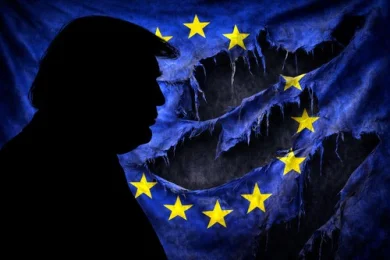
The Trump administration has repeatedly attempted to influence and project its political agenda in the elections of other democracies, using diplomatic pressure, political visits, and rhetoric aligned with the MAGA movement, with effects ranging from the radicalization of internal scenes to the "anti-Trump bump," meaning mobilization against. This pattern marks a break from Washington's more reserved tradition regarding electoral processes in allied states and transforms external scrutiny into extensions of internal political conflicts in the U.S., with Romania becoming one of the central examples of this strategy: amid a rising tide of far-right growth, the Trump administration pressured for a radical candidate, Călin Georgescu, not to be blocked from the presidential race.
This approach was not limited to distant messages: the White House used key moments from the European diplomatic agenda, such as the Munich Security Conference, to push the theme of the far-right to the forefront, questioning the "quality of democracy" in states that would block radical candidates and legitimizing sovereignist discourse by referring to Georgescu as an "authentic" exponent of popular discontent.
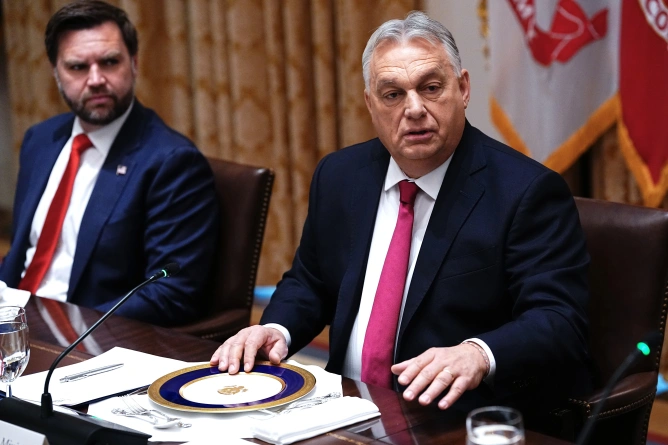
In the current context, American Vice President JD Vance is visiting Hungary from April 7-8, just before parliamentary elections considered the tightest for Viktor Orbán in his last decade in power, in a vote where Fidesz is pressured by the Tisza party, led by former ally turned adversary, Péter Magyar. According to several polls cited by Reuters, Tisza leads comfortably against Fidesz, with about 50-53% of decided voters, compared to 37-38% for Orbán's party, reinforcing the perception that the Hungarian prime minister enters this campaign as a favorite for defeat, not victory. Officially, Vance is going to Budapest for bilateral discussions and joint statements with the Hungarian prime minister about the "solid partnership" between the United States and Hungary, but the political stakes are evident: sending a signal of support from Washington for an illiberal leader under internal pressure, in a campaign marked by accusations of corruption, economic stagnation, and challenges to the concentration of power around Orbán.
Analyses and correspondence published by Deutsche Welle and picked up by other international institutions highlight that Vance plays the role of an external "boost" for Fidesz, aimed at strengthening the mobilization of the conservative base and reminding voters that Orbán remains directly connected to the power network of President Trump. In this light, the visit transforms the elections on April 12 into a new episode of the global culture war: if Orbán manages to maintain his majority against Péter Magyar and Tisza, his illiberal model remains a pillar of "international MAGA" in Central and Eastern Europe; if he loses, the defeat would become symbolic for transatlantic trumpism and signal the limits of exporting this model in the face of an already validated internal opposition in polls.
In Australia, a Washington Post analysis shows how foreign policy and tariffs announced by Donald Trump have become a central factor in the campaign for the federal elections in May 2025, but with the opposite effect of Washington's intentions. Labor Prime Minister Anthony Albanese then secured a second term, despite enduring months of unfavorable polls, and Reuters notes that many voters saw him as a guarantor of stability and responsible management of the crisis caused by the new American tariffs, which the leader from Canberra described as "not exactly the action of a friend." In contrast, the Liberal Party led by Peter Dutton, which borrowed themes from the MAGA arsenal, from anti-woke rhetoric to attacks on the federal bureaucracy, failed to capitalize on economic discontent, being perceived as too close to Trump's style at a time when a significant part of the electorate wanted to temper external tensions.
In Canada, The New York Times explicitly describes an "anti-Trump bump" that propelled Mark Carney to lead the government in Ottawa after the federal elections in April 2025. The former central banker secured a new term at the head of the Liberal Party after an openly anti-Trump campaign, warning that the American president "wants to weaken Canada to control it" and made defending the Canadian economy against tariffs and pressures from Washington the central theme of his message. Conservative leader Pierre Poilievre, who built his profile on a combative, anti-elite style and close to Trumpist tactics, suffered a severe defeat, including the loss of his own parliamentary seat, and the New York Times analysis notes that many voters perceived Carney as a "safe hand" capable of managing an unpredictable American neighbor, in a context where trade relations with the U.S. are vital for the Canadian economy.
The Trump administration's involvement in the electoral dynamics in France fits into the same strategy of exporting MAGA, but with an additional stake: the direct influence on the presidential race of 2027 in one of the main powers of the EU. France thus becomes the ground where Trump's ambitions to legitimize the European far-right intersect with the calculations of Rassemblement National (RN) regarding its own path to the Élysée Palace.
After Marine Le Pen's conviction for misappropriation of European funds and the five-year ban on holding public office, a sanction that, in its current form, excludes her from the race for the 2027 presidential elections, Donald Trump publicly intervened demanding her release and presenting the French judiciary's decision as a "witch hunt" and an example of the abusive use of justice by the European left. On his platform, Trump argued that the case would be a "minor accounting issue" and compared the treatment applied to Le Pen with his own legal troubles, thus framing the RN leader's conviction within the same global narrative of political persecution against the radical right.
Le Monde describes this sequence as a logical step in a longer evolution, in which Trump becomes the "guiding star" of the European far-right, and figures like Le Pen see in his victory and return to the White House a "political renaissance" that should "wake up the Old Continent." At the Patriots for Europe summit, Marine Le Pen explicitly invoked the "global disruption" produced by Trump as a model for a similar rupture in Europe, while carefully avoiding addressing the major contradictions between Trump's economic agenda, pro-tariff and pro-business, and the RN's social-populist program, which promises wage increases and a return to a lower retirement age.
From the perspective of French domestic politics, Trump's intervention has two main effects. First, it strengthens the militant base of the RN, which can present Le Pen's conviction as part of a "globalist" conspiracy and can legitimize itself through explicit support from the White House. Second, it fuels fears among the economic and institutional elite: Reuters notes that, although the RN is at the top of the polls less than a year and a half before the election, the French business environment remains reluctant towards a party perceived as economically ambiguous and too tied to an American president willing to hit the EU with tariffs. In the case of the RN, the bet is that Trump's blessing will matter more than the concerns of a part of French society regarding too close an approach to Trumpist Washington; until 2027, the dilemma remains whether this symbolic investment will translate into votes or will fuel, as in Canada and Australia, its own "French anti-Trump bump."
Connecting these episodes, there also emerges an assessment of effectiveness, not just of methods: where institutions are fragile and the political scene is already polarized, as in Romania or Hungary, the involvement of the Trump administration can raise the stakes for favored candidates and amplify the illiberal agenda, even if it does not guarantee victory at the polls. In consolidated democracies, such as Australia and Canada, the same tactics have faced an "anti-Trump bump": studies and campaign analyses cited by the Washington Post and New York Times show that Trump's presence at the center of the electoral debate has mobilized more moderate voters and strengthened leaders like Anthony Albanese and Mark Carney, rather than validating local imitators of trumpism.
*****The analysis and data presented have been enhanced with the help of Machine Learning and Artificial Intelligence tools
Latest News
20:17
19:52
19:46
19:15
19:09
See more news
NEWS ON THE SAME TOPICS