ANALYSIS. The phenomenon of global warming, otherwise negatively viewed by Trump, the real trigger of the fight for Greenland



Always see our news on Google
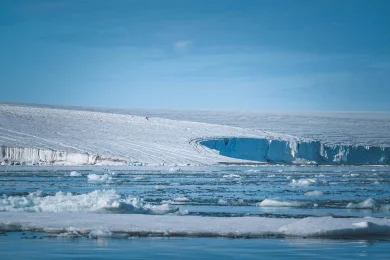
The accelerated melting of Arctic ice shifts the center of gravity of geoeconomics and global security towards the "Far North", transforming seas that were recently frozen into strategic transport corridors, power projection, and access to resources. In this context, the competition between the USA (under President Trump), Europe, Russia, and China, including the symbolic and strategic dispute over Greenland, is directly linked to the new Arctic routes and climate changes.
The Arctic in thaw: from peripheral frontier to strategic axis
The melting of sea ice increasingly opens three key corridors during the warm season: the Northern Sea Route (NSR) along the Russian coast, the Northwest Passage (NWP) through the Canadian archipelago, and progressively, a transpolar route that crosses the center of the Arctic Ocean. Climate projections indicate a future in which, in the second half of the century, significant portions of the Arctic will be navigable for dozens of days up to several months a year, dramatically compressing maritime distances between Asia–Europe and Asia–North America and reconfiguring global logistics maps.
A recent study in Nature Communications shows that access to the "Arctic Sea Route" could transform the structure of the global shipping network: by 2100, Arctic traffic could exceed 2% of global voyages and, in certain scenarios, rival in volume with Suez and Panama, without replacing them. Paradoxically, however, although each voyage through the Arctic is shorter and more energy-efficient, modeling indicates a net increase in global shipping emissions by about 8.2%, and the share of the Arctic in global maritime emissions could rise from 0.22% to 2.72%, suggesting that the "distance gain" is offset by the increase in volume and complexity of traffic.
Strategies of major actors: between trade, security, and climate
Russia: controlled polar highway
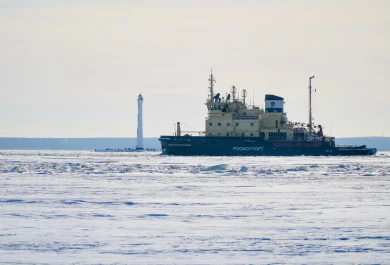
Russia possesses the longest Arctic coastline and treats the Northern Sea Route as a state artery, a kind of "polar highway" over which it claims extensive rights of regulation and taxation. Moscow is massively investing in icebreakers, ports, LNG terminals in Arctic peninsulas, and in revitalizing military bases in the North, transforming the NSR into a tool for monetizing resources (oil, gas, minerals) and military projection.
In the medium term, Russia sees the NSR as the optimal route for energy exports to Asia, bypassing vulnerable straits and infrastructure controlled by the West, while using Arctic military infrastructure to create a "bastion" of deterrence against NATO. However, vulnerabilities are significant: Western sanctions limit access to technology, financing, and insurance, and the seasonal nature of the route, along with the high costs of navigation in ice, currently restrict the attractiveness of the NSR for major global container lines.
The United States: North Atlantic security and Greenland's "pivot"
The USA views the Arctic primarily through the lens of security: defending the North Atlantic, monitoring Russian and Chinese activities, and protecting emerging maritime routes. Washington is modernizing surveillance and early warning infrastructure, closely cooperating with Norway, Iceland, and especially Greenland, where there is already critical American infrastructure (radars, dual-use facilities).
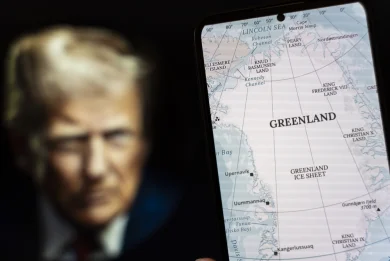
Donald Trump's persistent interest in acquiring Greenland – revived in the context of the new Arctic dynamics – is based on three pillars: control of routes, access to resources, and strengthening the North Atlantic security architecture. Greenland is located at the intersection of the potential Northwest Passage, North Atlantic routes, and future transpolar corridors, making it an ideal platform for monitoring and conditioning traffic between North America, Europe, and Asia.
Moreover, the melting of ice and technological advances make Greenland's mineral resources, including critical metals essential for the energy transition, increasingly accessible, raising the island's strategic value in the context of rivalry with China and the Western effort to secure supply chains. From Washington's perspective, political and military control of Greenland is also a measure to prevent a potential massive influx of Chinese capital into the island's infrastructure.
China: "Polar Silk Road" and long-term play
China defines itself as an "almost Arctic state" and has integrated the Arctic into its Belt and Road Initiative in the form of the "Polar Silk Road", exploring routes and investments that reduce transport times to Europe and diversify dependencies on chokepoints like Suez and Malacca. A Politico analysis shows how Beijing is testing, with container ships like Istanbul Bridge, a kind of seasonal express line Asia–Europe via the NSR, currently on a minuscule scale (about 1% of Far East–Northern Europe traffic), but with a clear intention to accumulate experience and normalize the route.
China is playing the long game, accepting that the Arctic will remain for many years a complementary, niche route, used especially for dedicated cargoes (LNG, high-value goods, time-sensitive flows), but betting that, as the ice-free season expands, northern routes will gain structural weight in Asia–Europe trade. Meanwhile, Beijing is seeking economic and political footholds: cooperation with Russia on the NSR, infrastructure projects in northern European ports, and potentially, in Greenland, where it faces a front of Western opposition.
Europe, Nordic states, and Canada: between ecology and hard security
The Nordic European states (Norway, Denmark/Greenland, Iceland, Sweden, Finland) and the EU combine security logic – concern over Russian militarization and China's entry into the region – with a declarative agenda of environmental protection and sustainable development. The EU's Arctic strategy seeks to limit hydrocarbon exploitation, impose strict standards on marine fuels, and reduce black carbon and methane emissions, while supporting the strengthening of NATO's presence and surveillance infrastructure in the North.
Canada insists that the Northwest Passage is internal Canadian waters, in contradiction with the US interpretation, which treats it as an international strait, creating a latent legal dispute. Ottawa is investing in patrols, monitoring infrastructure, and strengthening its military and civilian presence in the North, while trying to manage trade and climate pressures on indigenous communities.
Who wins, who loses?
Arctic powers – Russia, the USA, Canada, Norway, and Denmark through Greenland – benefit from a structural geographical advantage, being able to transform their Arctic coastline into logistics, energy, and security hubs. Flexible commercial actors (shipping companies, energy traders) can exploit the complementarity between traditional and Arctic routes, optimizing costs and times based on season, insurance, and geopolitical risks.
China can gain time and competitiveness if it manages to secure access to Arctic infrastructure, but it is constrained by political suspicion in Europe and North America and the possibility of regulations and sanctions that could limit its maneuvering. Small Nordic states, such as Norway or Iceland, have the chance to become transshipment nodes and maritime service and surveillance centers, gaining disproportionate political relevance relative to their size, but also increased responsibilities in managing risks.
In contrast, indigenous communities and Arctic ecosystems bear disproportionate costs: although they may benefit from investments, jobs, and infrastructure, they see their environment and traditional ways of life destabilized by climate change and industrial pressure.
New routes: geoeconomic advantages, climate traps
Advantages: distance, diversification, resources
Arctic routes offer shorter lines between Asia and Europe compared to the route through the Suez Canal, reducing transit time by up to 40–50% on certain relationships (for example, Japan–Northern Europe), which diminishes fuel consumption and direct costs per ship. Additionally, they provide a strategic diversification of global corridors, reducing dependence on vulnerable chokepoints (Suez, Malacca) and offering a degree of redundancy in case of regional conflicts, blockages, or attacks on critical infrastructure.
The melting of ice exposes hydrocarbon deposits, minerals – including critical metals for the energy transition – and new potential fishing areas, attracting the interest of companies and governments in search of "reserve" resources in global competition. For Russia, this means strengthening its status as a major LNG exporter; for Greenland and Canada, it means opening up a potential for economic development otherwise inaccessible.
Disadvantages: fragility, militarization, and a negative climate balance
On the other hand, an analysis by France 24 and the Nature study show that the Arctic is becoming a "laboratory" of a vicious climate cycle: the melting of ice opens routes, traffic increases, CO₂ and black carbon emissions amplify, albedo decreases, and warming and ice melting accelerate. The increased use of heavy fuel oil, pollution with black carbon, and the risk of hydrocarbon accidents in an extremely fragile ecosystem amplify the regional and global effects of the climate crisis.
Moreover, the reduction of ice does not eliminate maritime risks, but transforms them: studies on "maritime hazards" show that more open water means stronger waves, unpredictable drifting ice, and extreme weather episodes, complicating navigation and raising design, insurance, and rescue requirements. The militarization of the region – with reactivated Russian bases, increasingly frequent NATO exercises, and China's ambitions – transforms the Arctic from a relatively stable area of cooperation into a potential theater of symbolic, legal, and, in extreme scenarios, military confrontation.
Legally, the status of the routes remains contested: Russia considers the NSR as internal waters and a national route, Canada applies a similar narrow logic for the NWP, while the USA and other actors invoke freedom of navigation and the concept of international straits, signaling new conflicts over the interpretation of maritime law.
The Trump–Europe dispute over Greenland: a symptom of the new Arctic order
In this context, the dispute between Donald Trump and Europe over Greenland is not an isolated eccentricity, but a symptom of the strategic mutations generated by climate change in the Arctic. Greenland is becoming a pivot between North America and the new Arctic routes, a "stone aircraft carrier" guarding both the North Atlantic and potential transpolar routes and connections with the Northwest Passage.
For Washington, acquiring or at least consolidating decision-making control over Greenland would mean:
a positional advantage over maritime and air flows between North America, Europe, and Asia;
securing a logistical base for naval and air operations in the Arctic;
privileged access to critical mineral resources and future offshore energy projects.
Europe and, especially, Denmark, however, support maintaining sovereignty and an extensive autonomy framework for Greenland, emphasizing the local population's right to decide on the island's future and perceiving the American offer as a challenge to the post-war territorial order in Northern Europe. The EU, against the backdrop of its own Arctic strategy, seeks to tie Greenland more closely to the European market, to provide funding for infrastructure and green transition, and thus mitigate the temptation of Chinese investments or a unilateral bilateral arrangement with the USA.
In essence, the Trump–Europe dispute over Greenland is linked to the Arctic climate reality in three ways:
it transforms a once peripheral island into a central asset for controlling routes and resources;
it places it at the center of competition for supply chain security (critical metals, energy, data);
it turns it into a test case for how the West simultaneously manages decarbonization, security, and relations with China in frontier spaces.
Conclusion: The Arctic between niche profit and systemic risk
Integrating geopolitical, economic, and climate analyses shows that the Arctic will not quickly become a "new Suez", but rather a network of niche routes, with a relatively low volume share, but with a disproportionately strategic weight in the global balance of power. Russia, China, the USA, Europe, and Canada seek to capitalize on local advantages – shorter routes, access to resources, military positioning – but, taken on a global scale, the effects could mean more emissions, increased militarization, and the vulnerability of an ecosystem essential for the planet's climate stability.
In this sense, the new Arctic routes are simultaneously a promise of profit and a risk multiplier: those who move quickly can gain economic and strategic advantages, but without robust governance – climate, legal, and security – short-term gains may fuel long-term instability in the international order.
Analysis conducted with the support of the NewsVibe platform and Perplexity Comet
Latest News
14:53
14:47
14:43
14:41
14:36
See more news
NEWS ON THE SAME TOPICS